9CL6 image
Deposition Date 2024-07-10
Release Date 2025-01-08
Last Version Date 2025-01-15
Entry Detail
PDB ID:
9CL6
Keywords:
Title:
Ammonia monooxygenase in native membranes
Biological Source:
Source Organism:
Method Details:
Experimental Method:
Resolution:
2.77 Å
Aggregation State:
2D ARRAY
Reconstruction Method:
SINGLE PARTICLE
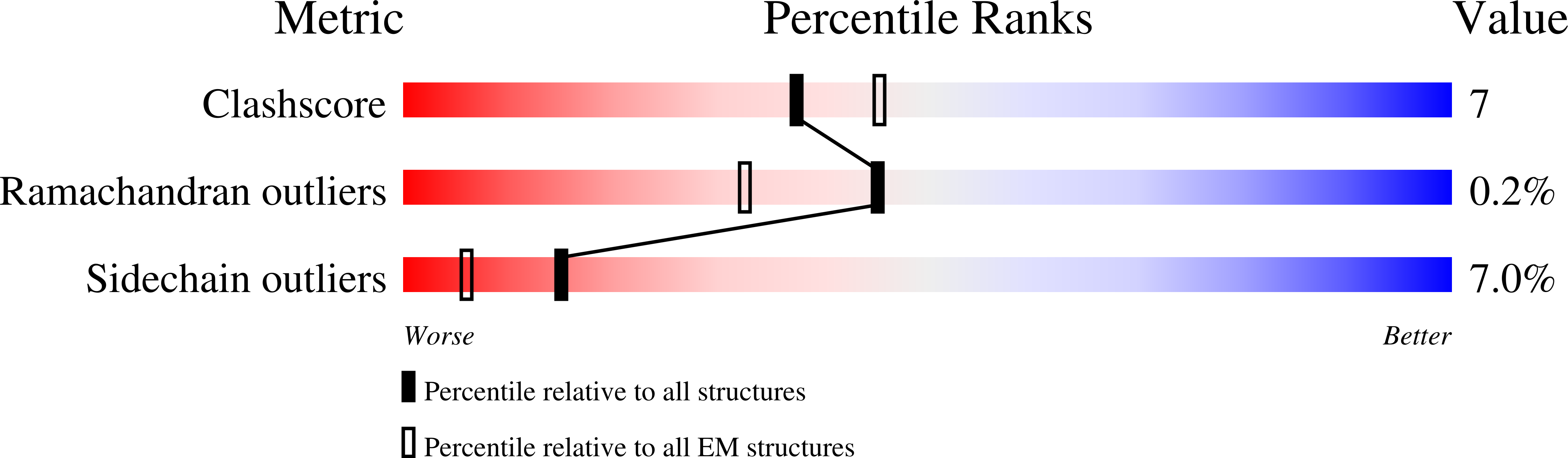
Macromolecular Entities
Structures with similar UniProt ID
Protein Blast
Polymer Type:polypeptide(L)
Molecule:Ammonia monooxygenase beta subunit
Gene (Uniprot):amoB1, amoB2
Chain IDs:B (auth: A), K (auth: H), L (auth: E)
Chain Length:383
Number of Molecules:3
Biological Source:Nitrosomonas europaea ATCC 19718
Structures with similar UniProt ID
Protein Blast
Polymer Type:polypeptide(L)
Molecule:Ammonia monooxygenase alpha subunit
Gene (Uniprot):amoA1, amoA2
Chain IDs:C (auth: B), G (auth: I), H (auth: F)
Chain Length:274
Number of Molecules:3
Biological Source:Nitrosomonas europaea ATCC 19718
Structures with similar UniProt ID
Protein Blast
Polymer Type:polypeptide(L)
Molecule:Ammonia monooxygenase subunit C
Gene (Uniprot):amoC2
Chain IDs:A (auth: C), I (auth: J), J (auth: G)
Chain Length:254
Number of Molecules:3
Biological Source:Nitrosomonas europaea ATCC 19718
Polymer Type:polypeptide(L)
Molecule:ammonia monooxygenase supernumerary helix
Chain IDs:D (auth: Da), E (auth: Db), F (auth: Dc)
Chain Length:39
Number of Molecules:3
Biological Source:Nitrosomonas europaea ATCC 19718
Ligand Molecules
Primary Citation
Structures of methane and ammonia monooxygenases in native membranes.
Proc.Natl.Acad.Sci.USA 122 e2417993121 e2417993121 (2025)
PMID: 39739801 DOI: 10.1073/pnas.2417993121

Abstact

Methane- and ammonia-oxidizing bacteria play key roles in the global carbon and nitrogen cycles, respectively. These bacteria use homologous copper membrane monooxygenases to accomplish the defining chemical transformations of their metabolisms: the oxidations of methane to methanol by particulate methane monooxygenase (pMMO) and ammonia to hydroxylamine by ammonia monooxygenase (AMO), enzymes of prime interest for applications in mitigating climate change. However, investigations of these enzymes have been hindered by the need for disruptive detergent solubilization prior to structure determination, confounding studies of pMMO and precluding studies of AMO. Here, we overcome these challenges by using cryoEM to visualize pMMO and AMO directly in their native membrane arrays at 2.4 to 2.8 Å resolution. These structures reveal details of the copper centers, numerous bound lipids, and previously unobserved components, including identifiable and distinct supernumerary helices interacting with pMMO and AMO, suggesting a widespread role for these helices in copper membrane monooxygenases. Comparisons between these structures, their metallocofactors, and their unexpected protein-protein interactions highlight features that may govern activity or the formation of higher-order arrays in native membranes. The ability to obtain molecular insights within the native membrane will enable further understanding of these environmentally important enzymes.

Legend

Protein

Chemical

Disease

Primary Citation of related structures
Feedback Form
Name
Email
Institute
Feedback