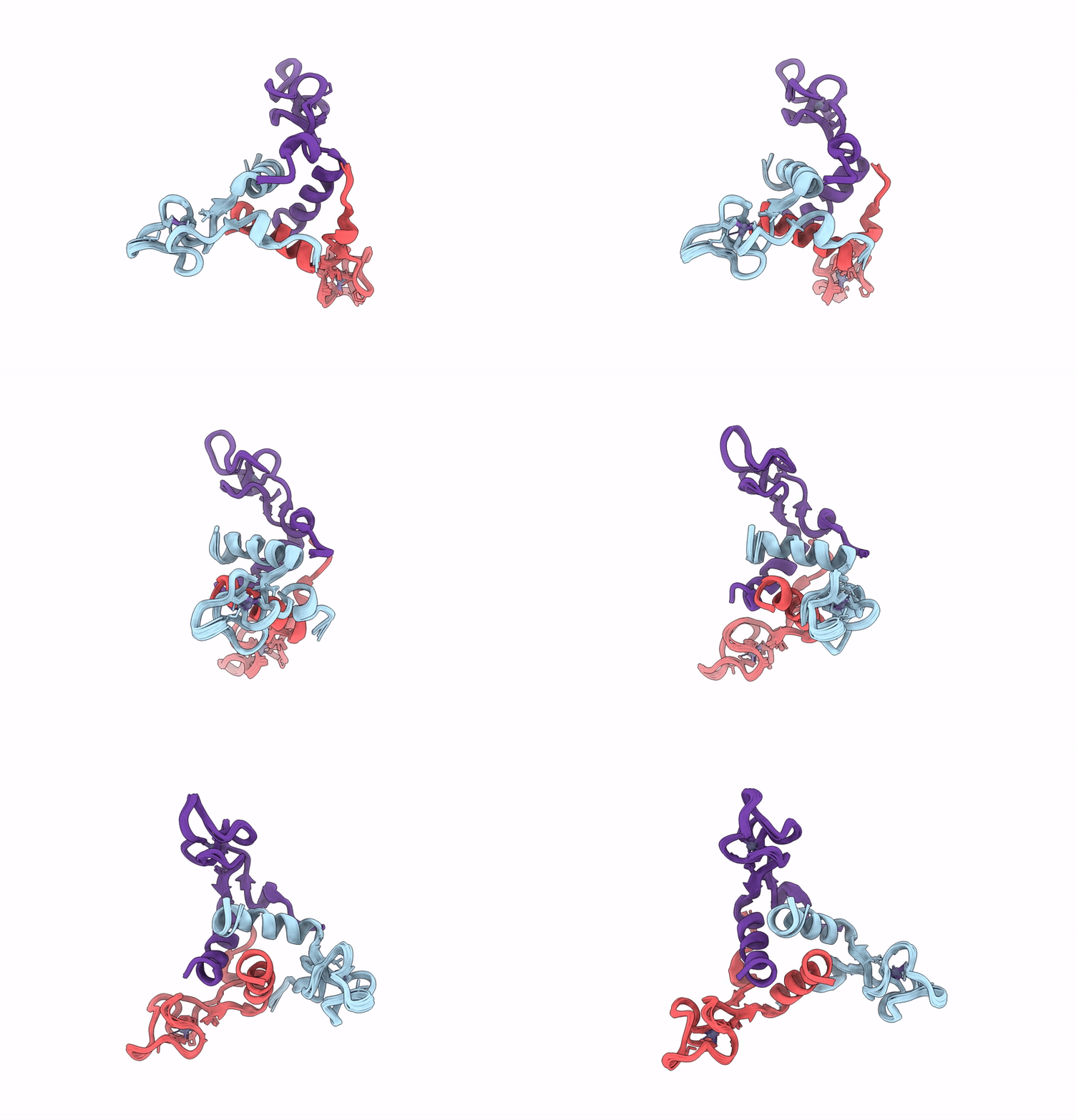
9CCH image
Deposition Date 2024-06-21
Release Date 2025-06-25
Last Version Date 2026-01-07
Entry Detail
PDB ID:
9CCH
Keywords:
Title:
Solution structure of the Bsu Anti-TRAP trimer
Biological Source:
Source Organism(s):
Expression System(s):
Method Details:
Experimental Method:
Conformers Calculated:
100
Conformers Submitted:
20
Selection Criteria:
structures with the lowest energy
Macromolecular Entities
Structures with similar UniProt ID
Protein Blast
Polymer Type:polypeptide(L)
Molecule:Anti-TRAP regulator
Gene (Uniprot):rtpA
Chain IDs:A, B, C
Chain Length:53
Number of Molecules:3
Biological Source:Bacillus subtilis
Modified Residue
Compound ID Chain ID Parent Comp ID Details 2D Image
FME A MET modified residue
Ligand Molecules
Primary Citation
Solution structure, dynamics and tetrahedral assembly of Anti-TRAP, a homo-trimeric triskelion-shaped regulator of tryptophan biosynthesis in Bacillus subtilis.
J Struct Biol X 10 100103 100103 (2024)
PMID: 39035014 DOI: 10.1016/j.yjsbx.2024.100103

Abstact

Cellular production of tryptophan is metabolically expensive and tightly regulated. The small Bacillus subtilis zinc binding Anti-TRAP protein (AT), which is the product of the yczA/rtpA gene, is upregulated in response to accumulating levels of uncharged tRNATrp through a T-box antitermination mechanism. AT binds to the undecameric axially symmetric ring-shaped protein TRAP (trp RNA Binding Attenuation Protein), thereby preventing it from binding to the trp leader RNA. This reverses the inhibitory effect of TRAP on transcription and translation of the trp operon. AT principally adopts two symmetric oligomeric states, a trimer (AT3) featuring three-fold axial symmetry or a dodecamer (AT12) comprising a tetrahedral assembly of trimers, whereas only the trimeric form binds and inhibits TRAP. We apply native mass spectrometry (nMS) and small-angle x-ray scattering (SAXS), together with analytical ultracentrifugation (AUC) to monitor the pH and concentration-dependent equilibrium between the trimeric and dodecameric structural forms of AT. In addition, we use solution nuclear magnetic resonance (NMR) spectroscopy to determine the solution structure of AT3, while heteronuclear 15N relaxation measurements on both oligomeric forms of AT provide insights into the dynamic properties of binding-active AT3 and binding-inactive AT12, with implications for TRAP binding and inhibition.

Legend

Protein

Chemical

Disease

Primary Citation of related structures
Feedback Form
Name
Email
Institute
Feedback