9C1Y image
Deposition Date 2024-05-29
Release Date 2025-06-11
Last Version Date 2025-08-06
Entry Detail
PDB ID:
9C1Y
Keywords:
Title:
Structure of human neuronal nitric oxide synthase R354A/G357D mutant heme domain in complex with 7-((3-(((4-(6-aminopyridin-2-yl)butyl)amino)methyl)phenoxy)methyl)quinolin-2-amine
Biological Source:
Source Organism:
Homo sapiens (Taxon ID: 9606)
Method Details:
Experimental Method:
Resolution:
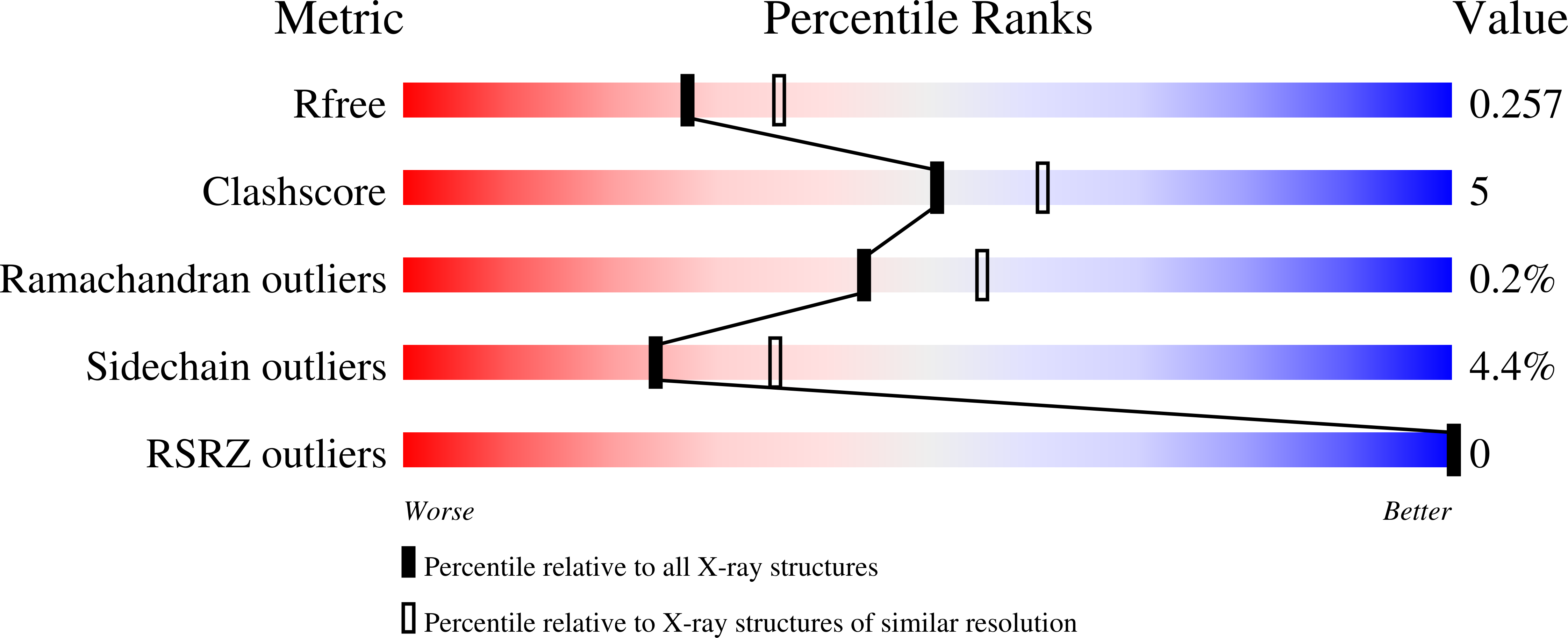
2.30 Å
R-Value Free:
0.26
R-Value Work:
0.19
R-Value Observed:
0.19
Space Group:
P 1 21 1
Macromolecular Entities
Structures with similar UniProt ID
Protein Blast
Polymer Type:polypeptide(L)
Molecule:Nitric oxide synthase, brain
Gene (Uniprot):NOS1
Mutagens:R354A, G357D
Chain IDs:A, B, C, D
Chain Length:423
Number of Molecules:4
Biological Source:Homo sapiens
Primary Citation
A Tetrahydrobiopterin-Displacing Potent Neuronal Nitric Oxide Synthase Inhibitor with an Unprecedented Binding Mode.
Acs Med.Chem.Lett. 16 651 659 (2025)
PMID: 40236557 DOI: 10.1021/acsmedchemlett.5c00062

Abstact

Nitric oxide synthase (NOS) is a pivotal enzyme that regulates various physiological processes, and the dysregulation of neuronal NOS (nNOS) is implicated in neurodegenerative diseases. In our efforts to leverage existing X-ray crystallography data to develop novel aminoquinoline-pyridine hybrid inhibitors and evaluate their inhibitory activities and interactions with NOS isoforms, we identified compounds 8 and 9 as potent human nNOS inhibitors (K i = 38 and 22 nM, respectively). Notably, compound 8 displayed an unprecedented binding mode, displacing the essential cofactor tetrahydrobiopterin (H4B). Furthermore, compound 9 exhibited excellent selectivity, with a 900-fold preference for human nNOS over human eNOS, making it one of the most potent and selective aminoquinoline-based nNOS inhibitors reported to date. Herein we present our inhibitor design rationale, the synthesis, and the biochemical/physical evaluation of binding along with X-ray crystallographic studies with three NOS isoforms, providing detailed insights into the observed potency and selectivity of these inhibitors.

Legend

Protein

Chemical

Disease

Primary Citation of related structures
Feedback Form
Name
Email
Institute
Feedback