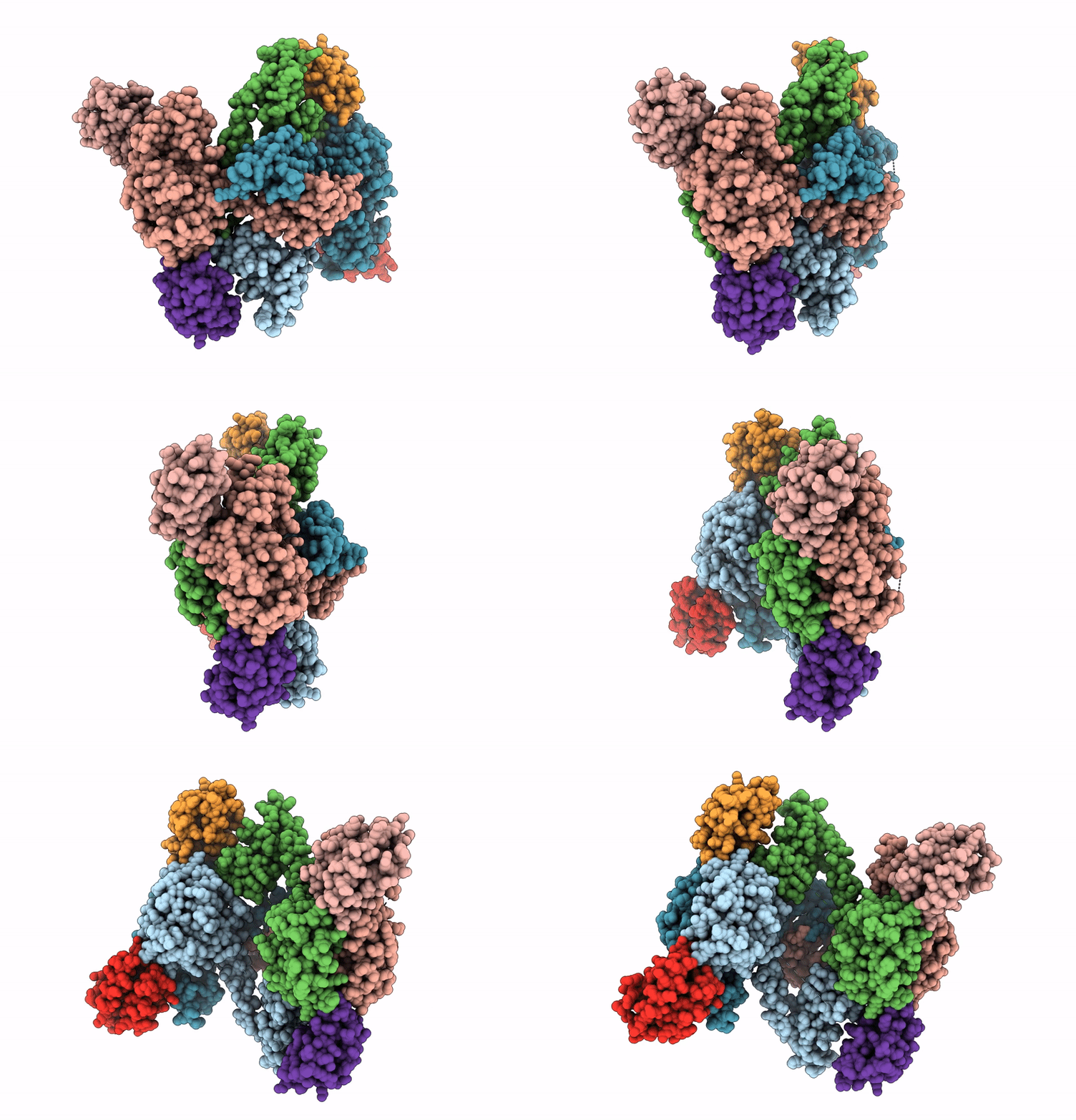
9BW9 image
Deposition Date 2024-05-21
Release Date 2025-06-25
Last Version Date 2025-11-05
Entry Detail
PDB ID:
9BW9
Keywords:
Title:
Tetrameric Complex of full-length HIV-1 integrase protein bound to the integrase binding domain of LEDGF/p75
Biological Source:
Source Organism:
Homo sapiens (Taxon ID: 9606)
HIV-1 06TG.HT008 (Taxon ID: 587638)
Method Details:
Experimental Method:
Resolution:
4.10 Å
Aggregation State:
PARTICLE
Reconstruction Method:
SINGLE PARTICLE
Macromolecular Entities
Structures with similar UniProt ID
Protein Blast
Polymer Type:polypeptide(L)
Molecule:Integrase
Gene (Uniprot):gag-pol
Chain IDs:C, D, G (auth: A), H (auth: B)
Chain Length:318
Number of Molecules:4
Biological Source:HIV-1 06TG.HT008
Structures with similar UniProt ID
Protein Blast
Polymer Type:polypeptide(L)
Molecule:PC4 and SFRS1-interacting protein
Gene (Uniprot):PSIP1
Chain IDs:A (auth: G), B (auth: H), E, F
Chain Length:91
Number of Molecules:4
Biological Source:Homo sapiens
Ligand Molecules
Primary Citation

Abstact

Integrase (IN) performs dual essential roles during HIV-1 replication. During ingress, IN functions within an oligomeric "intasome" assembly to catalyze viral DNA integration into host chromatin. During late stages of infection, tetrameric IN binds viral RNA and orchestrates the condensation of ribonucleoprotein complexes into the capsid core. The molecular architectures of HIV-1 IN assemblies that mediate these distinct events remain unknown. Furthermore, the IN tetramer is an important antiviral target for investigational allosteric IN inhibitors. Here, we determined cryo-EM structures of wildtype HIV-1 IN tetramers and intasome hexadecamers. Our structures unveil a remarkable plasticity that leverages IN C-terminal domains and abutting linkers to assemble functionally distinct oligomeric forms. Alteration of a newly recognized conserved interface revealed that both IN functions track with tetramerization in vitro and during HIV-1 infection. Collectively, our findings reveal how IN plasticity orchestrates its diverse molecular functions and suggest a working model for IN-viral RNA binding. Moreover, our structure of the IN tetramer provides atomic blueprints for the rational development of improved allosteric inhibitors.

Legend

Protein

Chemical

Disease

Primary Citation of related structures
Feedback Form
Name
Email
Institute
Feedback