9BTU image
Deposition Date 2024-05-15
Release Date 2024-11-27
Last Version Date 2025-02-19
Entry Detail
PDB ID:
9BTU
Title:
Human SCNN1B-SCNN1G ENaC dimers
Biological Source:
Source Organism:
Homo sapiens (Taxon ID: 9606)
Mus musculus (Taxon ID: 10090)
Host Organism:
Method Details:
Experimental Method:
Resolution:
3.68 Å
Aggregation State:
PARTICLE
Reconstruction Method:
SINGLE PARTICLE
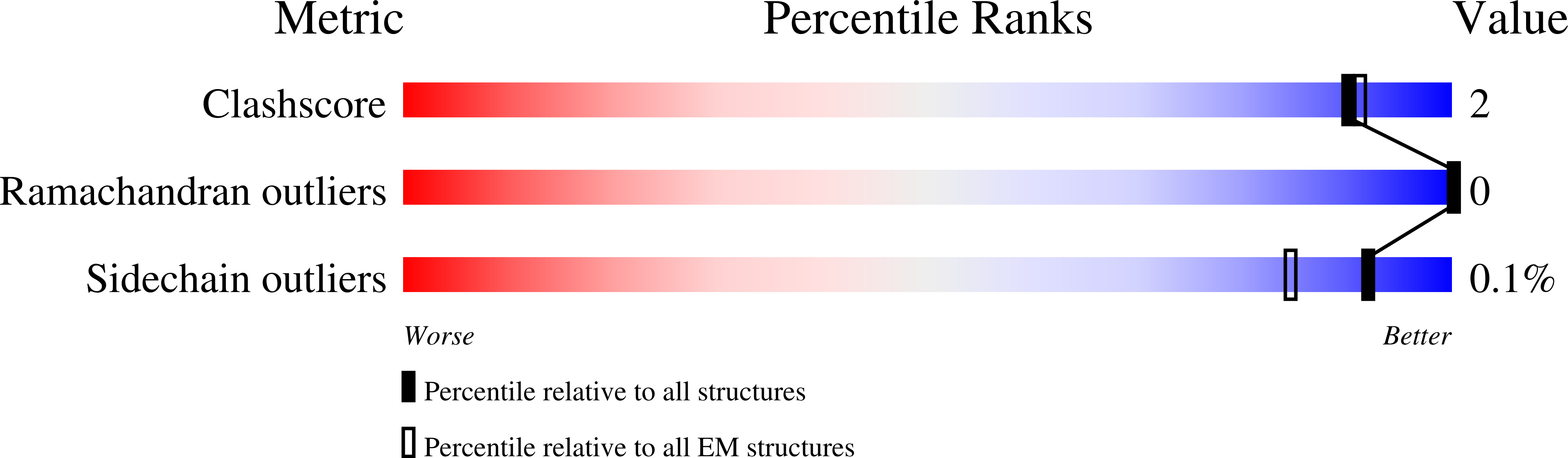
Macromolecular Entities
Structures with similar UniProt ID
Protein Blast
Polymer Type:polypeptide(L)
Molecule:Amiloride-sensitive sodium channel subunit beta
Gene (Uniprot):SCNN1B
Chain IDs:A (auth: B)
Chain Length:640
Number of Molecules:1
Biological Source:Homo sapiens
Structures with similar UniProt ID
Protein Blast
Polymer Type:polypeptide(L)
Molecule:Amiloride-sensitive sodium channel subunit gamma
Gene (Uniprot):SCNN1G
Chain IDs:C
Chain Length:649
Number of Molecules:1
Biological Source:Homo sapiens
Polymer Type:polypeptide(L)
Molecule:10D4 Fab
Chain IDs:B (auth: D)
Chain Length:116
Number of Molecules:1
Biological Source:Mus musculus
Polymer Type:polypeptide(L)
Molecule:10D4 Fab
Chain IDs:D (auth: E)
Chain Length:73
Number of Molecules:1
Biological Source:Mus musculus
Ligand Molecules
Primary Citation
Structural insights into subunit-dependent functional regulation in epithelial sodium channels.
Structure 33 349 362.e4 (2025)
PMID: 39667931 DOI: 10.1016/j.str.2024.11.013

Abstact

Epithelial sodium channels (ENaCs) play a crucial role in Na+ reabsorption in mammals. To date, four subunits have been identified-α, β, γ, and δ-believed to form different heteromeric complexes. Currently, only the structure of the αβγ complex is known. To investigate the formation of channels with different subunit compositions and to determine how each subunit contributes to distinct channel properties, we co-expressed human δ, β, and γ. Using single-particle cryoelectron microscopy, we observed three distinct ENaC complexes. The structures unveil a pattern in which β and γ positions are conserved among the different complexes while the α position in αβγ trimer is occupied by either δ or another β. The δ subunit induces structural rearrangements in the γ subunit, which may contribute to the differences in channel activity between αβγ and δβγ channels. These structural changes provide molecular insights into how ENaC subunit composition modulates channel function.

Legend

Protein

Chemical

Disease

Primary Citation of related structures
Feedback Form
Name
Email
Institute
Feedback