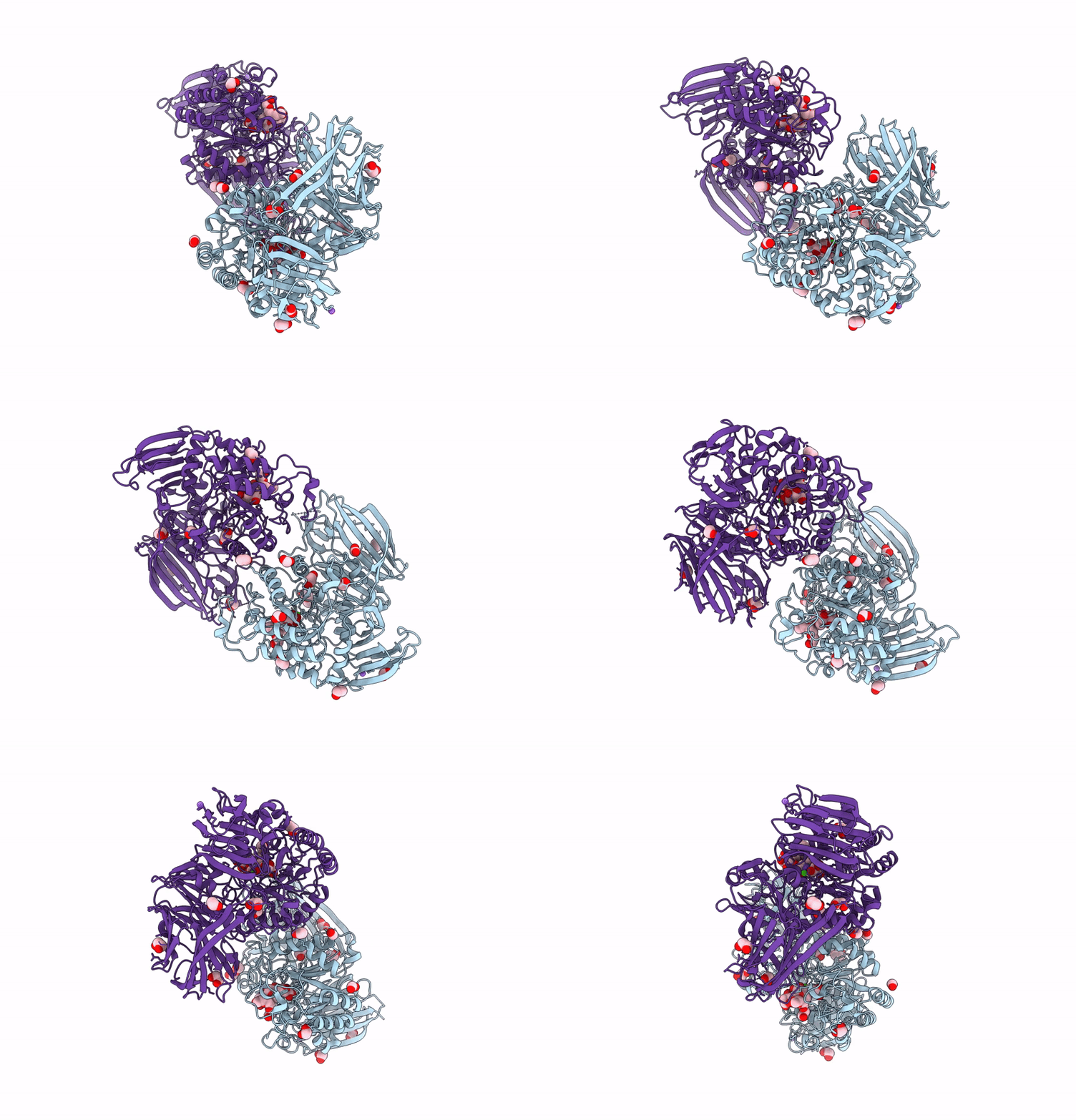
9BS5 image
Deposition Date 2024-05-13
Release Date 2024-10-30
Last Version Date 2025-05-14
Entry Detail
PDB ID:
9BS5
Keywords:
Title:
Bacteroides ovatus GH97C Sus
Biological Source:
Source Organism:
Host Organism:
Method Details:
Experimental Method:
Resolution:
1.46 Å
R-Value Free:
0.22
R-Value Work:
0.20
R-Value Observed:
0.20
Space Group:
P 21 21 21

Macromolecular Entities
Structures with similar UniProt ID
Protein Blast
Polymer Type:polypeptide(L)
Molecule:Alpha-glucosidase
Chain IDs:A, B
Chain Length:724
Number of Molecules:2
Biological Source:Bacteroides ovatus ATCC 8483
Primary Citation
Acarbose impairs gut Bacteroides growth by targeting intracellular glucosidases.
Mbio 15 e0150624 e0150624 (2024)
PMID: 39565129 DOI: 10.1128/mbio.01506-24

Abstact

UNLABELLED Acarbose is a type 2 diabetes medicine that prevents dietary starch breakdown into glucose by inhibiting host amylase and glucosidase enzymes. Numerous gut species in the Bacteroides genus enzymatically break down starch and change in relative abundance within the gut microbiome in acarbose-treated individuals. To mechanistically explain this observation, we used two model starch-degrading Bacteroides, Bacteroides ovatus (Bo), and Bacteroides thetaiotaomicron (Bt). Bt growth on starch polysaccharides is severely impaired by acarbose, whereas Bo growth is much less affected by the drug. The Bacteroides use a starch utilization system (Sus) to grow on starch. We hypothesized that Bo and Bt Sus enzymes are differentially inhibited by acarbose. Instead, we discovered that although acarbose primarily targets the Sus periplasmic GH97 enzymes in both organisms, the drug affects starch processing at multiple other points. Acarbose competes for transport through the TonB-dependent SusC proteins and binds to the Sus transcriptional regulators. Furthermore, Bo expresses a non-Sus GH97 (BoGH97D) when grown in starch with acarbose. The Bt homolog, BtGH97H, is not expressed in the same conditions, nor can overexpression of BoGH97D complement the Bt growth inhibition in the presence of acarbose. This work informs us about unexpected complexities of Sus function and regulation in Bacteroides, including variation between related species. Furthermore, this indicates that the gut microbiome may be a source of variable response to acarbose treatment for diabetes. IMPORTANCE Acarbose is a type 2 diabetes medication that works primarily by stopping starch breakdown into glucose in the small intestine. This is accomplished by the inhibition of host enzymes, leading to better blood sugar control via reduced ability to derive glucose from dietary starches. The drug and undigested starch travel to the large intestine where acarbose interferes with the ability of some bacteria to grow on starch. However, little is known about how gut bacteria interact with acarbose, including microbes that can use starch as a carbon source. Here, we show that two gut species, Bacteroides ovatus (Bo) and Bacteroides thetaiotaomicron (Bt), respond differently to acarbose: Bt growth is inhibited by acarbose, while Bo growth is less affected. We reveal a complex set of mechanisms involving differences in starch import and sensing behind the different Bo and Bt responses. This indicates the gut microbiome may be a source of variable response to acarbose treatment for diabetes via complex mechanisms in common gut microbes.

Legend

Protein

Chemical

Disease

Primary Citation of related structures
Feedback Form
Name
Email
Institute
Feedback