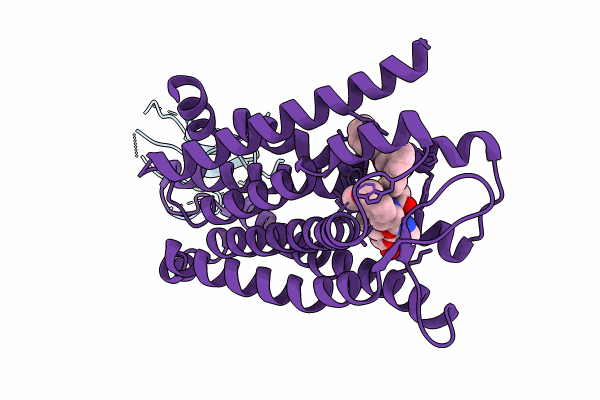
9BJK image
Deposition Date 2024-04-25
Release Date 2024-07-17
Last Version Date 2025-05-21
Entry Detail
PDB ID:
9BJK
Title:
Inactive mu opioid receptor bound to Nb6, naloxone and NAM
Biological Source:
Source Organism:
Lama glama (Taxon ID: 9844)
Mus musculus (Taxon ID: 10090)
Host Organism:
Method Details:
Experimental Method:
Resolution:
3.26 Å
Aggregation State:
PARTICLE
Reconstruction Method:
SINGLE PARTICLE
Macromolecular Entities
Polymer Type:polypeptide(L)
Molecule:kappa opioid receptor Nanobody 6
Chain IDs:A (auth: N)
Chain Length:133
Number of Molecules:1
Biological Source:Lama glama
Structures with similar UniProt ID
Protein Blast
Polymer Type:polypeptide(L)
Molecule:Mu-type opioid receptor
Gene (Uniprot):Oprm1
Chain IDs:B (auth: R)
Chain Length:426
Number of Molecules:1
Biological Source:Mus musculus
Ligand Molecules
Primary Citation

Abstact

The µ-opioid receptor (µOR) is a well-established target for analgesia1, yet conventional opioid receptor agonists cause serious adverse effects, notably addiction and respiratory depression. These factors have contributed to the current opioid overdose epidemic driven by fentanyl2, a highly potent synthetic opioid. µOR negative allosteric modulators (NAMs) may serve as useful tools in preventing opioid overdose deaths, but promising chemical scaffolds remain elusive. Here we screened a large DNA-encoded chemical library against inactive µOR, counter-screening with active, G-protein and agonist-bound receptor to 'steer' hits towards conformationally selective modulators. We discovered a NAM compound with high and selective enrichment to inactive µOR that enhances the affinity of the key opioid overdose reversal molecule, naloxone. The NAM works cooperatively with naloxone to potently block opioid agonist signalling. Using cryogenic electron microscopy, we demonstrate that the NAM accomplishes this effect by binding a site on the extracellular vestibule in direct contact with naloxone while stabilizing a distinct inactive conformation of the extracellular portions of the second and seventh transmembrane helices. The NAM alters orthosteric ligand kinetics in therapeutically desirable ways and works cooperatively with low doses of naloxone to effectively inhibit various morphine-induced and fentanyl-induced behavioural effects in vivo while minimizing withdrawal behaviours. Our results provide detailed structural insights into the mechanism of negative allosteric modulation of the µOR and demonstrate how this can be exploited in vivo.

Legend

Protein

Chemical

Disease

Primary Citation of related structures
Feedback Form
Name
Email
Institute
Feedback