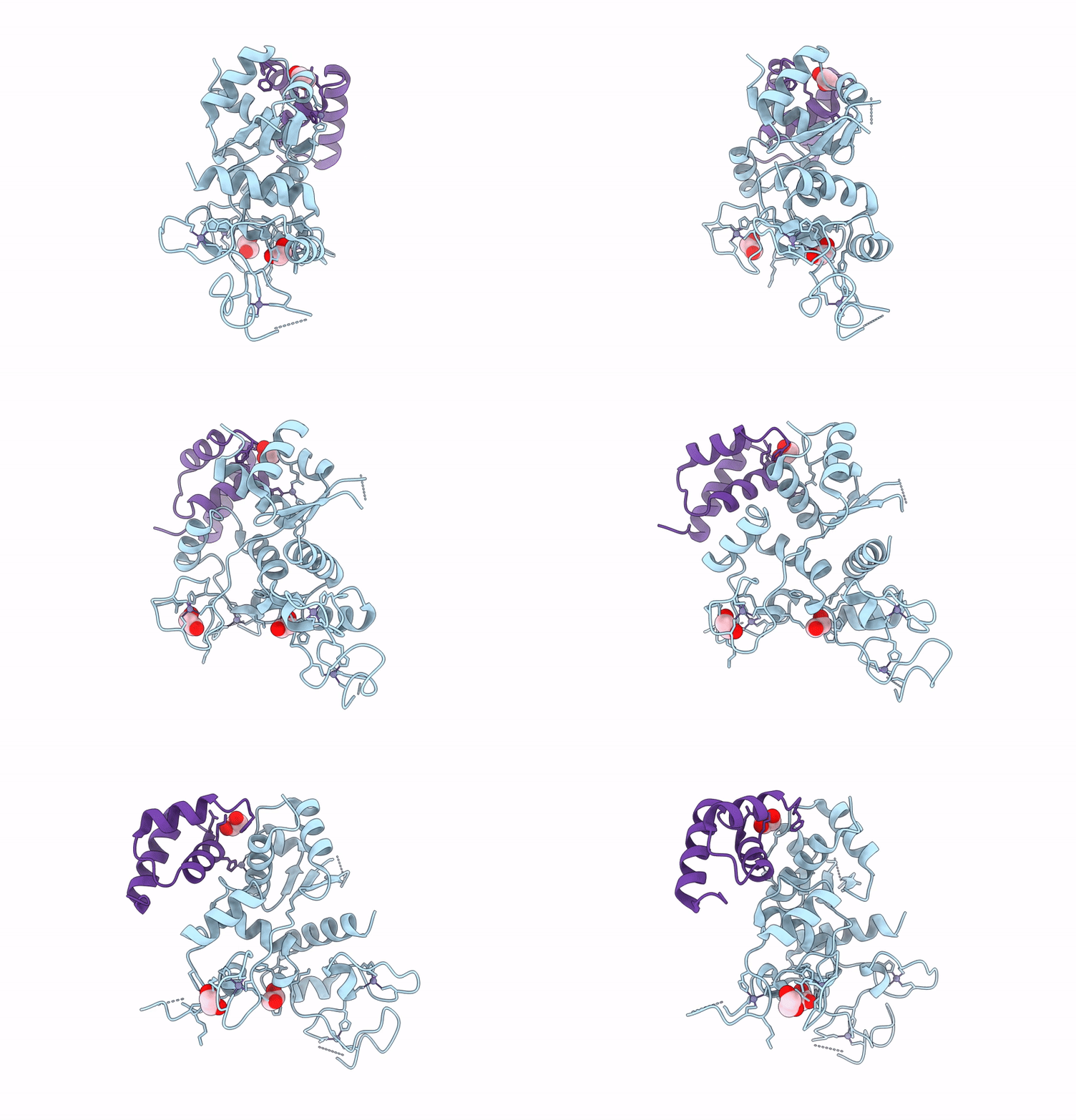
9BGL image
Deposition Date 2024-04-19
Release Date 2025-01-22
Last Version Date 2025-01-22
Entry Detail
PDB ID:
9BGL
Title:
Complex of Zinc Finger Antiviral Protein RBD and KHNYN CTD
Biological Source:
Source Organism:
Homo sapiens (Taxon ID: 9606)
Host Organism:
Method Details:
Experimental Method:
Resolution:
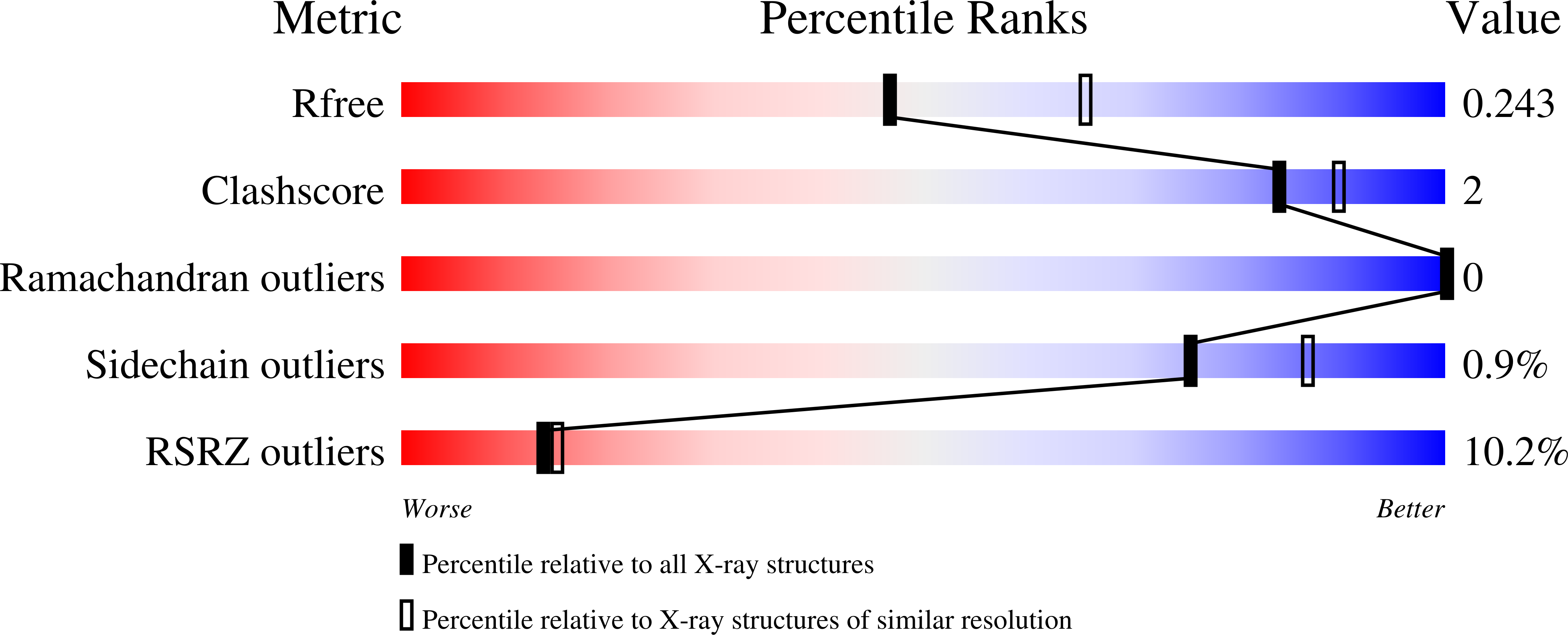
2.29 Å
R-Value Free:
0.24
R-Value Work:
0.20
R-Value Observed:
0.20
Space Group:
P 21 21 21
Macromolecular Entities
Structures with similar UniProt ID
Protein Blast
Polymer Type:polypeptide(L)
Molecule:Zinc finger CCCH-type antiviral protein 1
Gene (Uniprot):ZC3HAV1
Chain IDs:A
Chain Length:229
Number of Molecules:1
Biological Source:Homo sapiens
Structures with similar UniProt ID
Protein Blast
Polymer Type:polypeptide(L)
Molecule:Protein KHNYN
Gene (Uniprot):KHNYN
Chain IDs:B
Chain Length:55
Number of Molecules:1
Biological Source:Homo sapiens
Primary Citation
Functional anatomy of zinc finger antiviral protein complexes.
Nat Commun 15 10834 10834 (2024)
PMID: 39738020 DOI: 10.1038/s41467-024-55192-z

Abstact

ZAP is an antiviral protein that binds to and depletes viral RNA, which is often distinguished from vertebrate host RNA by its elevated CpG content. Two ZAP cofactors, TRIM25 and KHNYN, have activities that are poorly understood. Here, we show that functional interactions between ZAP, TRIM25 and KHNYN involve multiple domains of each protein, and that the ability of TRIM25 to multimerize via its RING domain augments ZAP activity and specificity. We show that KHNYN is an active nuclease that acts in a partly redundant manner with its homolog N4BP1. The ZAP N-terminal RNA binding domain constitutes a minimal core that is essential for antiviral complex activity, and we present a crystal structure of this domain that reveals contacts with the functionally required KHNYN C-terminal domain. These contacts are remote from the ZAP CpG binding site and would not interfere with RNA binding. Based on our dissection of ZAP, TRIM25 and KHNYN functional anatomy, we could design artificial chimeric antiviral proteins that reconstitute the antiviral function of the intact authentic proteins, but in the absence of protein domains that are otherwise required for activity. Together, these results suggest a model for the RNA recognition and action of ZAP-containing antiviral protein complexes.

Legend

Protein

Chemical

Disease

Primary Citation of related structures
Feedback Form
Name
Email
Institute
Feedback