9BD7 image
Deposition Date 2024-04-11
Release Date 2025-09-03
Last Version Date 2025-09-17
Entry Detail
PDB ID:
9BD7
Keywords:
Title:
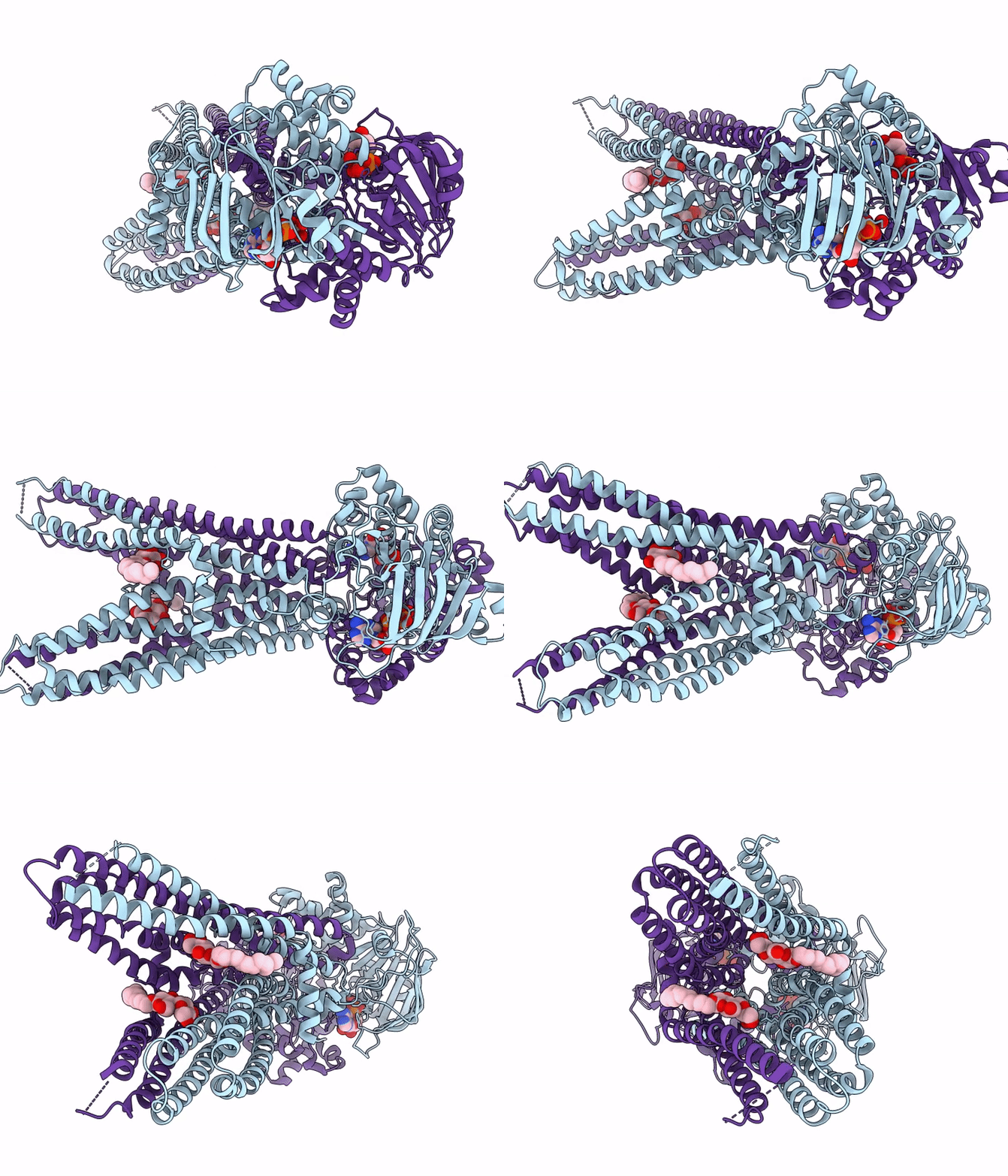
PaMsbA in an open, outward conformation
Biological Source:
Source Organism:
Host Organism:
Method Details:
Experimental Method:
Resolution:
2.44 Å
Aggregation State:
PARTICLE
Reconstruction Method:
SINGLE PARTICLE

Macromolecular Entities
Structures with similar UniProt ID
Protein Blast
Polymer Type:polypeptide(L)
Molecule:ATP-dependent lipid A-core flippase
Gene (Uniprot):msbA
Chain IDs:A (auth: B), B (auth: A)
Chain Length:605
Number of Molecules:2
Biological Source:Pseudomonas aeruginosa
Primary Citation
Molecular Basis for the Activation of Pseudomonas aeruginosa MsbA by Divalent Metals.
J.Am.Chem.Soc. 147 31488 31496 (2025)
PMID: 40851428 DOI: 10.1021/jacs.4c18759

Abstact

Proteins involved in the biogenesis of lipopolysaccharide (LPS), a lipid exclusive to Gram-negative bacteria, are promising candidates for drug discovery. Specifically, the ABC transporter MsbA plays a crucial role in translocating an LPS precursor from the cytoplasmic to the periplasmic facing leaflet of the inner membrane, and small molecules that inhibit its function exhibit bactericidal activity. Here, we use native mass spectrometry (MS) to determine lipid binding affinities of MsbA from P. aeruginosa (PaMsbA), a Gram-negative bacteria associated with hospital-acquired infections, in different conformations. Unlike the transporter from E. coli, we show that the ATPase activity of PaMsbA is stimulated by Zn2+, Ni2+, and Mn2+ and successfully trapping the protein with vanadate requires one of these metal ions. We also present cryogenic-electron microscopy structures of PaMsbA in occluded and open outward-facing conformations determined to resolutions of 2.58 and 2.44 Å, respectively. The structures reveal a triad of histidine residues, and mutation of these residues abolishes Zn2+ binding and stimulation of PaMsbA activity by metal ions. Together, our studies provide insight into the structure of PaMsbA and its lipid binding preferences and reveal that a subset of divalent metals stimulates its ATPase activity.

Legend

Protein

Chemical

Disease

Primary Citation of related structures
Feedback Form
Name
Email
Institute
Feedback