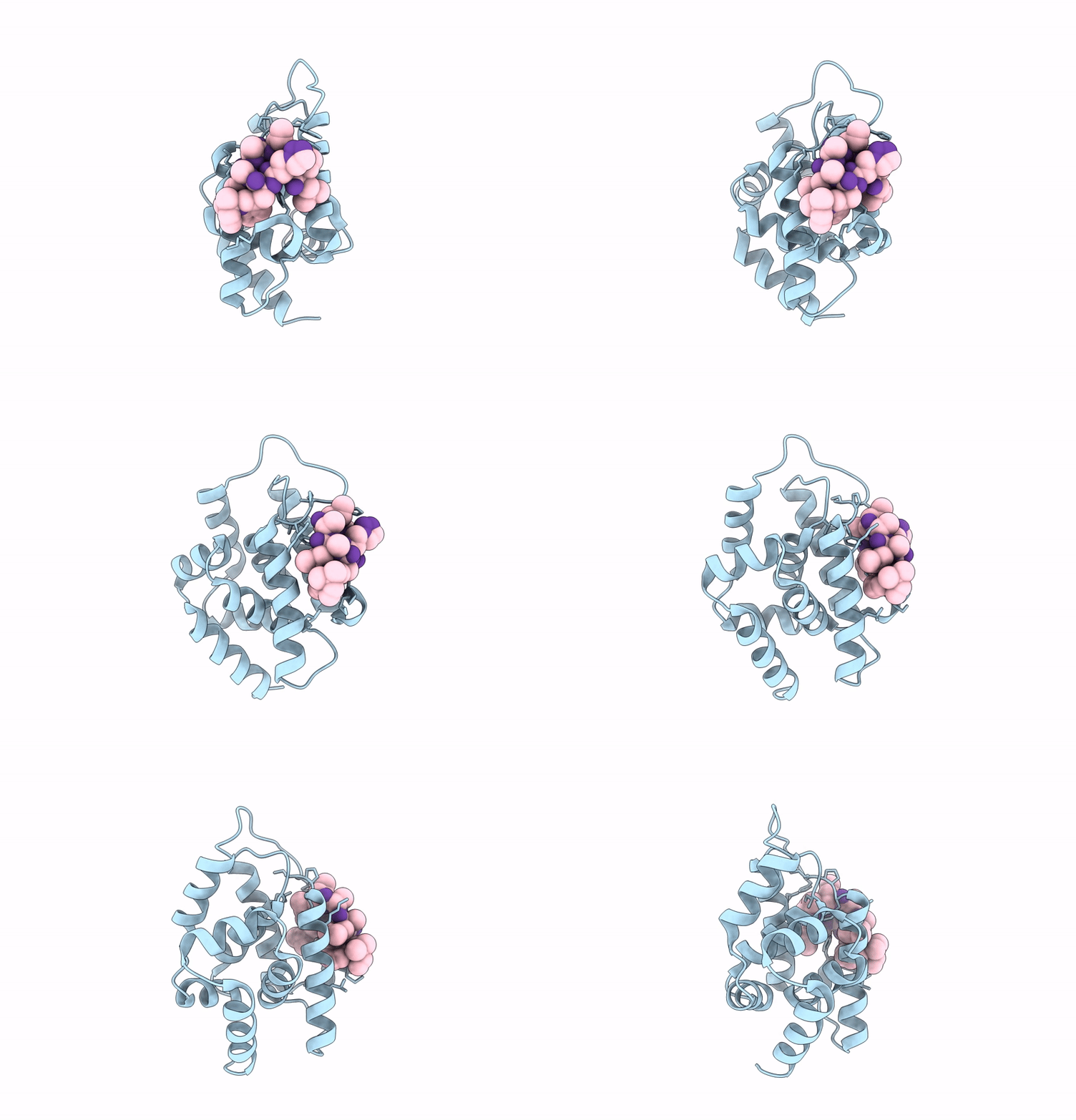
9BBJ image
Deposition Date 2024-04-05
Release Date 2025-12-10
Last Version Date 2026-01-07
Entry Detail
PDB ID:
9BBJ
Keywords:
Title:
M. tuberculosis ClpC1-NTD complexed with a click chemistry analog of Rufomycin
Biological Source:
Source Organism(s):
Expression System(s):
Method Details:
Experimental Method:
Resolution:
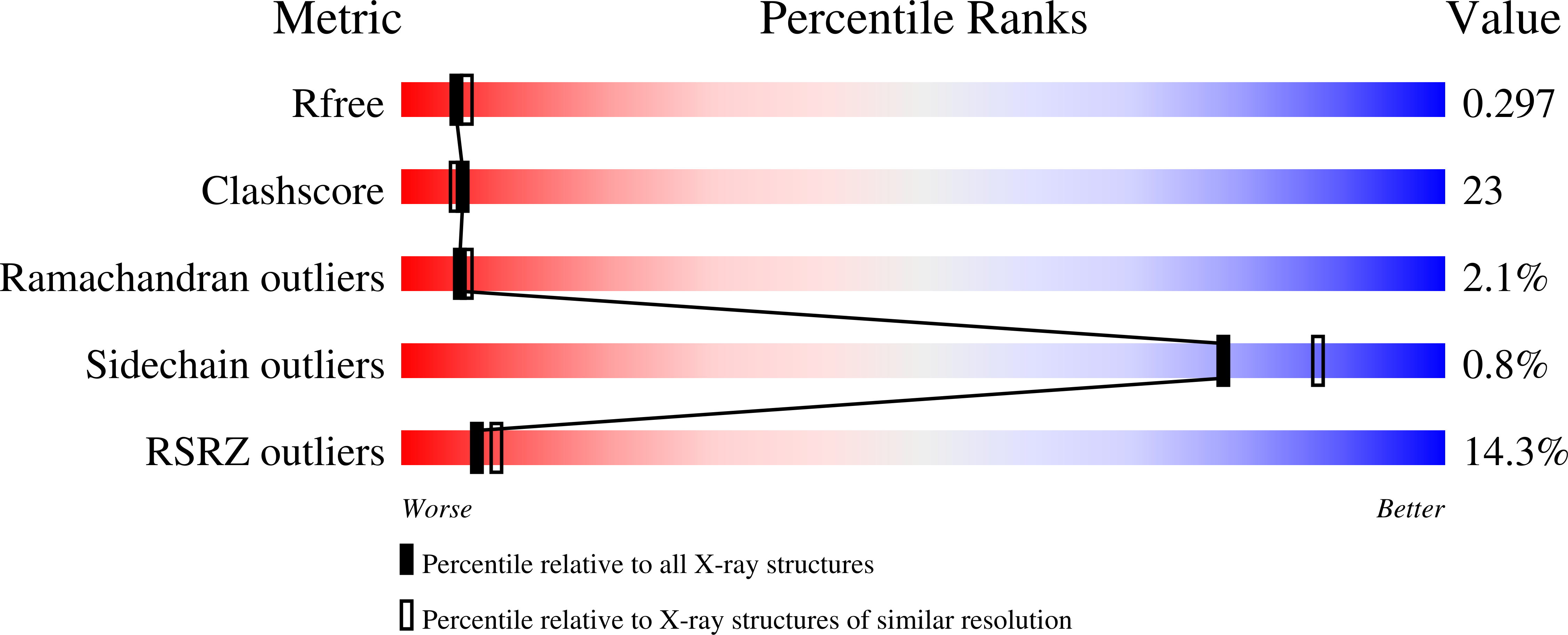
2.56 Å
R-Value Free:
0.29
R-Value Work:
0.25
R-Value Observed:
0.26
Space Group:
P 43 21 2
Macromolecular Entities
Structures with similar UniProt ID
Protein Blast
Polymer Type:polypeptide(L)
Molecule:ATP-dependent Clp protease ATP-binding subunit ClpC1
Gene (Uniprot):clpC1
Chain IDs:A
Chain Length:158
Number of Molecules:1
Biological Source:Mycobacterium tuberculosis
Polymer Type:polypeptide(L)
Molecule:Click chemistry analog of Rufomycin
Chain IDs:B
Chain Length:7
Number of Molecules:1
Biological Source:synthetic construct
Ligand Molecules
Primary Citation
Unique Interactions of Novel Rufomycin "Click Chemistry" Analogs with Mtb ClpC1 and Implications.
J.Med.Chem. 68 26298 26310 (2025)
PMID: 41384615 DOI: 10.1021/acs.jmedchem.5c02416

Abstact

Disrupting protein homeostasis in Mycobacterium tuberculosis (Mtb) by targeting the ClpC1P1P2 proteolytic complex is a promising anti-TB strategy. We synthesized conformationally constrained monomeric and dimeric rufomycin 4/6 (RUF) analogs via click chemistry. While most monomeric analogs were inactive, dimeric analogs displayed potent anti-Mtb activity. Surface plasmon resonance revealed tight, slow-dissociating binding of dimers to the ClpC1 N-terminal domain (ClpC1NTD), indicating prolonged residency time. X-ray crystallography and size exclusion chromatography demonstrated that dimeric analogs induce NTD dimerization, likely shifting the equilibrium toward enzymatically active hexamers rather than inactive decamers. Dimers enhanced ATPase activity over 10-fold, surpassing that of ecumicin (8-fold) and far exceeding RUF (<2-fold). Notably, our dimers bind two NTDs per molecule (1:2), contrasting with RUF (1:1) and ecumicin (2:1), suggesting a distinct activation mechanism. These RUF-based click chemistry dimers represent potent ClpC1 modulators with extended residency and novel stoichiometry, offering promising tools for studying protein degradation.

Legend

Protein

Chemical

Disease

Primary Citation of related structures
Feedback Form
Name
Email
Institute
Feedback