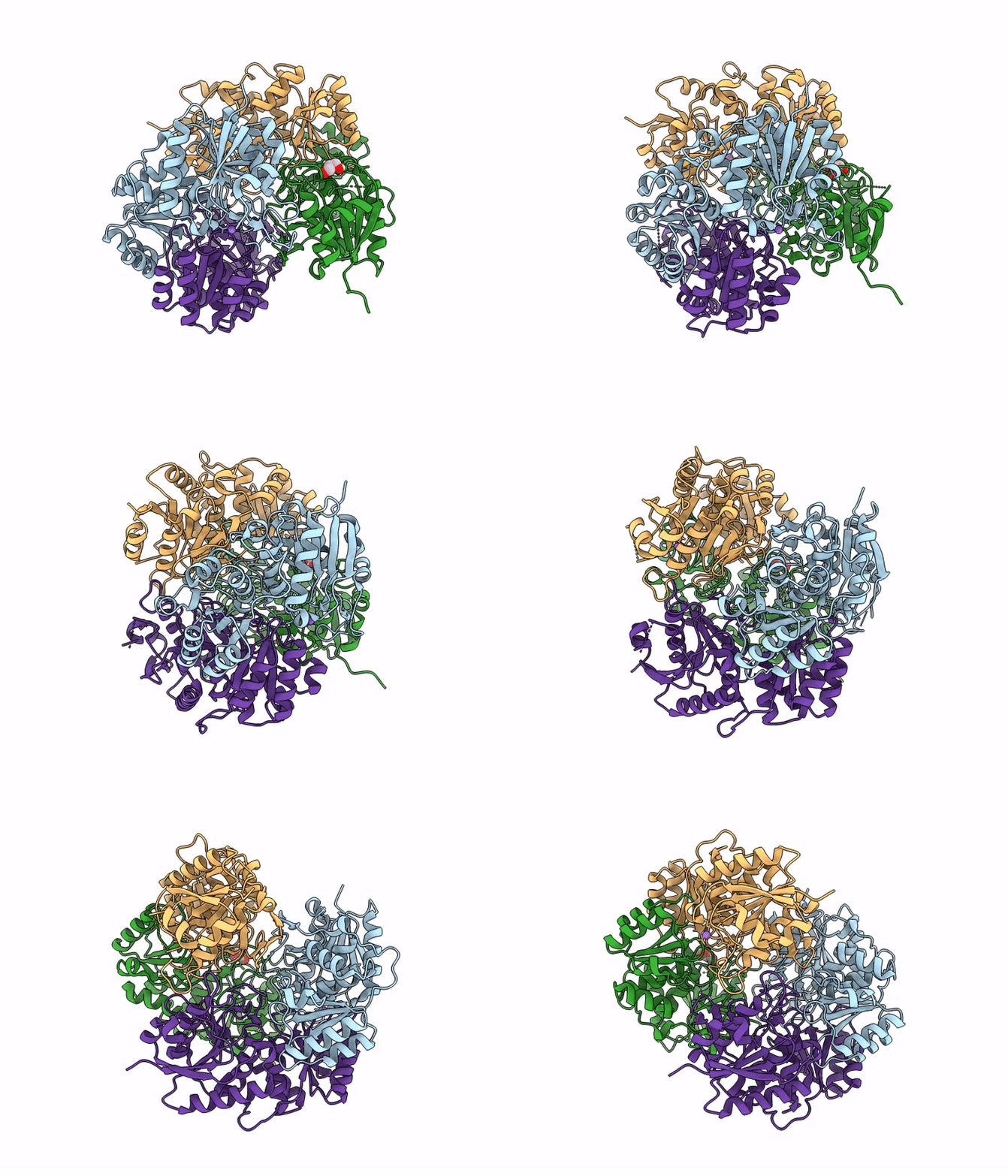
9BAD image
Deposition Date 2024-04-03
Release Date 2025-10-08
Last Version Date 2025-11-26
Entry Detail
PDB ID:
9BAD
Title:
Crystal structure of Bacillus subtilis 168 L-asparaginase II with antileukemic activity
Biological Source:
Method Details:
Experimental Method:
Resolution:
1.30 Å
R-Value Free:
0.16
R-Value Work:
0.13
R-Value Observed:
0.13
Space Group:
P 21 21 21

Macromolecular Entities
Structures with similar UniProt ID
Protein Blast
Polymer Type:polypeptide(L)
Molecule:L-asparaginase 2
Gene (Uniprot):ansZ
Chain IDs:A, B, C, D
Chain Length:375
Number of Molecules:4
Biological Source:Bacillus subtilis subsp. subtilis str. 168
Primary Citation
Structural and biochemical characterization of a thermostable Bacillus subtilis L-asparaginase with antiproliferative effects on hematological cancer cell lines.
Int.J.Biol.Macromol. 333 148804 148804 (2025)
PMID: 41203148 DOI: 10.1016/j.ijbiomac.2025.148804

Abstact

L-asparaginase catalyzes the hydrolysis of L-asparagine into aspartic acid and ammonia and is found in animals, plants, and microorganisms. Microbial sources are preferred for large-scale production due to their efficiency and ease of cultivation. In this study, we produced and characterized a recombinant L-asparaginase from Bacillus subtilis (Asp-Z). Asp-Z was heterologously expressed in Escherichia coli and purified by affinity chromatography, yielding soluble protein with optimal activity at 55 °C and pH 7.5. The kinetic parameters under these conditions were a Km of 0.47 mM and a Vmax of 52.13 U/mg. Asp-Z was specific for L-asparagine, showing no detectable glutaminase activity, and exhibited antiproliferative effects against hematological cancer cell lines, particularly RAJI and JURKAT, with IC₅₀ values in the micromolar range. In silico analysis revealed distinct immunogenic epitopes between Asp-Z and the commercial E. coli L-asparaginase, suggesting divergent antigenic profiles, whereas crystallographic data revealed a conserved tetrameric fold with a highly flexible active-site loop. Together, these findings highlight Asp-Z as a thermostable, glutaminase-free, and poorly immunogenic enzyme that represents a promising scaffold for optimization through protein engineering toward therapeutic and biotechnological applications.

Legend

Protein

Chemical

Disease

Primary Citation of related structures
Feedback Form
Name
Email
Institute
Feedback