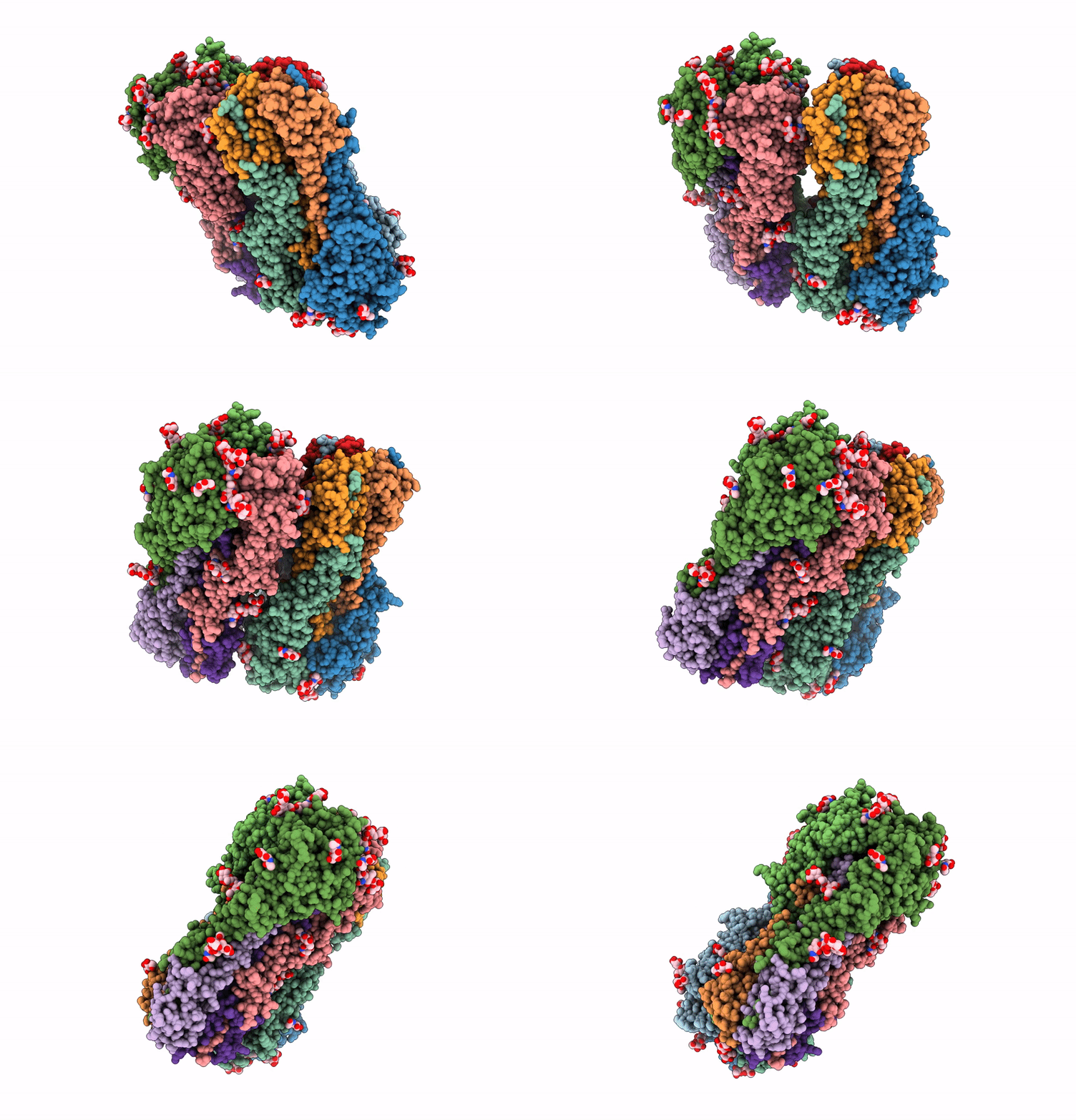
9B7I image
Deposition Date 2024-03-27
Release Date 2025-05-07
Last Version Date 2025-10-08
Entry Detail
PDB ID:
9B7I
Keywords:
Title:
Crystal structure of the H3 hemagglutinin COBRA J4
Biological Source:
Source Organism:
Host Organism:
Method Details:
Experimental Method:
Resolution:
2.90 Å
R-Value Free:
0.28
R-Value Work:
0.22
R-Value Observed:
0.23
Space Group:
P 1
Macromolecular Entities
Structures with similar UniProt ID
Protein Blast
Polymer Type:polypeptide(L)
Molecule:Hemagglutinin HA1
Gene (Uniprot):HA
Chain IDs:A, B, C, D, E, F
Chain Length:323
Number of Molecules:6
Biological Source:Influenza A virus
Structures with similar UniProt ID
Protein Blast
Polymer Type:polypeptide(L)
Molecule:Hemagglutinin HA2
Gene (Uniprot):HA
Chain IDs:G (auth: a), H (auth: b), I (auth: c), J (auth: d), K (auth: e), L (auth: f)
Chain Length:323
Number of Molecules:6
Biological Source:Influenza A virus
Ligand Molecules
Primary Citation
Assessing the structural boundaries of broadly reactive antibody interactions with diverse H3 influenza hemagglutinin proteins.
J.Virol. 99 e0045325 e0045325 (2025)
PMID: 40810533 DOI: 10.1128/jvi.00453-25

Abstact

Influenza virus infections are an ongoing seasonal disease burden and a persistent pandemic threat. Formulating successful vaccines remains a challenge due to accumulating mutations in circulating strains, necessitating the development of innovative strategies to combat present and future viruses. One promising strategy for attaining greater vaccine effectiveness and longer-lasting protection is the use of computationally optimized broadly reactive antigens (COBRAs). The COBRA approach involves in silico antigen design by generating iterative, layered consensus sequences based on current and historic viruses. Antigens designed by this process show a greater breadth of antibody-mediated protection compared to wild-type antigens, with effectiveness that often extends beyond the sequence design space of the COBRA. In particular, the use of COBRA hemagglutinin (HA) proteins has led to the discovery of broadly reactive antibodies that are suggestive of their therapeutic potential. Understanding the extent to which these antibodies are effective is key to assessing the resilience of vaccine-induced immunity to diverging influenza strains. To investigate this, we tested the binding of broadly reactive antibodies with a diverse panel of H3 HA proteins. Using cryo-electron microscopy, we defined the molecular characteristics of binding for these antibodies at the paratope-epitope interface. Through sequence and structural comparisons, we observed the correlative patterns between antibody affinity and antigen structure. These data shed light on the breadth and limitations of broadly reactive antibody responses in the context of an ever-changing landscape of influenza virus strains, yielding insights into strategies for universal vaccine design.IMPORTANCEFormulating effective influenza vaccines remains a challenge due to a constantly changing landscape of circulating viruses. This is particularly true for H3N2 viruses that undergo a high degree of antigenic drift. Several new vaccine designs can elicit broadly neutralizing antibodies that are effective against a range of influenza strains. More insight is needed, however, into how resilient these antibodies will be to future strains that evolve in the context of this selective pressure. Here, we measured the precise binding characteristics of three broadly neutralizing antibodies to 18 different hemagglutinin (HA) proteins representing almost 50 years of virus evolution. Using single-particle cryo-electron microscopy and X-ray crystallography, we determined the structural characteristics of the epitopes bound by these antibodies and identified specific amino acids that greatly impact the effectiveness of these antibodies. This provides important insights into the longevity of antibody efficacy that can help guide design choices in next-generation vaccines.

Legend

Protein

Chemical

Disease

Primary Citation of related structures
Feedback Form
Name
Email
Institute
Feedback