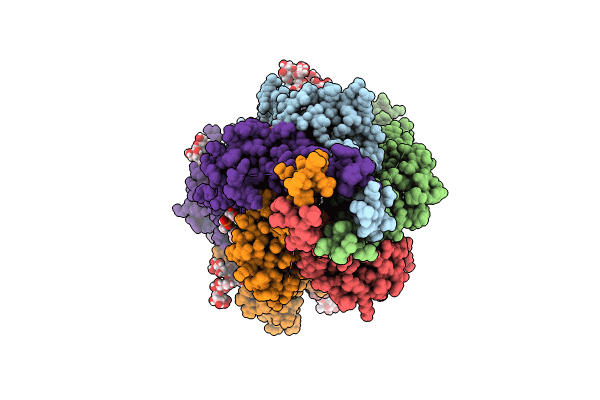
9AWJ image
Deposition Date 2024-03-05
Release Date 2024-07-31
Last Version Date 2025-05-21
Entry Detail
PDB ID:
9AWJ
Title:
Bovine adult muscle nAChR bound to ACh
Biological Source:
Source Organism:
Bos taurus (Taxon ID: 9913)
Method Details:
Experimental Method:
Resolution:
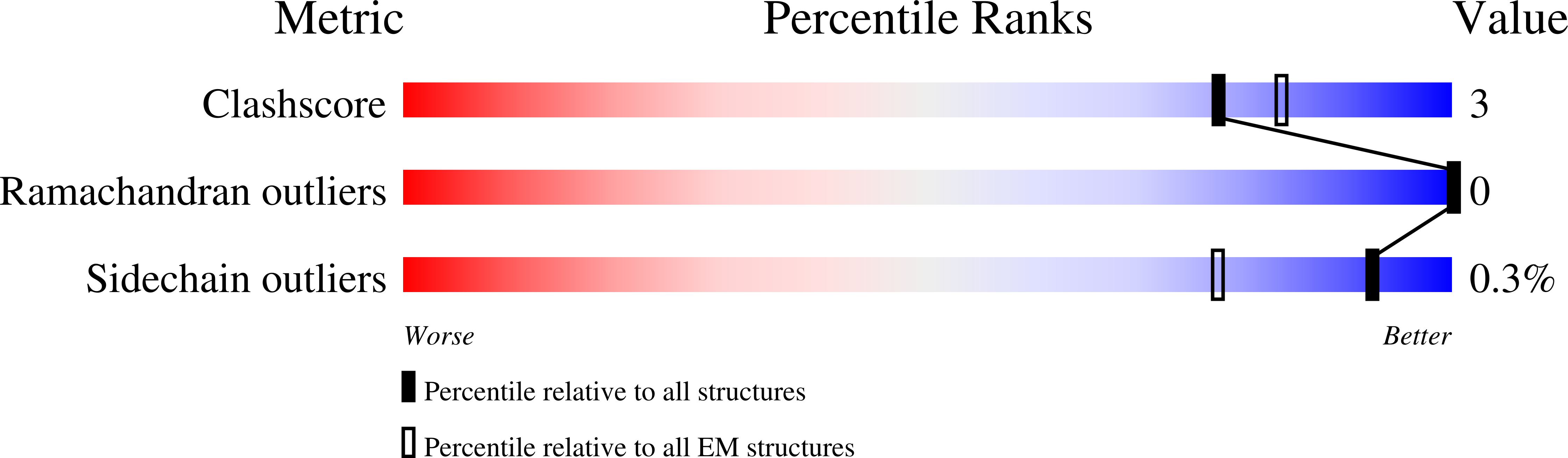
2.45 Å
Aggregation State:
PARTICLE
Reconstruction Method:
SINGLE PARTICLE
Macromolecular Entities
Structures with similar UniProt ID
Protein Blast
Polymer Type:polypeptide(L)
Molecule:Acetylcholine receptor subunit alpha
Gene (Uniprot):CHRNA1
Chain IDs:A, C
Chain Length:437
Number of Molecules:2
Biological Source:Bos taurus
Structures with similar UniProt ID
Protein Blast
Polymer Type:polypeptide(L)
Molecule:Acetylcholine receptor subunit epsilon
Gene (Uniprot):CHRNE
Chain IDs:E (auth: B)
Chain Length:471
Number of Molecules:1
Biological Source:Bos taurus
Structures with similar UniProt ID
Protein Blast
Polymer Type:polypeptide(L)
Molecule:Acetylcholine receptor subunit delta
Gene (Uniprot):CHRND
Chain IDs:D
Chain Length:495
Number of Molecules:1
Biological Source:Bos taurus
Structures with similar UniProt ID
Protein Blast
Polymer Type:polypeptide(L)
Molecule:Acetylcholine receptor subunit beta
Gene (Uniprot):CHRNB1
Chain IDs:B (auth: E)
Chain Length:481
Number of Molecules:1
Biological Source:Bos taurus
Primary Citation
Structural switch in acetylcholine receptors in developing muscle.
Nature 632 1174 1180 (2024)
PMID: 39085615 DOI: 10.1038/s41586-024-07774-6

Abstact

During development, motor neurons originating in the brainstem and spinal cord form elaborate synapses with skeletal muscle fibres1. These neurons release acetylcholine (ACh), which binds to nicotinic ACh receptors (AChRs) on the muscle, initiating contraction. Two types of AChR are present in developing muscle cells, and their differential expression serves as a hallmark of neuromuscular synapse maturation2-4. The structural principles underlying the switch from fetal to adult muscle receptors are unknown. Here, we present high-resolution structures of both fetal and adult muscle nicotinic AChRs, isolated from bovine skeletal muscle in developmental transition. These structures, obtained in the absence and presence of ACh, provide a structural context for understanding how fetal versus adult receptor isoforms are tuned for synapse development versus the all-or-none signalling required for high-fidelity skeletal muscle contraction. We find that ACh affinity differences are driven by binding site access, channel conductance is tuned by widespread surface electrostatics and open duration changes result from intrasubunit interactions and structural flexibility. The structures further reveal pathogenic mechanisms underlying congenital myasthenic syndromes.

Legend

Protein

Chemical

Disease

Primary Citation of related structures
Feedback Form
Name
Email
Institute
Feedback