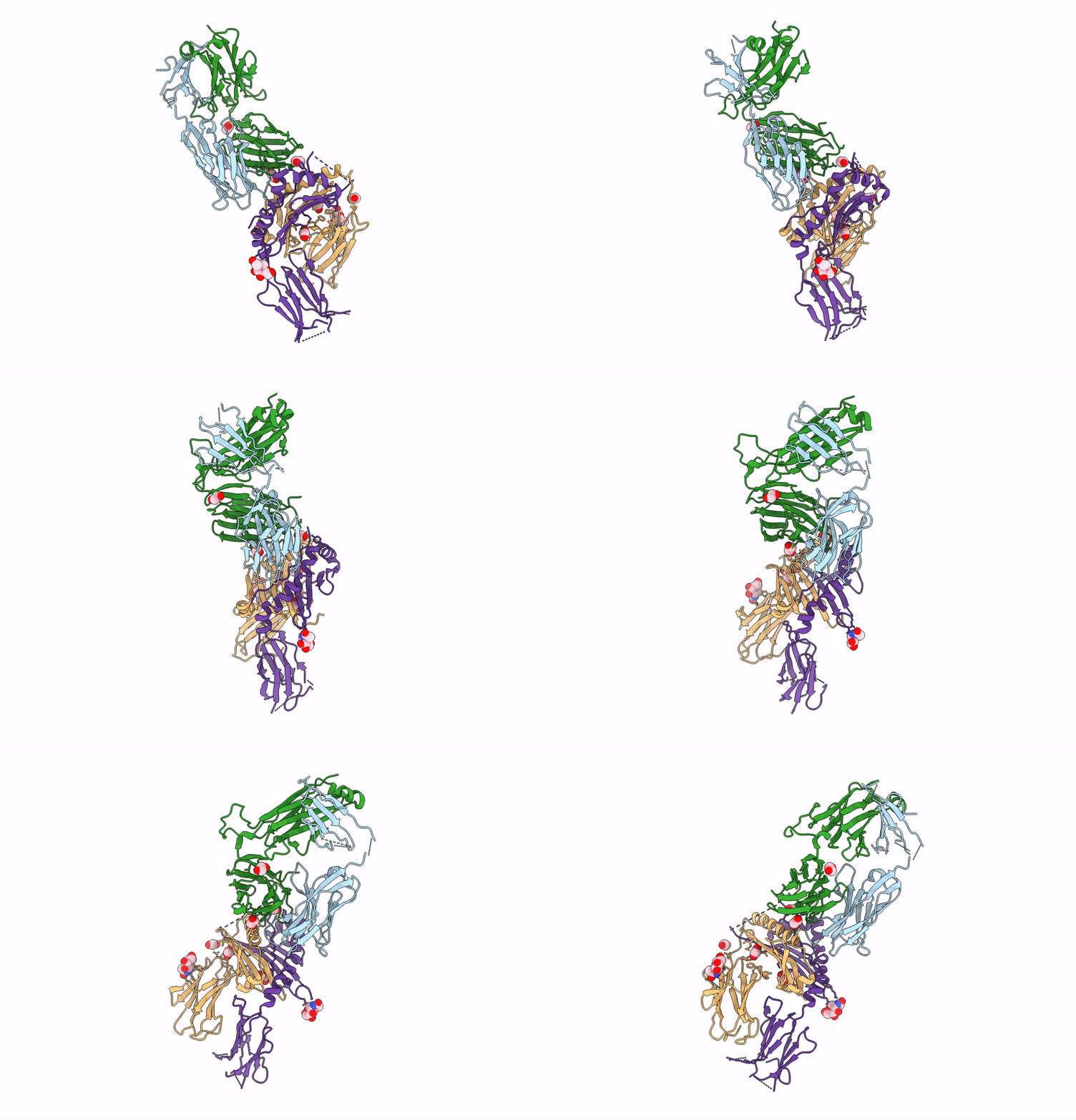
9AUD image
Deposition Date 2024-02-29
Release Date 2025-02-05
Last Version Date 2025-08-13
Entry Detail
PDB ID:
9AUD
Keywords:
Title:
Immune receptor complex
Biological Source:
Source Organism:
Host Organism:
Method Details:
Experimental Method:
Resolution:
2.90 Å
R-Value Free:
0.21
R-Value Work:
0.18
R-Value Observed:
0.18
Space Group:
H 3
Macromolecular Entities
Polymer Type:polypeptide(L)
Molecule:NPLCK1-2_TCR TRAV6-5 alpha chain
Chain IDs:C (auth: A)
Chain Length:210
Number of Molecules:1
Biological Source:Mus musculus
Polymer Type:polypeptide(L)
Molecule:NPLCK1-2 TCR TRBV1 Beta chain
Chain IDs:D (auth: B)
Chain Length:242
Number of Molecules:1
Biological Source:Mus musculus
Structures with similar UniProt ID
Protein Blast
Polymer Type:polypeptide(L)
Molecule:H-2 class II histocompatibility antigen, A-B alpha chain
Gene (Uniprot):H2-Aa
Chain IDs:A (auth: C)
Chain Length:188
Number of Molecules:1
Biological Source:Mus musculus
Protein Blast
Polymer Type:polypeptide(L)
Molecule:Nucleoprotein,H-2 class II histocompatibility antigen, A beta chain
Gene (Uniprot):NP, H2-Ab1
Chain IDs:B (auth: D)
Chain Length:228
Number of Molecules:1
Biological Source:Influenza A virus H3N2, Mus musculus
Primary Citation
LCK-co-receptor association ensures T cell lineage fidelity and maximizes epitope-specific TCR diversity.
Sci Immunol 10 eadp5016 eadp5016 (2025)
PMID: 39982976 DOI: 10.1126/sciimmunol.adp5016

Abstact

The interaction between the CD4/CD8 co-receptors and LCK (an Src family tyrosine kinase) is thought to augment T cell activation upon recognition of peptide-loaded major histocompatibility complexes (pMHCs). How this interaction influences antigen-specific T cell development is unclear however, as is its impact on naïve and immune antigen-specific T cell repertoires. In mice expressing mutated endogenous LCK unable to bind co-receptors (LCKFREE mice), we show that influenza A virus (IAV)-derived pMHC-specific CD8 and CD4 T cell responses had a significantly narrowed T cell receptor (TCR) repertoire, favoring high-affinity TCRs. This narrowing was established during T cell development and was exacerbated after viral infection. The dissociation of LCK from co-receptors also resulted in the redirection of CD4-fated T cells to the CD8 lineage, with expanded pMHCII-specific cytotoxic CD8 T cells observed after IAV infection. Thus, LCK-co-receptor association is critical for ensuring T cell lineage fidelity and maximizing antigen-specific T cell repertoire diversity.

Legend

Protein

Chemical

Disease

Primary Citation of related structures
Feedback Form
Name
Email
Institute
Feedback