8ZWQ image
Deposition Date 2024-06-13
Release Date 2025-06-18
Last Version Date 2025-12-31
Entry Detail
PDB ID:
8ZWQ
Keywords:
Title:
pseudorabies virus dUTPase structure
Biological Source:
Source Organism(s):
Method Details:
Experimental Method:
Resolution:
2.23 Å
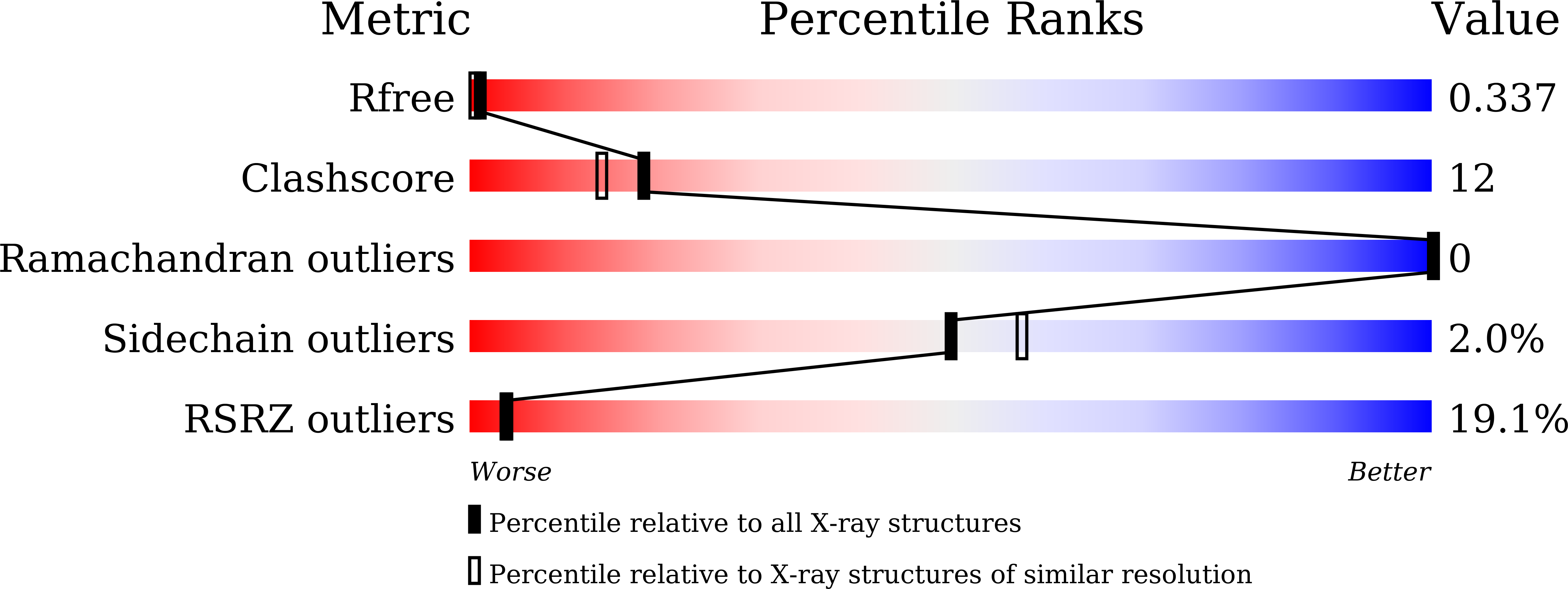
R-Value Free:
0.33
R-Value Work:
0.27
R-Value Observed:
0.28
Space Group:
C 1 2 1
Macromolecular Entities
Structures with similar UniProt ID
Protein Blast
Polymer Type:polypeptide(L)
Molecule:dUTPase
Gene (Uniprot):UL50
Chain IDs:A, B (auth: C), C (auth: B), D
Chain Length:276
Number of Molecules:4
Biological Source:Suid alphaherpesvirus 1
Primary Citation
Structural definition of pseudorabies virus dUTPase reveals a novel folding dimer in the herpesvirus family.
Int.J.Biol.Macromol. 280 135696 135696 (2024)
PMID: 39284464 DOI: 10.1016/j.ijbiomac.2024.135696

Abstact

The pseudorabies virus (PRV) causes severe and fatal acute respiratory disease in pigs. During PRV proliferation, the enzyme deoxyuridine 5'-triphosphate nucleotide hydrolase (dUTPase) plays a pivotal role in maintaining a low dUTP/dTTP ratio, thereby ensuring the accuracy of viral DNA replication. However, its structure and catalytic mechanisms have not been fully elucidated. Here, we report the crystal structure of PRV dUTPase at a 2.24 Å resolution and demonstrate an unprecedented dimeric architecture, with a conserved enzyme activity center of the herpesvirus family. The enzyme activity center is located in a cavity between the two domains, forming a pocket for binding substrate dUMP and magnesium ions. Remarkably, the exquisite interface of the dimer is primarily composed of four antiparallel β-sheets, which form 11 hydrogen bonds between the residues P33-V36 and R242-A248 to maintain protein stability. To the best of our knowledge, this is the first report demonstrating that dUTPase exists as a dimer in the herpesvirus family. These findings not only present a novel fold dimeric structure but also deepen the scope of our comprehension of structural diversity in dUTPase family.

Legend

Protein

Chemical

Disease

Primary Citation of related structures
Feedback Form
Name
Email
Institute
Feedback