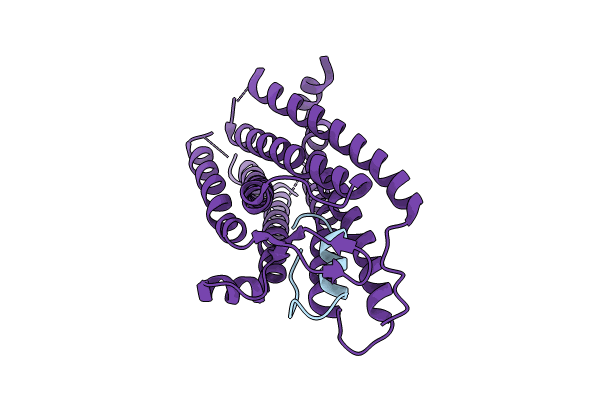
8ZRT image
Deposition Date 2024-06-05
Release Date 2024-10-02
Last Version Date 2025-06-25
Entry Detail
PDB ID:
8ZRT
Title:
Cryo-EM structure focused on the receptor of the ET-1 bound ETBR-DNGI complex
Biological Source:
Source Organism:
Homo sapiens (Taxon ID: 9606)
Host Organism:
Method Details:
Experimental Method:
Resolution:
3.62 Å
Aggregation State:
PARTICLE
Reconstruction Method:
SINGLE PARTICLE

Macromolecular Entities
Structures with similar UniProt ID
Protein Blast
Polymer Type:polypeptide(L)
Molecule:Endothelin-1
Gene (Uniprot):EDN1
Chain IDs:B (auth: L)
Chain Length:21
Number of Molecules:1
Biological Source:Homo sapiens
Structures with similar UniProt ID
Protein Blast
Polymer Type:polypeptide(L)
Molecule:Endothelin receptor type B
Gene (Uniprot):EDNRB
Chain IDs:A (auth: R)
Chain Length:346
Number of Molecules:1
Biological Source:Homo sapiens
Ligand Molecules
Primary Citation
Structure of endothelin ET B receptor-G i complex in a conformation stabilized by unique NPxxL motif.
Commun Biol 7 1303 1303 (2024)
PMID: 39414992 DOI: 10.1038/s42003-024-06905-z

Abstact

Endothelin type B receptor (ETBR) plays a crucial role in regulating blood pressure and humoral homeostasis, making it an important therapeutic target for related diseases. ETBR activation by the endogenous peptide hormones endothelin (ET)-1-3 stimulates several signaling pathways, including Gs, Gi/o, Gq/11, G12/13, and β-arrestin. Although the conserved NPxxY motif in transmembrane helix 7 (TM7) is important during GPCR activation, ETBR possesses the lesser known NPxxL motif. In this study, we present the cryo-EM structure of the ETBR-Gi complex, complemented by MD simulations and functional studies. These investigations reveal an unusual movement of TM7 to the intracellular side during ETBR activation and the essential roles of the diverse NPxxL motif in stabilizing the active conformation of ETBR and organizing the assembly of the binding pocket for the α5 helix of Gi protein. These findings enhance our understanding of the interactions between GPCRs and G proteins, thereby advancing the development of therapeutic strategies.

Legend

Protein

Chemical

Disease

Primary Citation of related structures
Feedback Form
Name
Email
Institute
Feedback