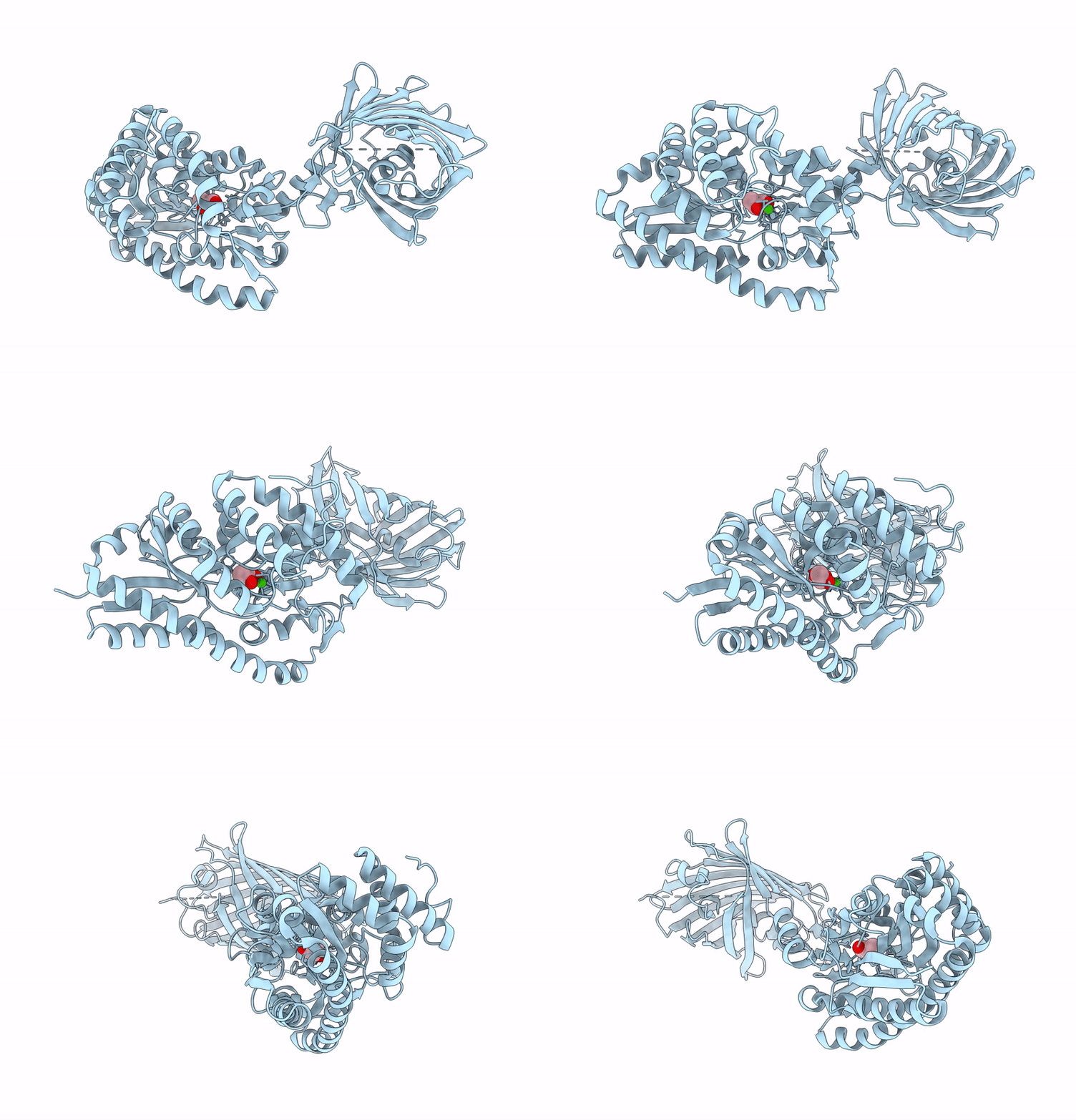
8ZMZ image
Deposition Date 2024-05-24
Release Date 2025-10-29
Last Version Date 2025-11-12
Entry Detail
PDB ID:
8ZMZ
Title:
Cryo-EM structure of R-eLACCO2 in the lactate-bound state
Biological Source:
Source Organism:
Host Organism:
Method Details:
Experimental Method:
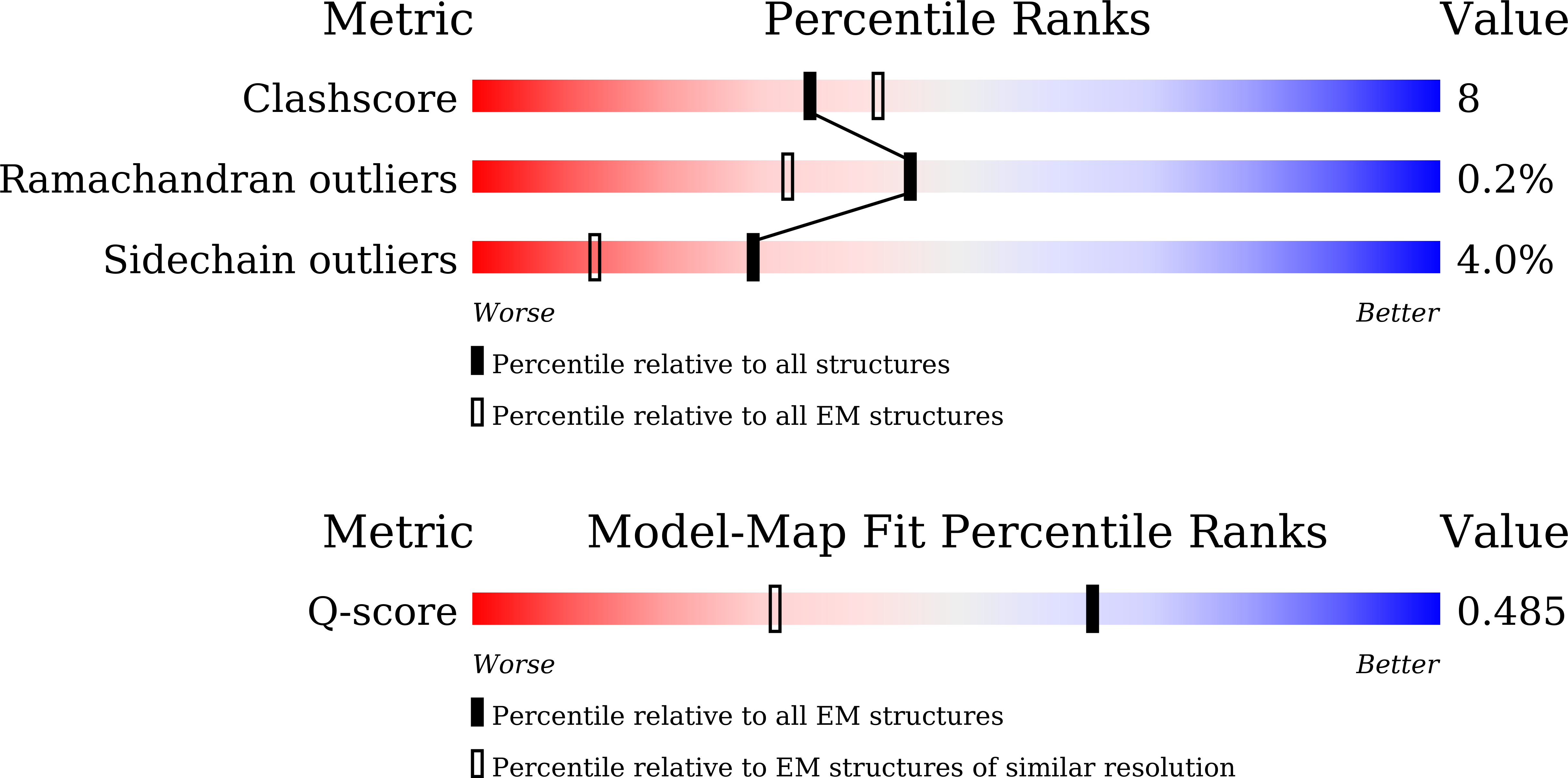
Resolution:
2.70 Å
Aggregation State:
PARTICLE
Reconstruction Method:
SINGLE PARTICLE
Macromolecular Entities
Protein Blast
Polymer Type:polypeptide(L)
Molecule:Lactate-binding periplasmic protein TTHA0766,Red fluorescent protein drFP583
Gene (Uniprot):TTHA0766
Mutagens:mutant type
Chain IDs:A
Chain Length:622
Number of Molecules:1
Biological Source:Thermus thermophilus HB8, Discosoma sp.
Modified Residue
Compound ID Chain ID Parent Comp ID Details 2D Image
NRQ A GLN chromophore
Primary Citation
A red fluorescent genetically encoded biosensor for in vivo imaging of extracellular L-lactate dynamics.
Nat Commun 16 9531 9531 (2025)
PMID: 41162396 DOI: 10.1038/s41467-025-64484-x

Abstact

L-Lactate is increasingly recognized as an intercellular energy currency in mammals, but mysteries remain regarding the spatial and temporal dynamics of its release and uptake between cells via the extracellular environment. Here we introduce R-eLACCO2.1, a red fluorescent extracellular L-lactate biosensor that is superior to previously reported green fluorescent biosensors in in vivo sensitivity to increases in extracellular L-lactate and spectral orthogonality. R-eLACCO2.1 exhibits excellent fluorescence response in cultured cells, mouse brain slices, and live mice. R-eLACCO2.1 also serves as an effective fluorescence lifetime-based biosensor. Using R-eLACCO2.1, we monitor whisker stimulation and locomotion-induced changes in endogenous extracellular L-lactate in the somatosensory cortex of awake mice. To highlight the potential insights gained from in vivo measurements with R-eLACCO2.1, we perform dual-color imaging from the somatosensory cortex of actively locomoting mice. This enables us to simultaneously observe the neural activity, reported by a green fluorescent GCaMP calcium ion biosensor, and extracellular L-lactate. As the high-performance tool in the suite of extracellular L-lactate biosensors, R-eLACCO2.1 is ideally suited to delimit the emerging roles of L-lactate in mammalian metabolism.

Legend

Protein

Chemical

Disease

Primary Citation of related structures
Feedback Form
Name
Email
Institute
Feedback