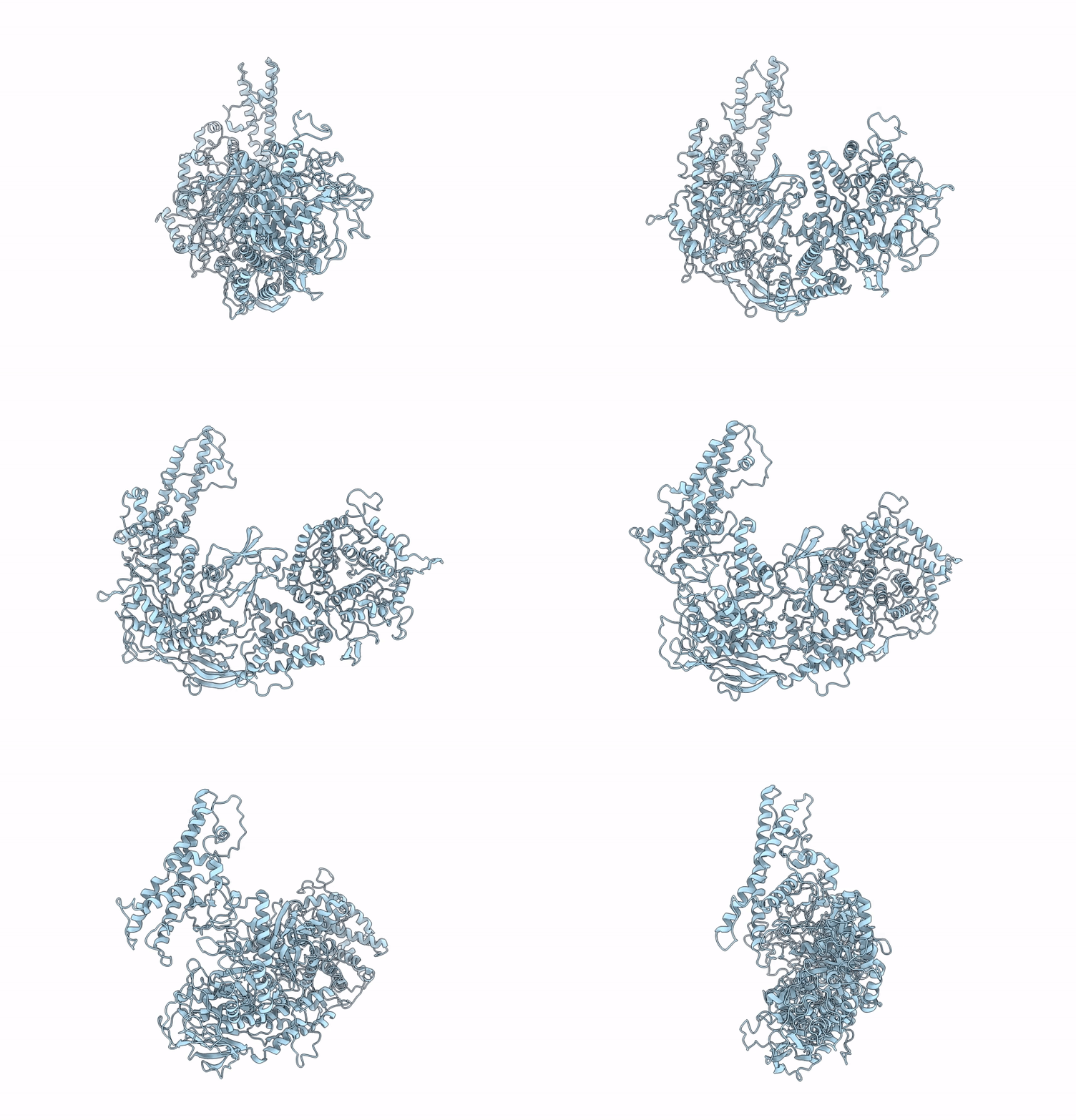
8ZEQ image
Deposition Date 2024-05-06
Release Date 2025-05-14
Last Version Date 2025-12-03
Entry Detail
PDB ID:
8ZEQ
Title:
Molecular Architecture of Human Glycogen Debranching Enzyme: Insights into Glycogen Storage Disease III Pathogenesis
Biological Source:
Source Organism:
Homo sapiens (Taxon ID: 9606)
Host Organism:
Method Details:
Experimental Method:
Resolution:
3.36 Å
Aggregation State:
PARTICLE
Reconstruction Method:
SINGLE PARTICLE

Macromolecular Entities
Structures with similar UniProt ID
Protein Blast
Polymer Type:polypeptide(L)
Molecule:Glycogen debranching enzyme
Gene (Uniprot):AGL
Chain IDs:A
Chain Length:1532
Number of Molecules:1
Biological Source:Homo sapiens
Ligand Molecules
Primary Citation
Molecular architecture and catalytic mechanism of human glycogen debranching enzyme.
Nat Commun 16 5962 5962 (2025)
PMID: 40593796 DOI: 10.1038/s41467-025-61077-6

Abstact

Glycogen, a key branched glucose polymer, acts as a vital energy reservoir in mammalian cells, particularly during intense activity or fasting. The glycogen debranching enzyme (GDE) plays a key role in glycogen degradation by removing branches, ensuring efficient glucose release. Dysfunction of GDE leads to the accumulation of limit dextrin and is implicated in the pathogenesis of Glycogen Storage Disease Type III (GSD III). We present the cryo-EM structure of human GDE (hsGDE) at 3.23 Å resolution, providing molecular insights into its substrate selectivity and catalytic mechanism. Our study further investigates the molecular consequences of disease-associated mutations by correlating structural data with enzymatic activities of representative GSD III-causing variants. We discover that these mutations induce GSD III through diverse mechanisms, including significant reductions in enzymatic activity, and disruptions to the glycogen-bound region and overall structural integrity. The elucidation of these pathways not only advances our understanding of hsGDE's role in substrate recognition and catalysis but also illuminates the molecular pathology of GSD III. Our findings pave the way for the development of targeted therapeutic strategies for this disease.

Legend

Protein

Chemical

Disease

Primary Citation of related structures
Feedback Form
Name
Email
Institute
Feedback