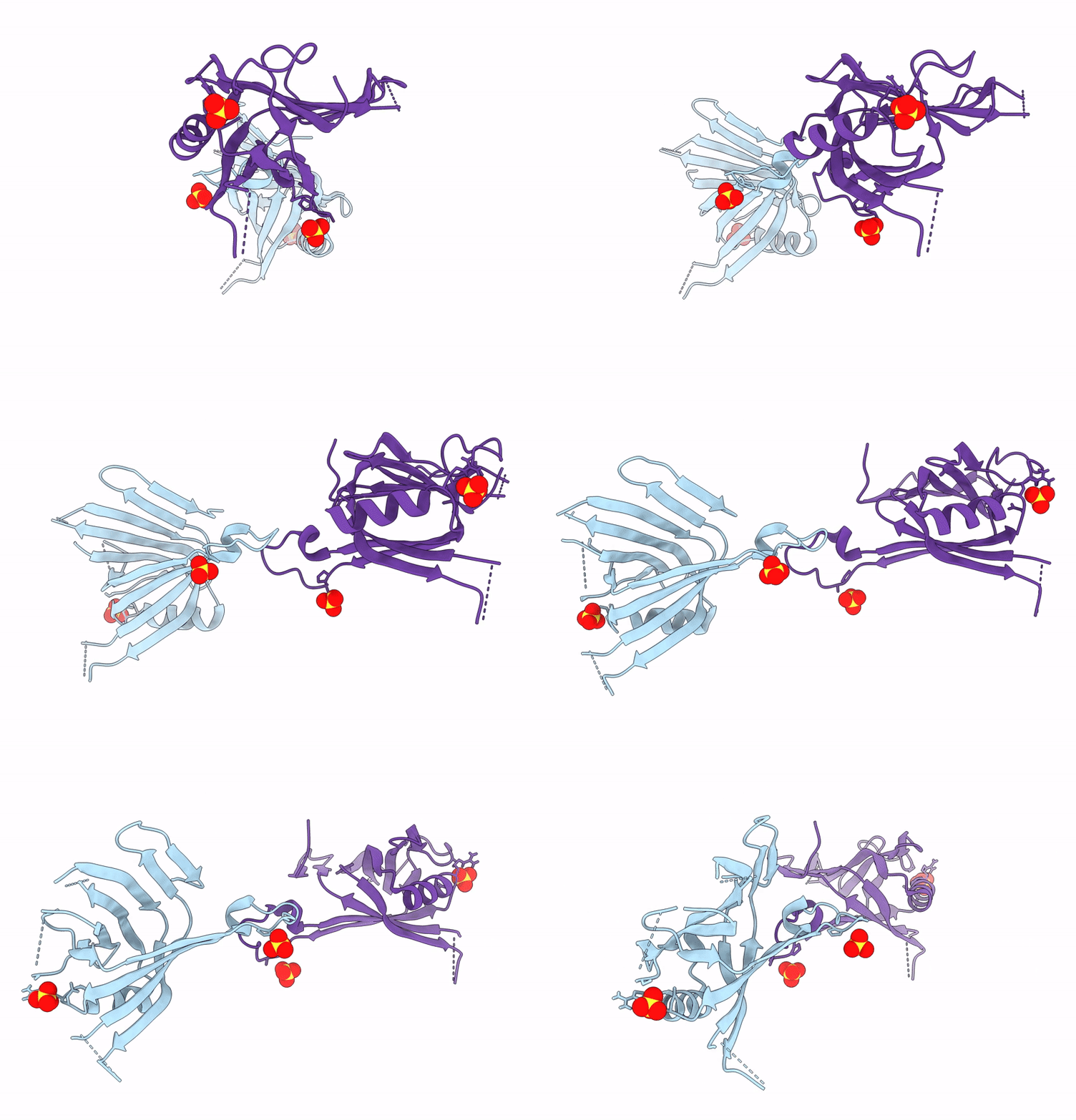
8Z7K image
Deposition Date 2024-04-20
Release Date 2024-12-25
Last Version Date 2025-01-22
Entry Detail
PDB ID:
8Z7K
Title:
Crystal structure of Hemolysin co-regulated protein 1 (Hcp1) VariantB from Burkholderia pseudomallei
Biological Source:
Source Organism:
Method Details:
Experimental Method:
Resolution:
1.58 Å
R-Value Free:
0.24
R-Value Work:
0.22
Space Group:
P 6

Macromolecular Entities
Structures with similar UniProt ID
Protein Blast
Polymer Type:polypeptide(L)
Molecule:Hcp family type VI secretion system effector
Mutagens:Q14T, H90Y, R91S, T94A, T96K, T96_T97insE, T167K
Chain IDs:A, B
Chain Length:178
Number of Molecules:2
Biological Source:Burkholderia pseudomallei
Ligand Molecules
Primary Citation
Genetic variation of hemolysin co-regulated protein 1 affects the immunogenicity and pathogenicity of Burkholderia pseudomallei.
Plos Negl Trop Dis 19 e0012758 e0012758 (2025)
PMID: 39761280 DOI: 10.1371/journal.pntd.0012758

Abstact

Hemolysin co-regulated protein 1 (Hcp1) is a component of the cluster 1 Type VI secretion system (T6SS1) that plays a key role during the intracellular lifecycle of Burkholderia pseudomallei. Hcp1 is recognized as a promising target antigen for developing melioidosis diagnostics and vaccines. While the gene encoding Hcp1 is retained across B. pseudomallei strains, variants of hcp1 have recently been identified. This study aimed to examine the prevalence of hcp1 variants in clinical isolates of B. pseudomallei, assess the antigenicity of the Hcp1 variants, and the ability of strains expressing these variants to stimulate multinucleated giant cell (MNGC) formation in comparison to strains expressing wild-type Hcp1 (Hcp1wt). Sequence analysis of 1,283 primary clinical isolates of B. pseudomallei demonstrated the presence of 8 hcp1 alleles encoding three types of Hcp1 proteins, including Hcp1wt (98.05%), Hcp1variant A (1.87%) and Hcp1variant B (0.08%). Compared to strains expressing Hcp1wt, those expressing the dominant variant, Hcp1variant A, stimulated lower levels of Hcp1variant A-specific antibody responses in melioidosis patients. Interestingly, when Hcp1variant A was expressed in B. pseudomallei K96243, this strain retained the ability to stimulate MNGC formation in A549 cells. In contrast, however, similar experiments with the Hcp1variant B demonstrated a decreased ability of B. pseudomallei to stimulate MNGC formation. Collectively, these results show that B. pseudomallei strains expressing variants of Hcp1 elicit variable antibody responses in melioidosis patients and differ in their ability to promote MNGC formation in cell culture.

Legend

Protein

Chemical

Disease

Primary Citation of related structures
Feedback Form
Name
Email
Institute
Feedback