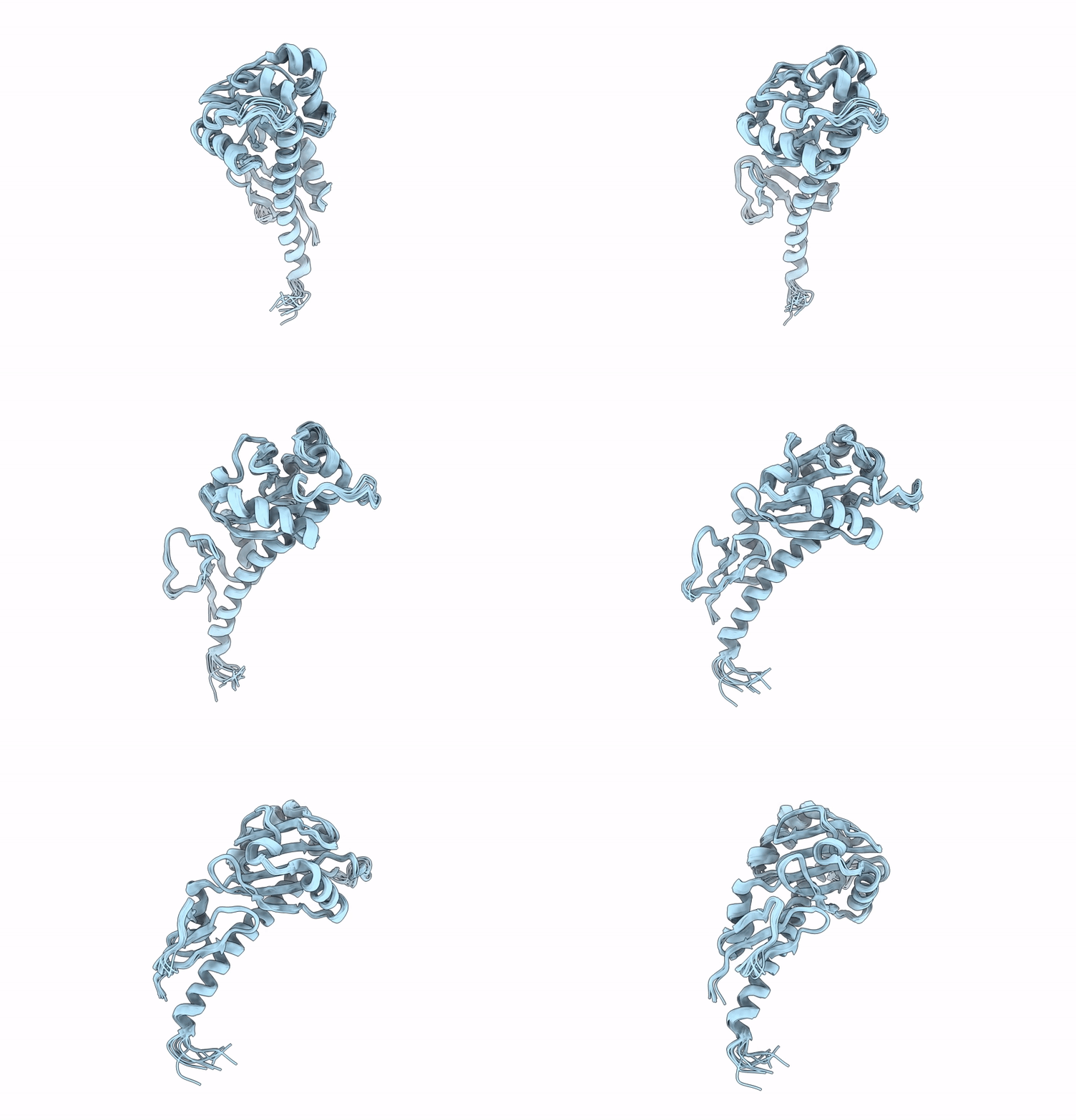
8Z5K image
Deposition Date 2024-04-18
Release Date 2025-04-23
Last Version Date 2025-11-12
Entry Detail
PDB ID:
8Z5K
Keywords:
Title:
Solution structure of PA2072 CHASE4 monomer.
Biological Source:
Source Organism:
Method Details:
Experimental Method:
Conformers Calculated:
100
Conformers Submitted:
10
Selection Criteria:
structures with the lowest energy

Macromolecular Entities
Structures with similar UniProt ID
Protein Blast
Polymer Type:polypeptide(L)
Molecule:Bifunctional diguanylate cyclase/phosphodiesterase
Gene (Uniprot):PA2072
Chain IDs:A
Chain Length:208
Number of Molecules:1
Biological Source:Pseudomonas aeruginosa PAO1
Ligand Molecules
Primary Citation
eATP sensing by the purinergic receptor PA2072 for allosteric modulation in intracellular c-di-GMP signaling.
Proc.Natl.Acad.Sci.USA 122 e2423664122 e2423664122 (2025)
PMID: 41187079 DOI: 10.1073/pnas.2423664122

Abstact

Extracellular ATP (eATP) has emerged as a crucial signaling molecule across eukaryotic and prokaryotic domains, modulating diverse cellular functions by activating purinergic receptors to initiate intracellular signaling cascades. However, the structural and molecular mechanisms underlying eATP sensing and signaling by prokaryotic receptors remain largely unknown. Here, we demonstrate that the receptor PA2072 in Pseudomonas aeruginosa is responsible for recognizing eATP to down-regulate intracellular cyclic di-GMP levels. The periplasmic CHASE4 domain of PA2072 specifically binds and hydrolyzes eATP, exhibiting ATPase activity both in the presence and absence of a divalent cation cofactor. Structural elucidation of the PA2072 CHASE4 domain in its monomeric and complex states unveils an exquisite molecular switch governed by the oligomeric state. ATP hydrolysis by the catalytically active monomeric form is coupled to homodimerization, concomitantly deactivating its ATPase activity and initiating intracellular phosphodiesterase activity. These findings open avenues for understanding interkingdom eATP signaling and developing targeted therapeutic interventions.

Legend

Protein

Chemical

Disease

Primary Citation of related structures
Feedback Form
Name
Email
Institute
Feedback