8Z2Z image
Deposition Date 2024-04-14
Release Date 2025-04-16
Last Version Date 2025-11-12
Entry Detail
PDB ID:
8Z2Z
Keywords:
Title:
PRMT1-Tetramer
Biological Source:
Source Organism:
Homo sapiens (Taxon ID: 9606)
Method Details:
Experimental Method:
Resolution:
3.25 Å
Aggregation State:
PARTICLE
Reconstruction Method:
SINGLE PARTICLE
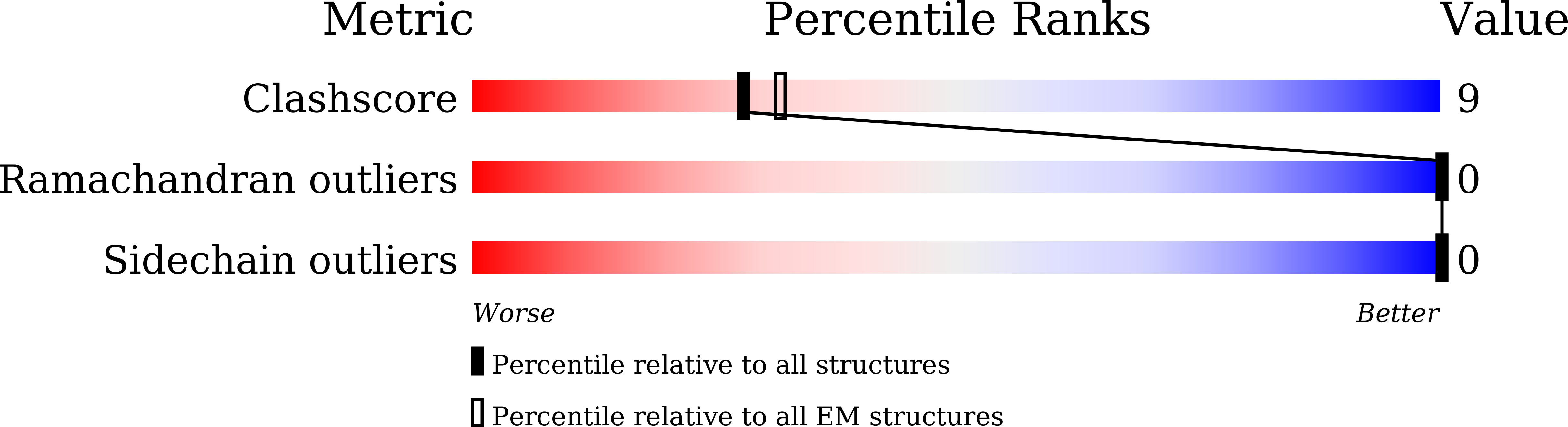
Macromolecular Entities
Structures with similar UniProt ID
Protein Blast
Polymer Type:polypeptide(L)
Molecule:Protein arginine N-methyltransferase 1
Gene (Uniprot):PRMT1
Chain IDs:A, B, C, D
Chain Length:330
Number of Molecules:4
Biological Source:Homo sapiens
Ligand Molecules
Primary Citation
Oligomerization of protein arginine methyltransferase 1 and its functional impact on substrate arginine methylation.
J.Biol.Chem. 300 107947 107947 (2024)
PMID: 39491649 DOI: 10.1016/j.jbc.2024.107947

Abstact

Protein arginine methyltransferases (PRMTs) are important posttranslational modifying enzymes in eukaryotic proteins and regulate diverse pathways from gene transcription, RNA splicing, and signal transduction to metabolism. Increasing evidence supports that PRMTs exhibit the capacity to form higher-order oligomeric structures, but the structural basis of PRMT oligomerization and its functional consequence are elusive. Herein, we revealed for the first time different oligomeric structural forms of the predominant arginine methyltransferase PRMT1 using cryo-EM, which included tetramer (dimer of dimers), hexamer (trimer of dimers), octamer (tetramer of dimers), decamer (pentamer of dimers), and also helical filaments. Through a host of biochemical assays, we showed that PRMT1 methyltransferase activity was substantially enhanced as a result of the high-ordered oligomerization. High-ordered oligomerization increased the catalytic turnover and the multimethylation processivity of PRMT1. Presence of a catalytically dead PRMT1 mutant also enhanced the activity of WT PRMT1, pointing out a noncatalytic role of oligomerization. Structural modeling demonstrates that oligomerization enhances substrate retention at the PRMT1 surface through electrostatic force. Our studies offered key insights into PRMT1 oligomerization and established that oligomerization constitutes a novel molecular mechanism that positively regulates the enzymatic activity of PRMTs in biology.

Legend

Protein

Chemical

Disease

Primary Citation of related structures
Feedback Form
Name
Email
Institute
Feedback