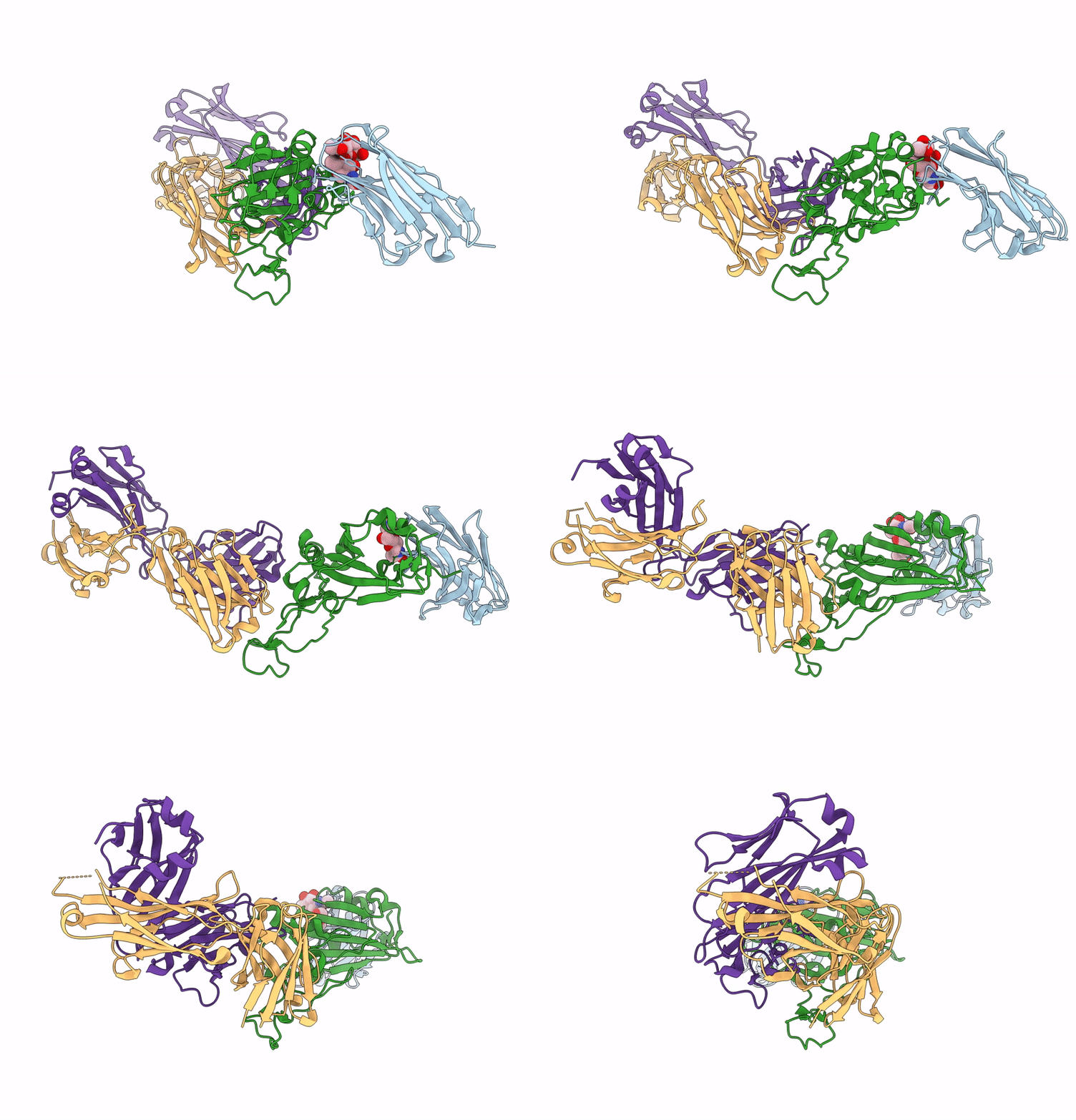
8Z2E image
Deposition Date 2024-04-12
Release Date 2025-04-23
Last Version Date 2025-11-05
Entry Detail
PDB ID:
8Z2E
Title:
Crystal structure of nanobody Tnb04-1 with antibody 1F11 fab and SARS-CoV-2 RBD
Biological Source:
Source Organism(s):
Expression System(s):
Method Details:
Experimental Method:
Resolution:
2.30 Å
R-Value Free:
0.23
R-Value Work:
0.19
R-Value Observed:
0.19
Space Group:
P 21 21 21

Macromolecular Entities
Polymer Type:polypeptide(L)
Molecule:Tnb04-1
Chain IDs:A (auth: B)
Chain Length:116
Number of Molecules:1
Biological Source:Vicugna pacos
Structures with similar UniProt ID
Protein Blast
Polymer Type:polypeptide(L)
Molecule:Spike protein S1
Gene (Uniprot):S
Chain IDs:B (auth: E)
Chain Length:217
Number of Molecules:1
Biological Source:Severe acute respiratory syndrome coronavirus 2
Polymer Type:polypeptide(L)
Molecule:1F11-H
Chain IDs:C (auth: H)
Chain Length:217
Number of Molecules:1
Biological Source:Homo sapiens
Polymer Type:polypeptide(L)
Molecule:1F11-L
Chain IDs:D (auth: L)
Chain Length:214
Number of Molecules:1
Biological Source:Homo sapiens
Primary Citation
Super broad and protective nanobodies against Sarbecoviruses including SARS-CoV-1 and the divergent SARS-CoV-2 subvariant KP.3.1.1.
Plos Pathog. 20 e1012625 e1012625 (2024)
PMID: 39527594 DOI: 10.1371/journal.ppat.1012625

Abstact

The ongoing evolution and immune escape of SARS-CoV-2, alongside the potential threat of SARS-CoV-1 and other sarbecoviruses, underscore the urgent need for effective strategies against their infection and transmission. This study highlights the discovery of nanobodies from immunized alpacas, which demonstrate exceptionally broad and potent neutralizing capabilities against the recently emerged and more divergent SARS-CoV-2 Omicron subvariants including JD.1.1, JN.1, KP.3, KP.3.1.1, as well as SARS-CoV-1 and coronaviruses from bats and pangolins utilizing receptor ACE2. Among these, Tnb04-1 emerges as the most broad and potent, binding to a conserved hydrophobic pocket in the spike's receptor-binding domain, distinct from the ACE2 binding site. This interaction disrupts the formation of a proteinase K-resistant core, crucial for viral-cell fusion. Notably, intranasal administration of Tnb04-1 in Syrian hamsters effectively prevented respiratory infection and transmission of the authentic Omicron XBB.1.5 subvariant. Thus, Thb04-1 holds promise in combating respiratory acquisition and transmission of diverse sarbecoviruses.

Legend

Protein

Chemical

Disease

Primary Citation of related structures
Feedback Form
Name
Email
Institute
Feedback