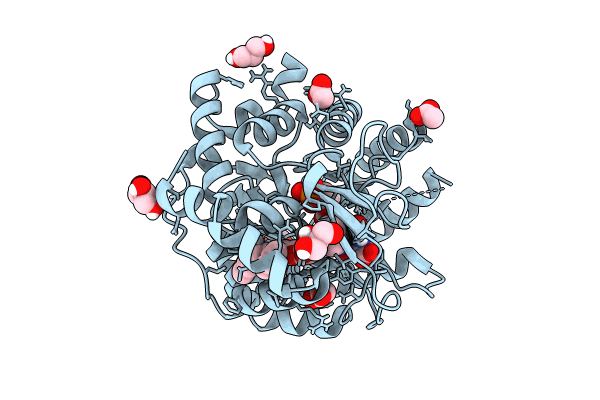
8YHR image
Deposition Date 2024-02-28
Release Date 2024-05-22
Last Version Date 2024-06-05
Entry Detail
PDB ID:
8YHR
Keywords:
Title:
DHODH in complex with furocoumavirin
Biological Source:
Source Organism:
Homo sapiens (Taxon ID: 9606)
Host Organism:
Method Details:
Experimental Method:
Resolution:
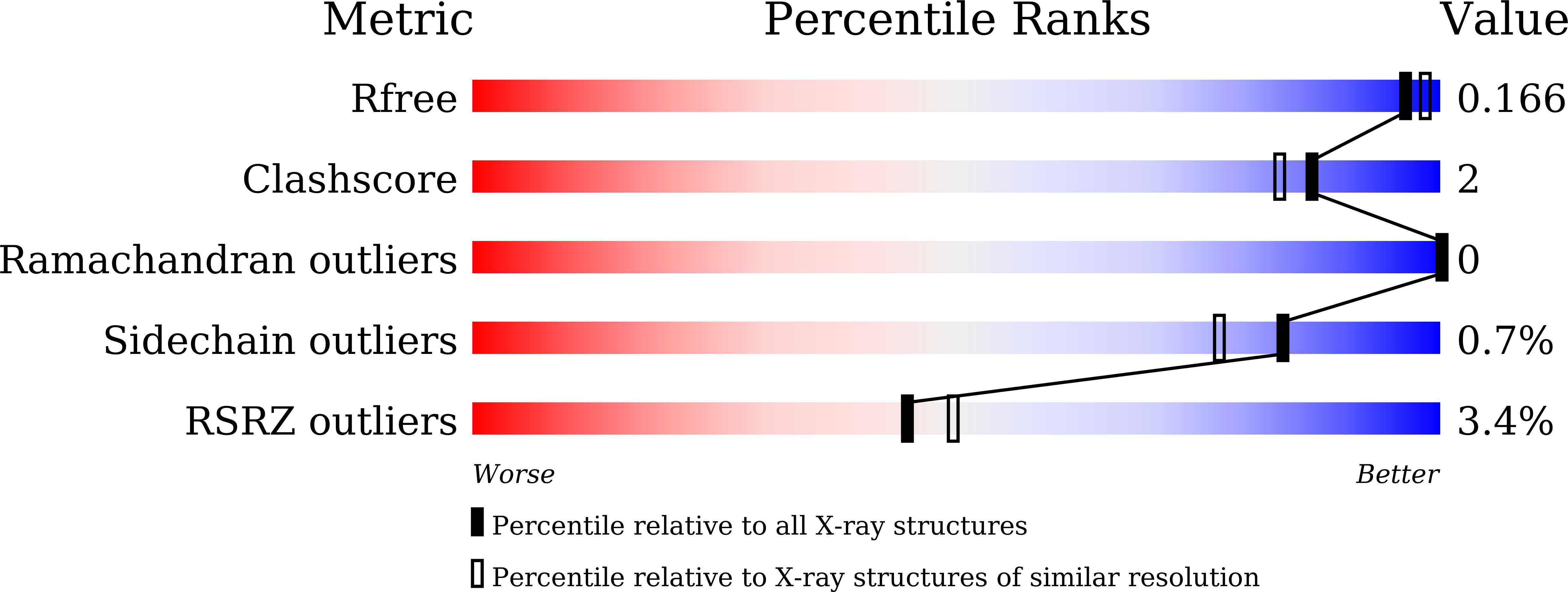
1.70 Å
R-Value Free:
0.16
R-Value Work:
0.14
R-Value Observed:
0.14
Space Group:
P 32 2 1
Macromolecular Entities
Structures with similar UniProt ID
Protein Blast
Polymer Type:polypeptide(L)
Molecule:Dihydroorotate dehydrogenase (quinone), mitochondrial
Gene (Uniprot):DHODH
Chain IDs:A
Chain Length:387
Number of Molecules:1
Biological Source:Homo sapiens
Primary Citation
Structural and Functional Analyses of Inhibition of Human Dihydroorotate Dehydrogenase by Antiviral Furocoumavirin.
Biochemistry 63 1241 1245 (2024)
PMID: 38724483 DOI: 10.1021/acs.biochem.4c00120

Abstact

Natural products are important sources of seed compounds for drug discovery. However, it has become difficult in recent years to discover new compounds with valuable pharmacological activities. On the other hand, among the vast number of natural products that have been isolated so far, a considerable number of compounds with specific biological activities are thought to be overlooked in screening that uses biological activity as an index. Therefore, it is conceivable that such overlooked useful compounds may be found by screening compound libraries that have been amassed previously through specific assays. Previously, NPD723, a member of the Natural Products Depository library comprised of a mixture of natural and non-natural products developed at RIKEN, and its metabolite H-006 were found to inhibit growth of various cancer cells at low nanomolar half-maximal inhibitory concentration. Subsequent analysis revealed that H-006 strongly inhibited human dihydroorotate dehydrogenase (DHODH), the rate-limiting enzyme in the de novo pyrimidine biosynthetic pathway. Here, we elucidated the crystal structure of the DHODH-flavin mononucleotide-orotic acid-H-006 complex at 1.7 Å resolution to determine that furocoumavirin, the S-enantiomer of H-006, was the actual inhibitor. The overall mode of interaction of furocoumavirin with the inhibitor binding pocket was similar to that described for previously reported tight-binding inhibitors. However, the structural information together with kinetic characterizations of site-specific mutants identified key unique features that are considered to contribute to the sub-nanomolar inhibition of DHODH by furocoumavirin. Our finding identified new chemical features that could improve the design of human DHODH inhibitors.

Legend

Protein

Chemical

Disease

Primary Citation of related structures
Feedback Form
Name
Email
Institute
Feedback