8YDD image
Deposition Date 2024-02-20
Release Date 2025-03-26
Last Version Date 2026-02-04
Entry Detail
PDB ID:
8YDD
Keywords:
Title:
Crystal structure of Nanog(R100A) in complex with Wdr5
Biological Source:
Source Organism(s):
Mus musculus (Taxon ID: 10090)
Expression System(s):
Method Details:
Experimental Method:
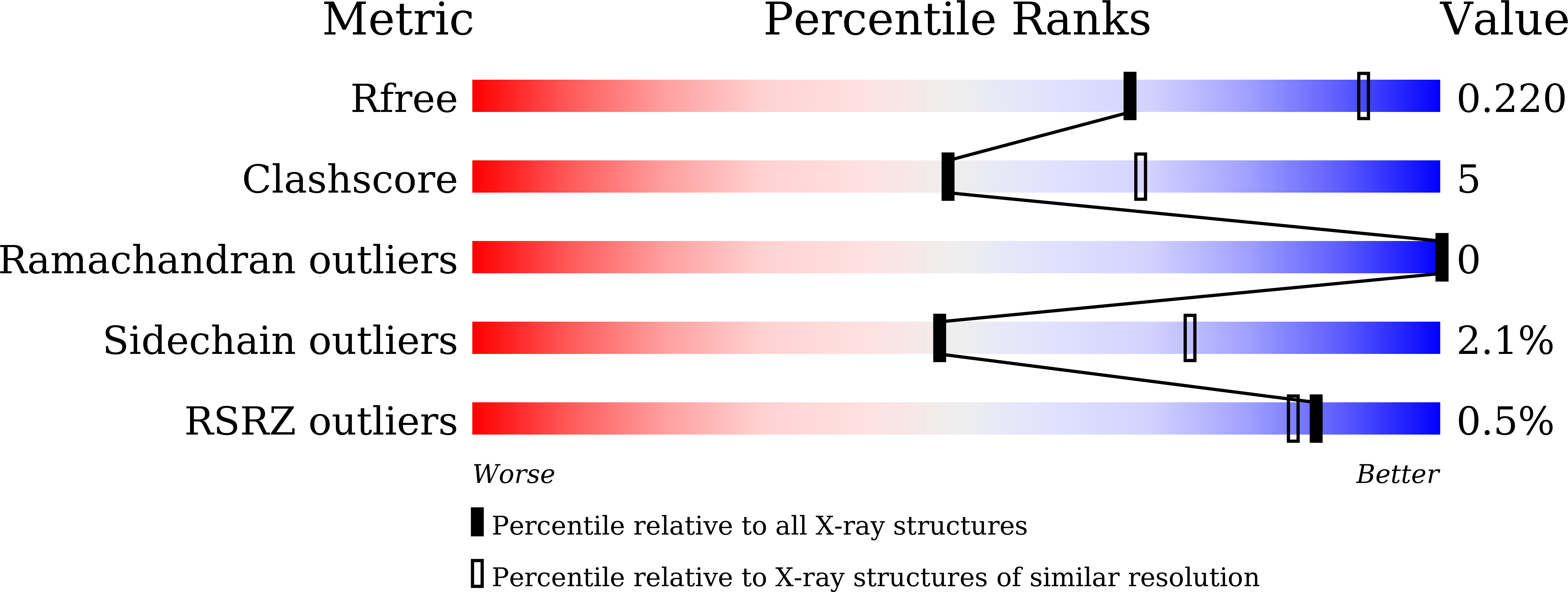
Resolution:
2.50 Å
R-Value Free:
0.22
R-Value Work:
0.17
R-Value Observed:
0.17
Space Group:
P 1 21 1
Macromolecular Entities
Structures with similar UniProt ID
Protein Blast
Polymer Type:polypeptide(L)
Molecule:WD repeat-containing protein 5
Gene (Uniprot):Wdr5
Chain IDs:A, B, C
Chain Length:313
Number of Molecules:3
Biological Source:Mus musculus
Structures with similar UniProt ID
Protein Blast
Polymer Type:polypeptide(L)
Molecule:Homeobox protein NANOG
Gene (Uniprot):Nanog
Mutagens:R100A
Chain IDs:D, E
Chain Length:61
Number of Molecules:2
Biological Source:Mus musculus
Primary Citation
WDR5 remodels NANOG condensates to drive transcriptional programs and sustain stem cell identity.
Nat Commun ? ? ? (2026)
PMID: 41565645 DOI: 10.1038/s41467-026-68623-w

Abstact

Stem cell pluripotency relies on a finely tuned interplay between transcription factors and epigenetic regulators. Here, we identify a direct interaction between NANOG, a master pluripotency transcription factor, and WDR5, a core chromatin regulator essential for maintaining stem cell identity. Mechanistically, WDR5 remodels irregular NANOG aggregates into dynamic, liquid-liquid phase-separated condensates at pluripotency-associated promoters to activate target genes. Structural analyses show that the NANOG homeodomain engages WDR5 through an extended interface distinct from previously characterized short linear motifs. The NANOG R153A mutation disrupts this interaction, leading to impaired condensate formation, reduced chromatin co-occupancy, and diminished levels of active histone marks, ultimately compromising embryonic stem cell pluripotency. Pharmacological inhibition of the WDR5-NANOG interaction suppresses leukemia stem cell expansion in vivo, highlighting its therapeutic potential. Collectively, this study reveals that WDR5-dependent regulation of NANOG condensate dynamics links phase-separated assemblies to transcriptional control of stem cell identity in physiological and pathological contexts.

Legend

Protein

Chemical

Disease

Primary Citation of related structures
Feedback Form
Name
Email
Institute
Feedback