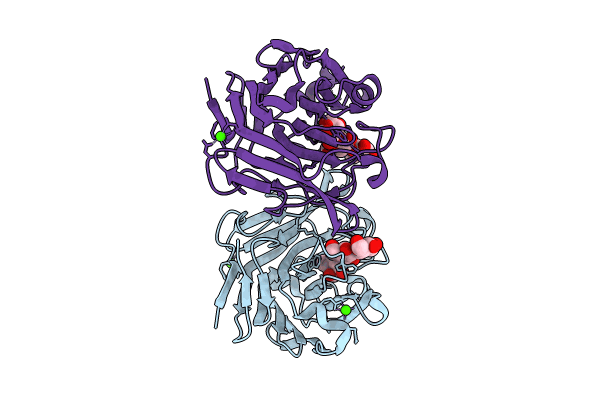
8XPK image
Deposition Date 2024-01-03
Release Date 2024-08-28
Last Version Date 2024-11-13
Entry Detail
PDB ID:
8XPK
Keywords:
Title:
Marine bacterial laminarinase PtLam mutant E154A in complex with laminatriose
Biological Source:
Source Organism:
Method Details:
Experimental Method:
Resolution:
2.00 Å
R-Value Free:
0.22
R-Value Work:
0.18
R-Value Observed:
0.19
Space Group:
P 21 2 21
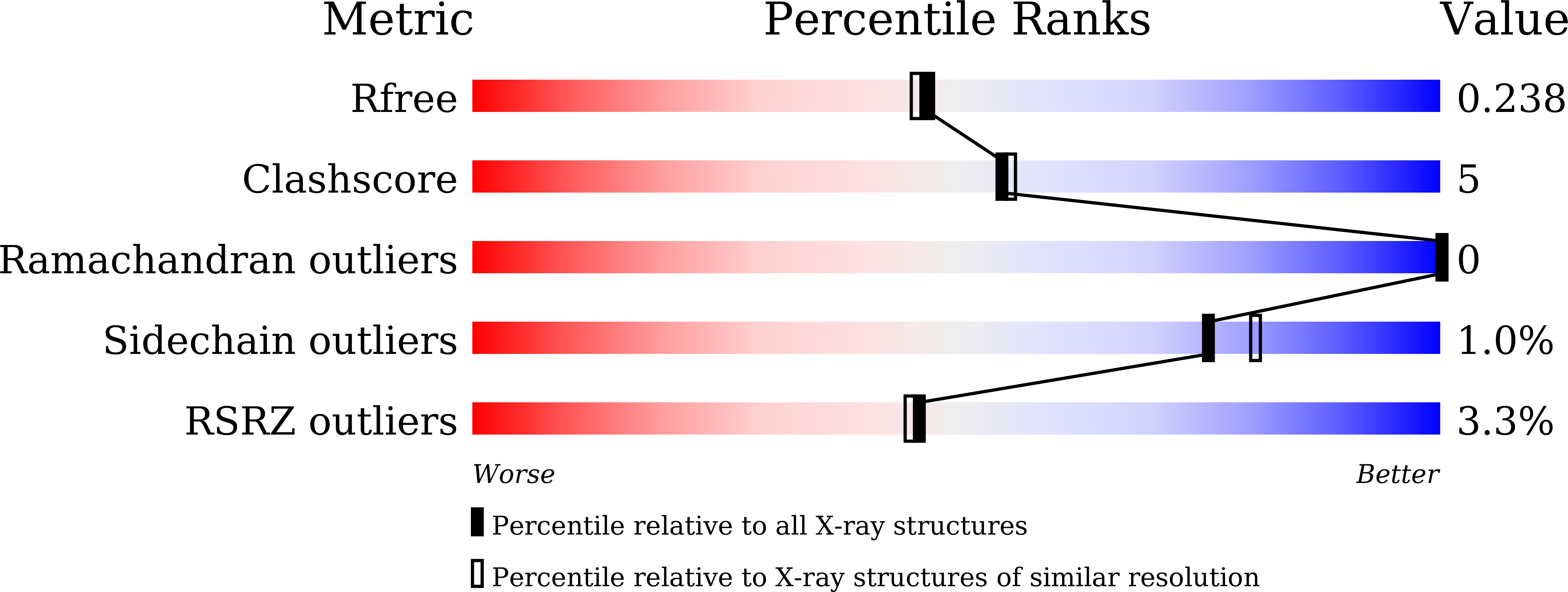
Macromolecular Entities
Polymer Type:polypeptide(L)
Molecule:Laminarinase
Mutagens:E154A
Chain IDs:A, B
Chain Length:269
Number of Molecules:2
Biological Source:Planctomycetes bacterium TBK1r
Ligand Molecules
Primary Citation
Molecular insights into the hydrolysis and transglycosylation of a deep-sea Planctomycetota -derived GH16 family laminarinase.
Appl.Environ.Microbiol. 90 e0094224 e0094224 (2024)
PMID: 39287396 DOI: 10.1128/aem.00942-24

Abstact

The biochemical and structural characteristics of PtLam, a laminarinase from deep-sea Planctomycetota, have been extensively elucidated, unveiling the fundamental molecular mechanisms governing substrate recognition and enzymatic catalysis. PtLam functions as an exo-laminarinase with the ability to sequentially hydrolyze laminarin, cleaving glucose units individually. Notably, PtLam exhibits proficient transglycosylation capabilities, utilizing various sugar alcohols as acceptors, with lyxose, in particular, yielding exclusively transglycosylated products. Structural analysis of both apo-PtLam and its laminarin oligosaccharide-bound complex revealed significant conformational alterations in active residues upon substrate binding. Moreover, pivotal residues involved in substrate recognition were identified, with subsequent mutation assays indicating the contribution of positive subsites in modulating exo-hydrolysis and transglycosidic activities. These results enhance our comprehension of laminarin cycling mechanisms by marine Planctomycetota, while also providing essential enzyme components for laminarin hetero-oligosaccharide synthesis.IMPORTANCEThe ubiquitous Planctomycetota, with distinctive physiological traits, exert a significant influence on global carbon and nitrogen fluxes. Their intimate association with algae suggests a propensity for efficient polysaccharide degradation; however, research on glycoside hydrolases derived from Planctomycetota remains scarce. Herein, we unveil the GH16 family laminarinase PtLam from deep-sea Planctomycetota, shedding light on its catalytic mechanisms underlying hydrolysis and transglycosylation. Our findings elucidate the enzymatic pathways governing the marine laminarin cycle orchestrated by Planctomycetota, thereby fostering the exploration of novel polysaccharide hydrolases with promising practical implications.

Legend

Protein

Chemical

Disease

Primary Citation of related structures
Feedback Form
Name
Email
Institute
Feedback