8XKT image
Deposition Date 2023-12-24
Release Date 2025-01-01
Last Version Date 2026-02-04
Entry Detail
PDB ID:
8XKT
Title:
The structure of Spodoptera litura chemosensory protein
Biological Source:
Source Organism(s):
Expression System(s):
Method Details:
Experimental Method:
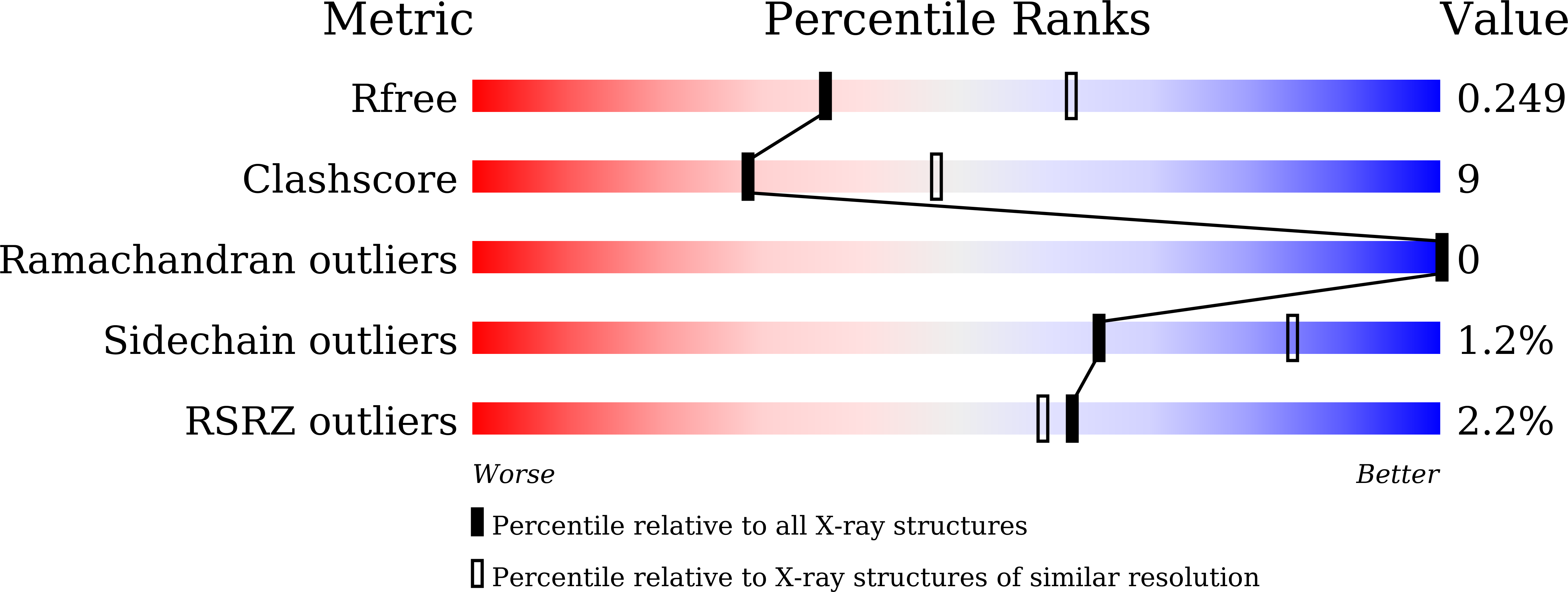
Resolution:
2.50 Å
R-Value Free:
0.24
R-Value Work:
0.23
R-Value Observed:
0.23
Space Group:
P 43 2 2
Macromolecular Entities
Structures with similar UniProt ID
Protein Blast
Polymer Type:polypeptide(L)
Molecule:chemosensory protein
Chain IDs:A
Chain Length:123
Number of Molecules:1
Biological Source:Spodoptera litura
Primary Citation
Structural plasticity underlies the binding capacities and specificities of chemosensory proteins towards various pesticides.
Pestic Biochem Physiol 215 106647 106647 (2025)
PMID: 41162037 DOI: 10.1016/j.pestbp.2025.106647

Abstact

Chemosensory proteins (CSPs) are small proteins that play important roles in insect physiology. Spodoptera litura, a notorious pest, causes considerable losses to the agricultural industry. Recent studies have linked the pesticide resistance of S. litura to CSPs, but the resistance mechanism remains poorly understood due to a dearth of biochemical studies and structural information on the CSP-ligand complexes. In this study, we report the crystal structure of Spodoptera litura CSP3 (SlCSP3). A comparative structural analysis of apo-SlCSP3 with its ligand-bound counterparts or AlphaFold2-predicted CSPs reveals a previously overlooked conformational state with an expanded pocket size. Furthermore, molecular dynamics (MD) simulations highlight the inherent structural plasticity of CSPs. Through virtual screening of potential CSP ligands, numerous agrochemical candidates were identified, with pyrethroids emerging as the primary category. Following docking studies demonstrated that the structurally diverse C-termini of CSPs dictate their binding specificities and affinities. This study offers insights into the structural underpinnings of differential binding propensities and specificities of CSPs, thereby shedding light on their pertinent mechanisms of drug resistance.

Legend

Protein

Chemical

Disease

Primary Citation of related structures
Feedback Form
Name
Email
Institute
Feedback