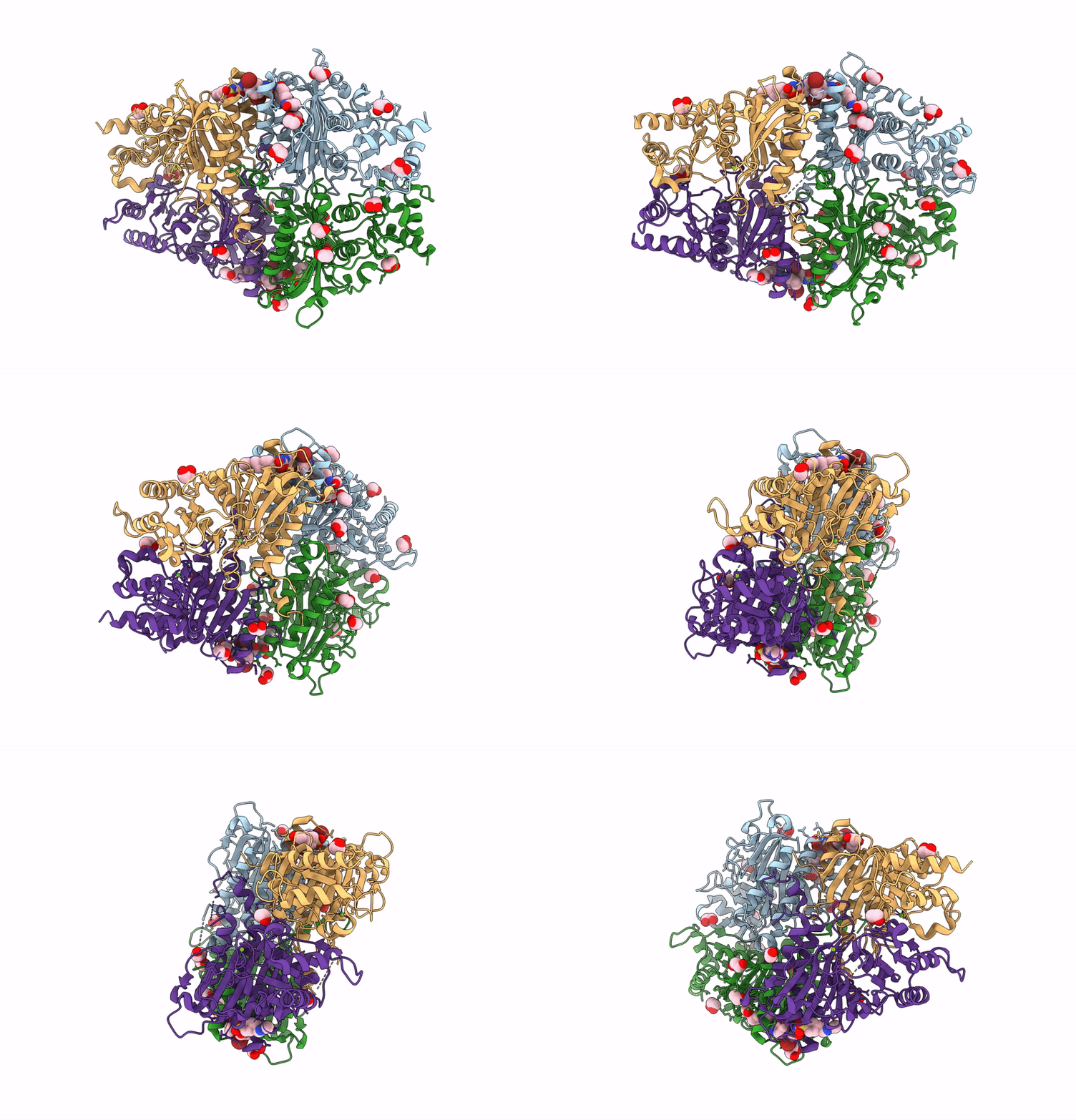
8XBK image
Deposition Date 2023-12-06
Release Date 2024-11-20
Last Version Date 2024-12-11
Entry Detail
PDB ID:
8XBK
Keywords:
Title:
Crystal Structure of Human Liver Fructose-1,6-bisphosphatase Complexed with a Covalent Inhibitor
Biological Source:
Source Organism:
Homo sapiens (Taxon ID: 9606)
Method Details:
Experimental Method:
Resolution:
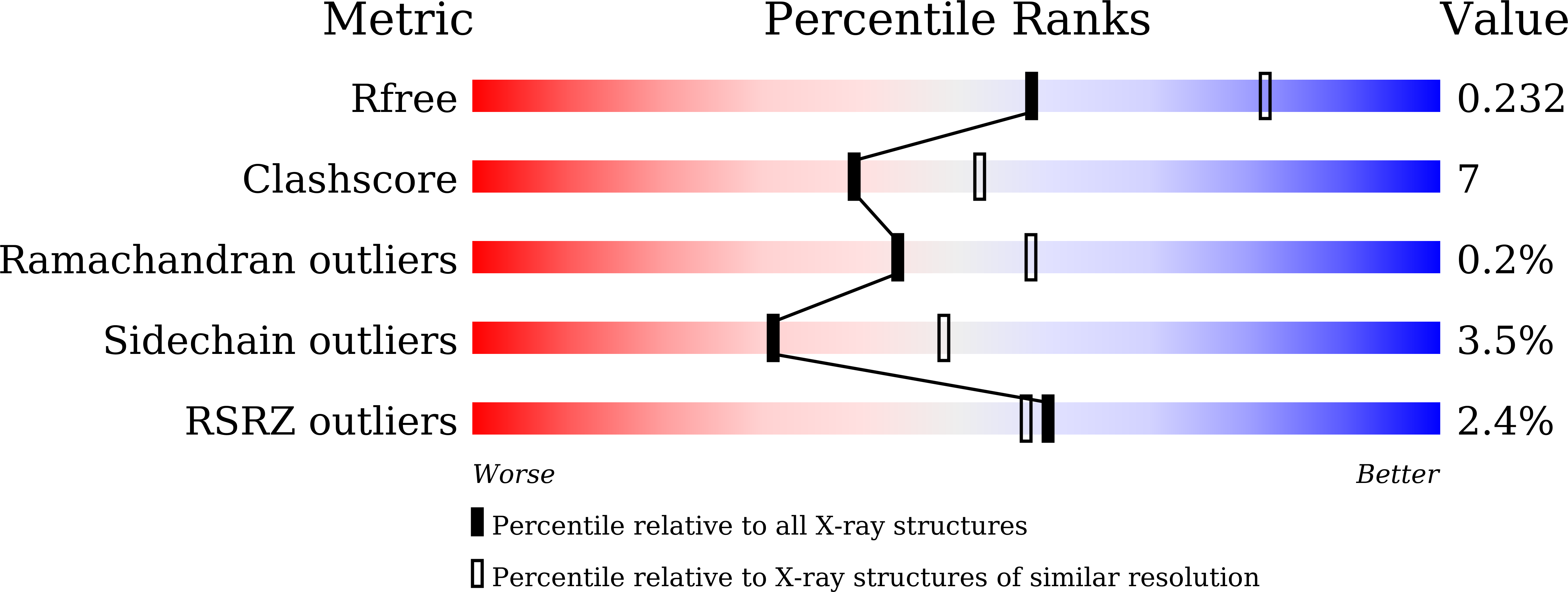
2.42 Å
R-Value Free:
0.23
R-Value Work:
0.18
R-Value Observed:
0.18
Space Group:
P 21 21 21
Macromolecular Entities
Structures with similar UniProt ID
Protein Blast
Polymer Type:polypeptide(L)
Molecule:Fructose-1,6-bisphosphatase 1
Chain IDs:A, B, C, D
Chain Length:348
Number of Molecules:4
Biological Source:Homo sapiens
Primary Citation
Structure-Guided Design of Affinity/Covalent-Bond Dual-Driven Inhibitors Targeting the AMP Site of FBPase.
J.Med.Chem. 67 20421 20437 (2024)
PMID: 39520680 DOI: 10.1021/acs.jmedchem.4c01886

Abstact

Fructose-1,6-bisphosphatase (FBPase) has attracted substantial interest as a target associated with cancer and type II diabetes. FBPase inhibitors targeting the AMP allosteric site have been documented, but their limited selectivity has raised concerns about adverse effects. To address this issue, we designed the affinity/covalent-bond dual-driven inhibitors based on the pharmacophore knowledge of the AMP pocket and neighboring cysteine residue (C179) of FBPase using the cysteine-targeting reactivity warhead screen followed by a structural optimization strategy. Pull-down and Western Blotting assays confirmed FBPase as a direct target in hepatic cells. X-ray cocrystallographic structure of FBPase-11 and Cov_DOX calculation demonstrated that hydrogen bonding and π-π stacking were the predominant driving force for the inhibition of sulfonylurea-based FBPase covalent inhibitors, while covalent binding with C179 enhances the inhibitors' long-lasting hypoglycemic effects. Together, this work highlights the potential of affinity/covalent-bond dual-driven inhibitors in drug development and provides a promising approach for developing potent drugs targeting AMP-associated proteins.

Legend

Protein

Chemical

Disease

Primary Citation of related structures
Feedback Form
Name
Email
Institute
Feedback