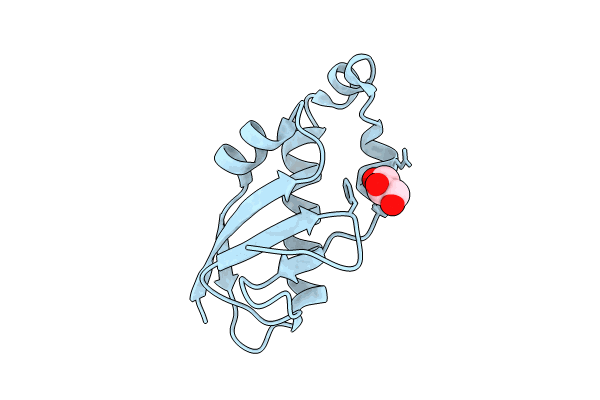
8XAB image
Deposition Date 2023-12-03
Release Date 2023-12-20
Last Version Date 2024-11-06
Entry Detail
PDB ID:
8XAB
Keywords:
Title:
Crystal structure of Ubl1 domain of nonstructural protein 3 of SARS-CoV-2
Biological Source:
Method Details:
Experimental Method:
Resolution:
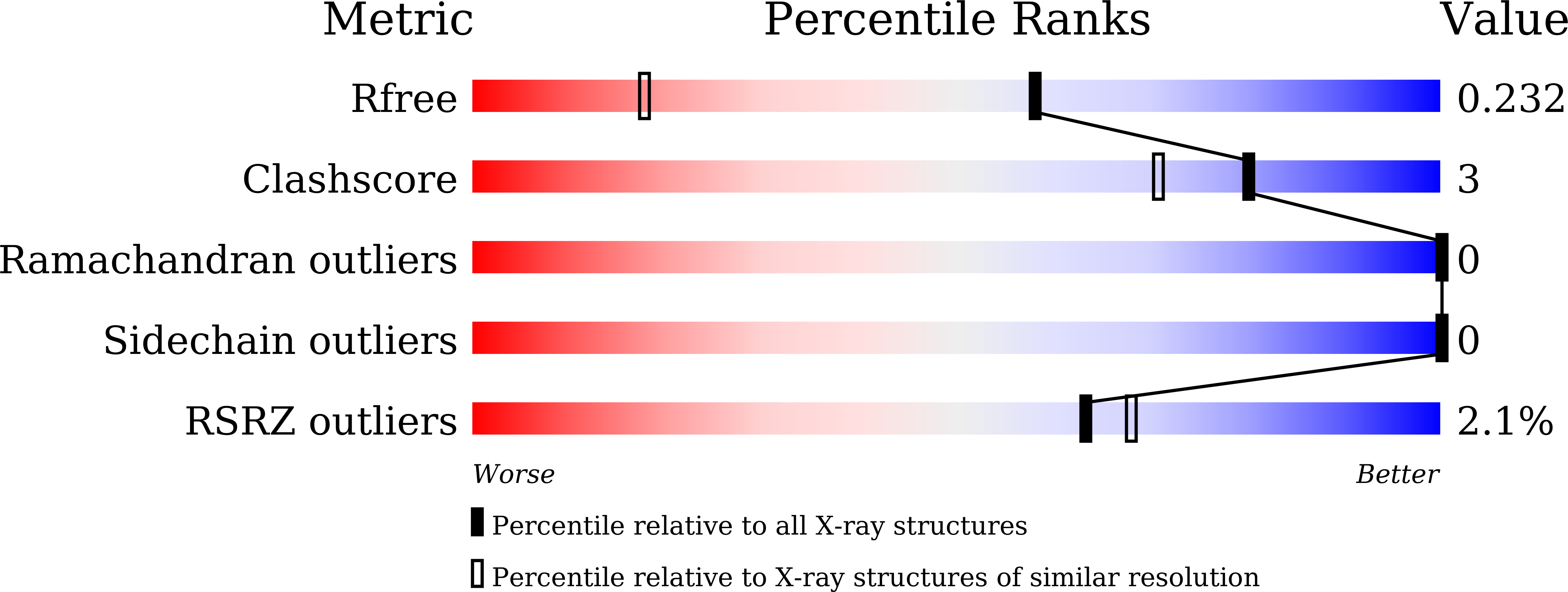
1.49 Å
R-Value Free:
0.23
R-Value Work:
0.20
R-Value Observed:
0.21
Space Group:
P 21 21 2
Macromolecular Entities
Structures with similar UniProt ID
Protein Blast
Polymer Type:polypeptide(L)
Molecule:Papain-like protease nsp3
Gene (Uniprot):rep
Chain IDs:A
Chain Length:96
Number of Molecules:1
Biological Source:Severe acute respiratory syndrome coronavirus 2
Ligand Molecules
Primary Citation
N terminus of SARS-CoV-2 nonstructural protein 3 interrupts RNA-driven phase separation of N protein by displacing RNA.
J.Biol.Chem. 300 107828 107828 (2024)
PMID: 39341499 DOI: 10.1016/j.jbc.2024.107828

Abstact

The connection between SARS-CoV-2 replication-transcription complexes and nucleocapsid (N) protein is critical for regulating genomic RNA replication and virion packaging over the viral life cycle. However, the mechanism that dynamically regulates genomic RNA packaging and replication remains elusive. Here, we demonstrate that the N-terminal domain of SARS-CoV-2 nonstructural protein 3, a core component of viral replication-transcription complexes, binds N protein and displaces RNA in a concentration-dependent manner. This interaction disrupts liquid-liquid phase separation of N protein driven by N protein-RNA interactions which is crucial for virion packaging and viral replication. We also report a high-resolution crystal structure of the nonstructural protein 3 ubiquitin-like domain 1 (Ubl1) at 1.49 Å, which reveals abundant negative charges on the protein surface. Sequence and structural analyses identify several conserved motifs at the Ubl1-N protein interface and a previously unexplored highly negative groove, providing insights into the molecular mechanism of Ubl1-mediated modulation of N protein-RNA binding. Our findings elucidate the mechanism of dynamic regulation of SARS-CoV-2 genomic RNA replication and packaging over the viral life cycle. Targeting the conserved Ubl1-N protein interaction hotspots also promises to aid in the development of broad-spectrum antivirals against pathogenic coronaviruses.

Legend

Protein

Chemical

Disease

Primary Citation of related structures
Feedback Form
Name
Email
Institute
Feedback