8VWO image
Deposition Date 2024-02-01
Release Date 2025-07-09
Last Version Date 2025-07-16
Entry Detail
PDB ID:
8VWO
Keywords:
Title:
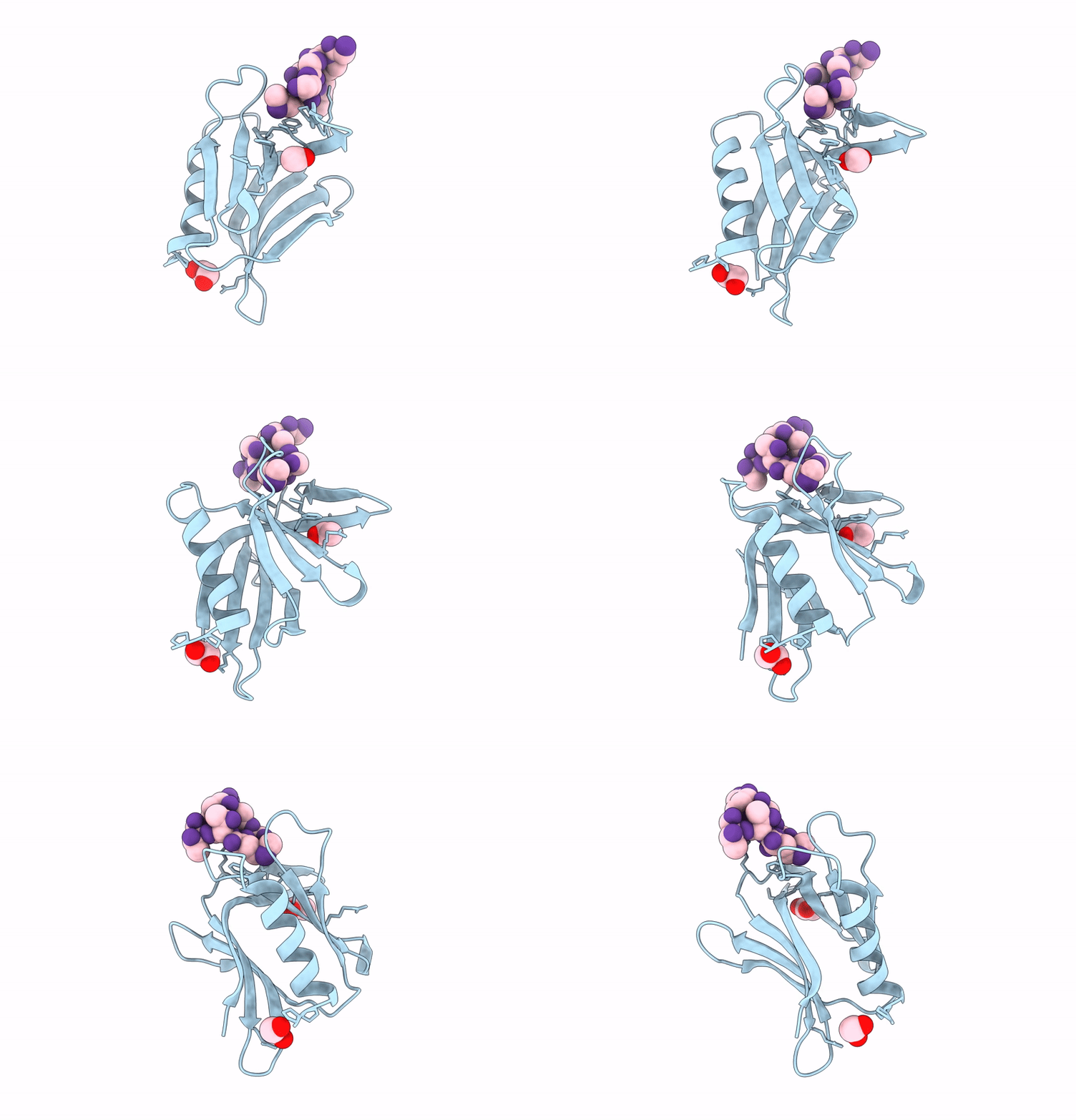
Crystal structure of hRpn13 Pru bound with U-shaped peptide
Biological Source:
Source Organism:
Homo sapiens (Taxon ID: 9606)
Method Details:
Experimental Method:
Resolution:
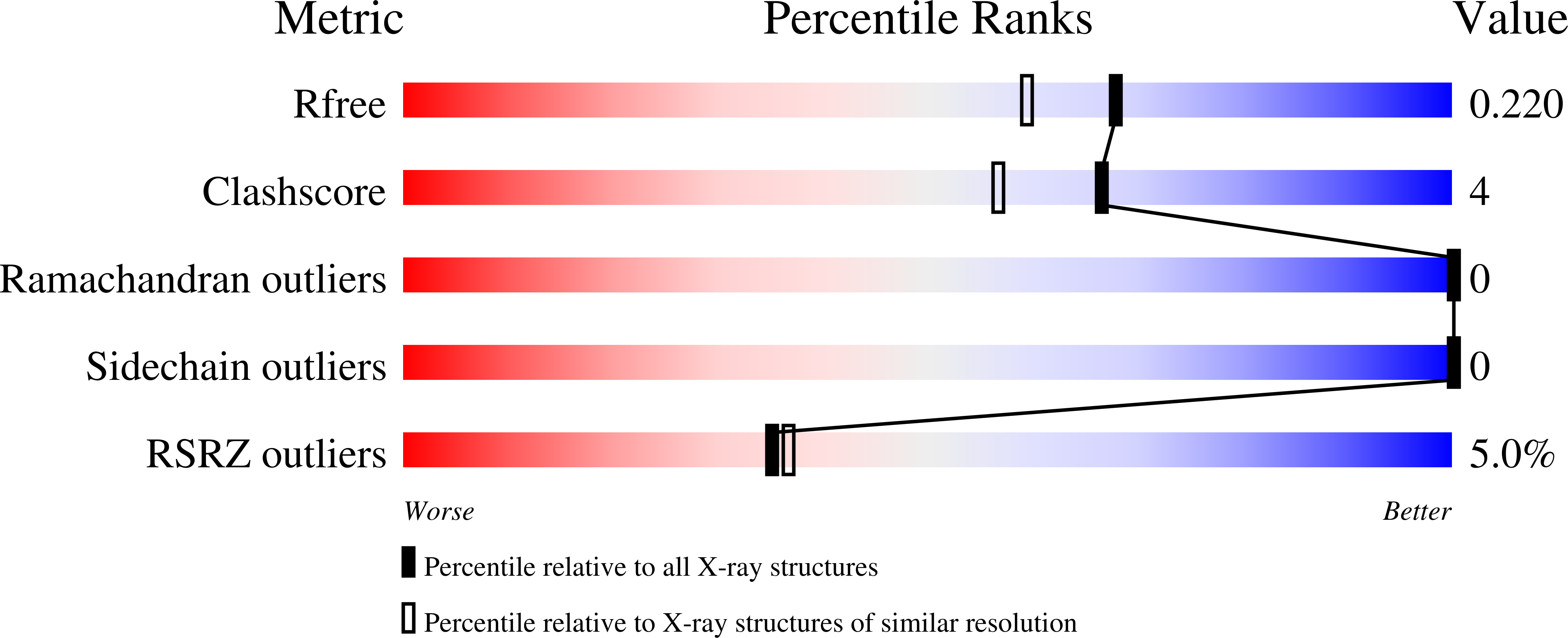
1.85 Å
R-Value Free:
0.21
R-Value Work:
0.19
R-Value Observed:
0.19
Space Group:
P 21 21 21
Macromolecular Entities
Structures with similar UniProt ID
Protein Blast
Polymer Type:polypeptide(L)
Molecule:Proteasomal ubiquitin receptor ADRM1
Gene (Uniprot):ADRM1
Mutagens:None
Chain IDs:A
Chain Length:150
Number of Molecules:1
Biological Source:Homo sapiens
Polymer Type:polypeptide(L)
Molecule:GLY-PRO-GLY-SER-MET-THR-THR
Mutagens:None
Chain IDs:B
Chain Length:7
Number of Molecules:1
Biological Source:Homo sapiens
Primary Citation
An adaptive peptide-binding site in ubiquitin receptor hRpn13 revealed by structural studies.
Nat Commun 16 5669 5669 (2025)
PMID: 40595513 DOI: 10.1038/s41467-025-60843-w

Abstact

A pleckstrin-like receptor for ubiquitin (Pru) domain in hRpn13 binds ubiquitin and proteasome subunit hRpn2. Here, we report a crystal structure of Pru bound to amino acids at the extreme N-terminus (ENT) of recombinant hRpn13. ENT adopts a U shape with native sequence along one side where M1 is buried in a Pru W108-centered pocket, and non-native sequence along the other with main chain hydrogen bonding to a neighboring Pru of the crystal lattice. These ENT:Pru interactions are stable in molecular dynamics simulations even with inclusion of only one Pru. Our findings suggest that hRpn13 can form bidentate interactions with ubiquitinated substrates by binding to both ubiquitin chains and disordered sequences of substrates. Testing this model by solution nuclear magnetic resonance revealed Pru to bind weakly to various peptides, concurrent binding with ubiquitin, and ENT displacement by hRpn2, the latter required for substrate handoff to the proteasome ATPases.

Legend

Protein

Chemical

Disease

Primary Citation of related structures
Feedback Form
Name
Email
Institute
Feedback