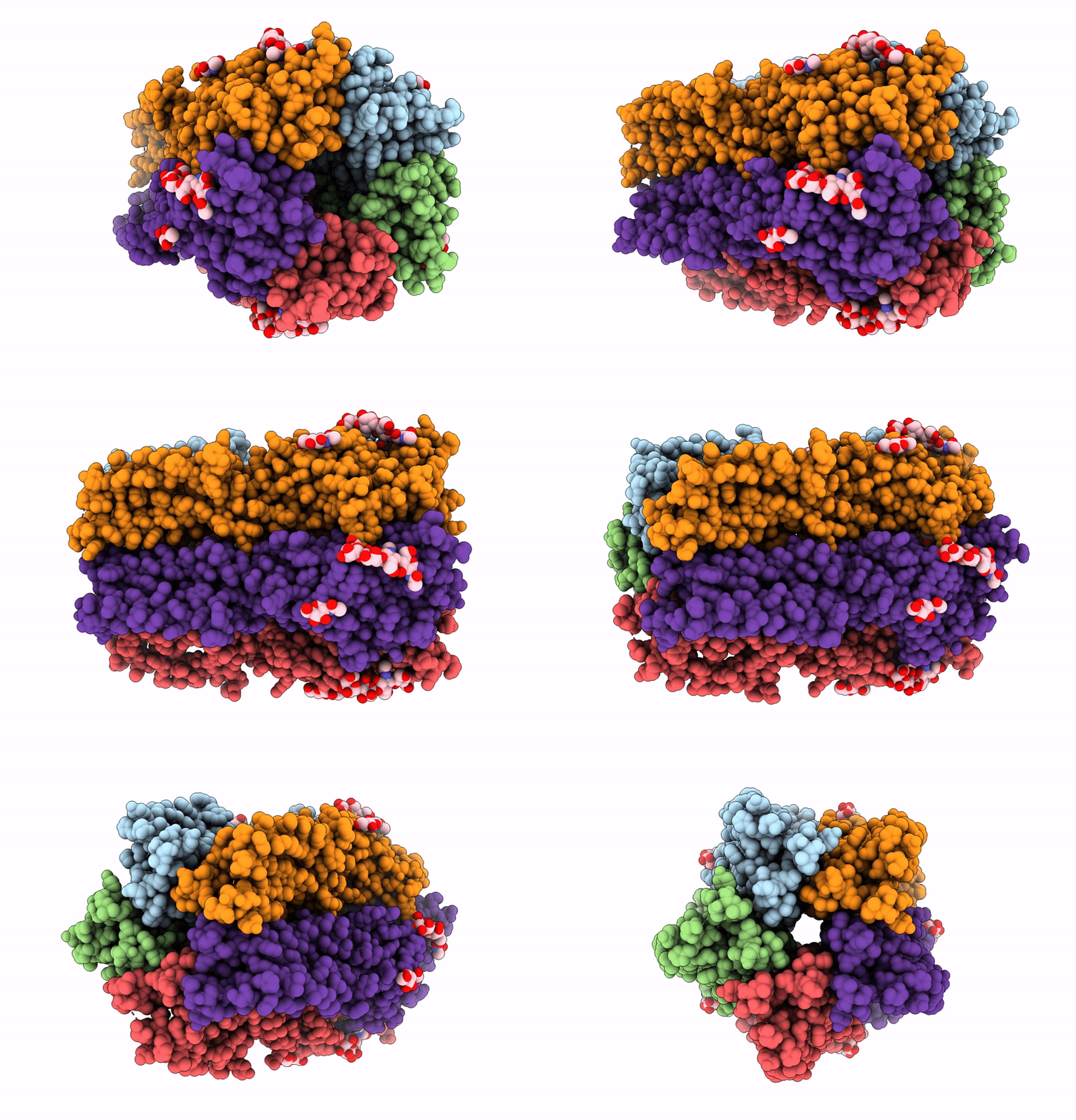
8VV0 image
Deposition Date 2024-01-30
Release Date 2024-12-11
Last Version Date 2026-01-07
Entry Detail
PDB ID:
8VV0
Title:
CryoEM structure of human GABAA receptor pi (GABRP) in complex with GABA
Biological Source:
Source Organism(s):
Homo sapiens (Taxon ID: 9606)
Expression System(s):
Method Details:
Experimental Method:
Resolution:
3.10 Å
Aggregation State:
PARTICLE
Reconstruction Method:
SINGLE PARTICLE
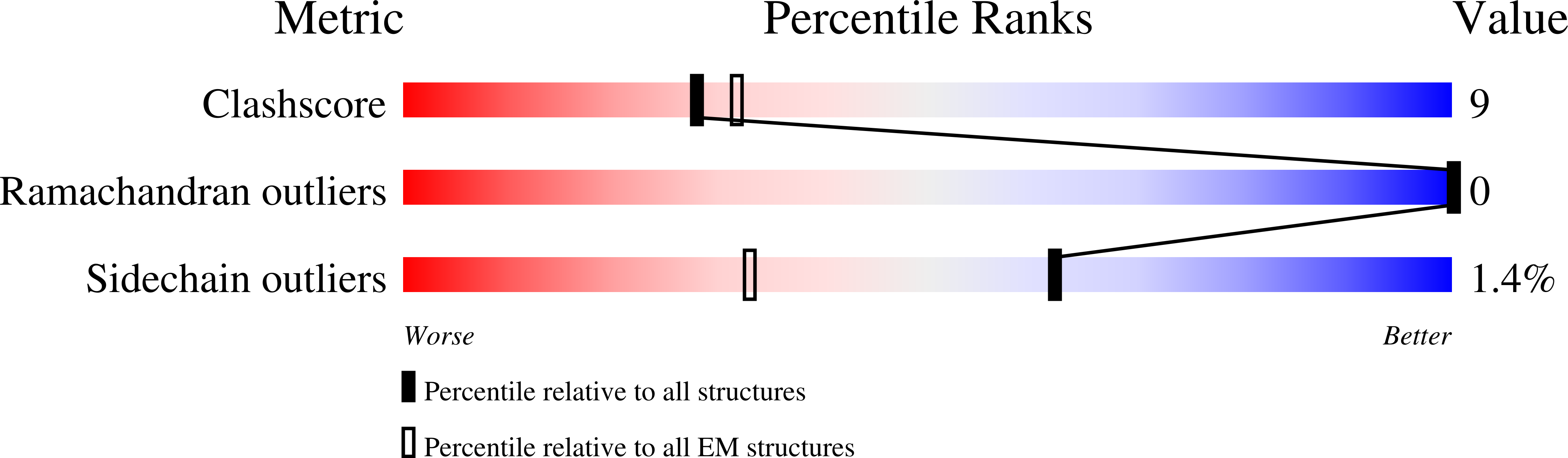
Macromolecular Entities
Structures with similar UniProt ID
Protein Blast
Polymer Type:polypeptide(L)
Molecule:Gamma-aminobutyric acid receptor subunit pi
Gene (Uniprot):GABRP
Chain IDs:A, B, C, D, E
Chain Length:381
Number of Molecules:5
Biological Source:Homo sapiens
Primary Citation
GABA A receptor pi forms channels that stimulate ERK through a G-protein-dependent pathway.
Mol.Cell 85 166 176.e5 (2025)
PMID: 39642883 DOI: 10.1016/j.molcel.2024.11.016

Abstact

The rare γ-aminobutyric acid type-A receptor (GABAAR) subunit π (GABRP) is highly expressed in certain cancers, where it stimulates growth through extracellular-regulated kinase (ERK) signaling by an uncharacterized pathway. To elucidate GABRP's signaling mechanism, we determined cryoelectron microscopy (cryo-EM) structures of GABRP embedded in native nanodiscs, both in the presence and absence of GABA. Structurally, GABRP homopentamers closely resemble heteropentameric GABAAR anion channels, transitioning from a closed "resting" state to an open "active" state upon GABA binding. However, functional assays reveal that GABRP responds more like a type-B metabotropic receptor. At physiological concentrations of GABA, chloride flux is not detected. Rather, GABRP activates a G-protein-coupled pathway leading to ERK signaling. Ionotropic activity is only triggered at supraphysiological GABA concentrations, effectively decoupling it from GABRP's signaling functions. These findings provide a structural and functional blueprint for GABRP, opening new avenues for targeted inhibition of GABA growth signals in GABRP-positive cancers.

Legend

Protein

Chemical

Disease

Primary Citation of related structures
Feedback Form
Name
Email
Institute
Feedback