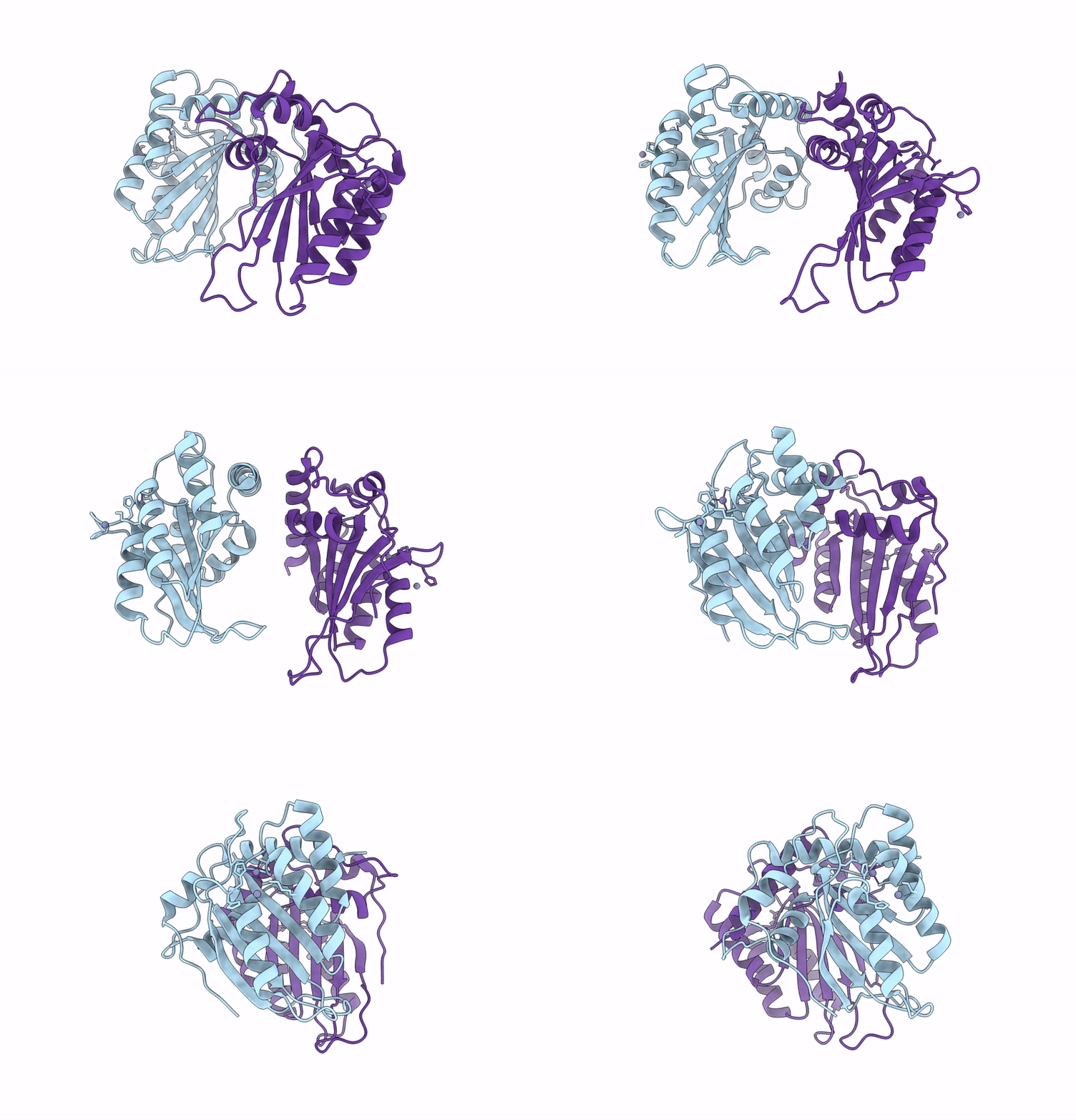
8VUD image
Deposition Date 2024-01-29
Release Date 2025-07-30
Last Version Date 2025-12-03
Entry Detail
PDB ID:
8VUD
Title:
Crystal structure of APOBEC3F-CD1
Biological Source:
Source Organism:
Homo sapiens (Taxon ID: 9606)
Host Organism:
Method Details:
Experimental Method:
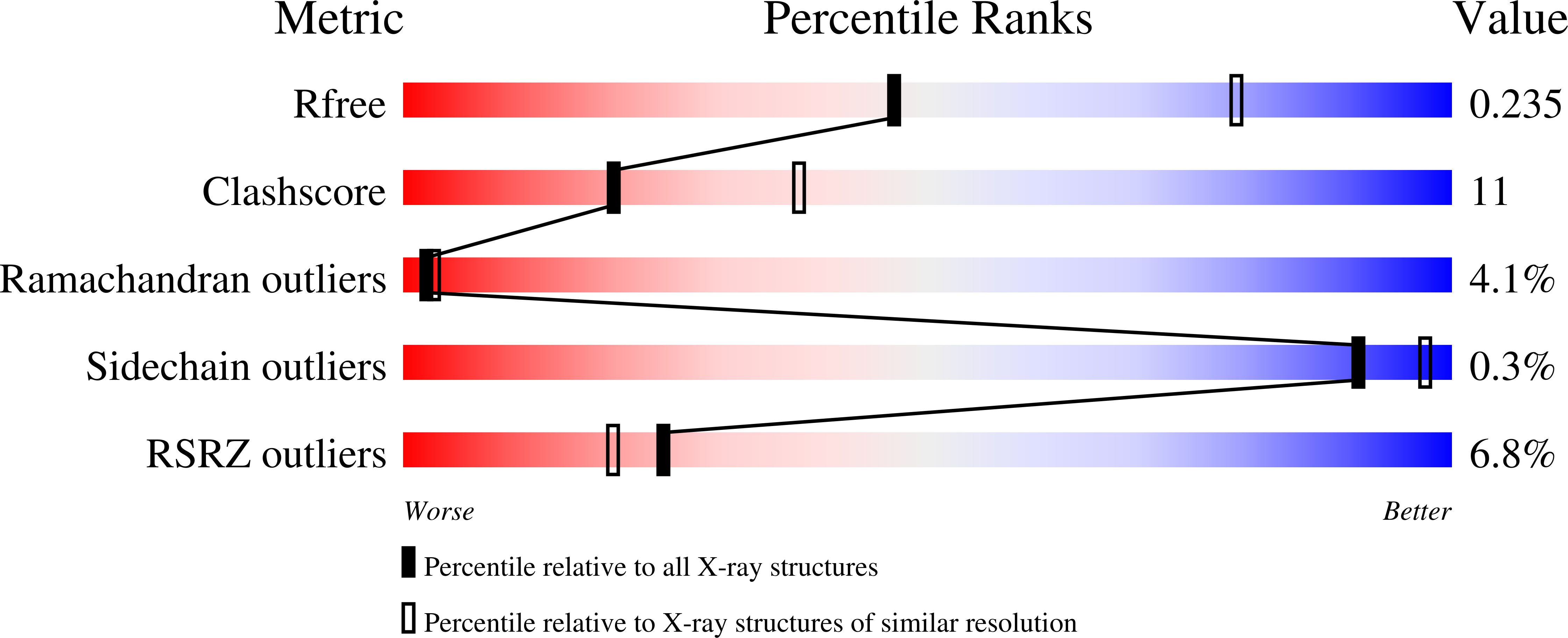
Resolution:
2.60 Å
R-Value Free:
0.23
R-Value Work:
0.17
R-Value Observed:
0.18
Space Group:
P 6
Macromolecular Entities
Structures with similar UniProt ID
Protein Blast
Polymer Type:polypeptide(L)
Molecule:DNA dC->dU-editing enzyme APOBEC-3F
Gene (Uniprot):APOBEC3F
Chain IDs:A, B
Chain Length:197
Number of Molecules:2
Biological Source:Homo sapiens
Ligand Molecules
Primary Citation
Both Domains of APOBEC3F Recognize AA RNA Motifs to Support HIV-1 Virion Encapsidation and Antiviral Function.
J.Mol.Biol. 438 169536 169536 (2025)
PMID: 41207371 DOI: 10.1016/j.jmb.2025.169536

Abstact

The anti-HIV-1 activity of the double-domain cytidine deaminases APOBEC3G (A3G) and APOBEC3F (A3F) depends on their encapsidation into progeny virions. While A3G requires AA-dinucleotide recognition by its N-terminal deaminase domain (CD1) for packaging, the mechanism for A3F encapsidation has remained unclear. Here, we present the structure of an A3F CD1 variant, revealing AA-binding pocket residues nearly identical to those of A3G CD1. Modeling further shows that A3F's C-terminal deaminase domain (CD2) harbors a similarly conserved AA-binding pocket. Both A3F CD1 and CD2 preferentially bind AA/GA-containing RNA, and mutations in the AA-binding pocket of either domain in full-length A3F do not impair virion packaging or antiviral activity, indicating functional redundancy. Consistently, double-domain chimeras with A3F CD1 or CD2 at either terminus are efficiently packaged and restrict HIV-1 through both deaminase-dependent and -independent mechanisms. In contrast, A3G exhibits strict domain-position dependence: only constructs with A3G CD1 at the N-terminus support packaging, and HIV-restriction activity varies with the particular domain at the C-terminus. A3G CD1 at the C-terminus is inactive, but the A3G CD2 at the C-terminus is active with either the A3F CD1 or A3F CD2 at the N-terminus. These findings highlight the mechanistic flexibility of A3F, in which either domain can mediate RNA recognition, virion encapsidation, and antiviral activity.

Legend

Protein

Chemical

Disease

Primary Citation of related structures
Feedback Form
Name
Email
Institute
Feedback