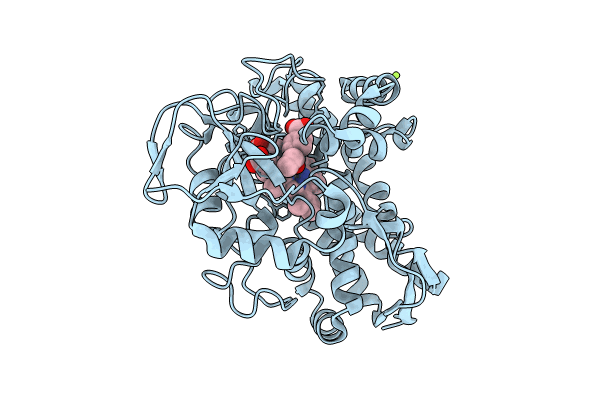
8VKF image
Deposition Date 2024-01-09
Release Date 2024-05-08
Last Version Date 2025-02-19
Entry Detail
PDB ID:
8VKF
Keywords:
Title:
The crystal structure of wild-type CYP199A4 bound to 4-propionylbenzoic acid
Biological Source:
Source Organism:
Method Details:
Experimental Method:
Resolution:
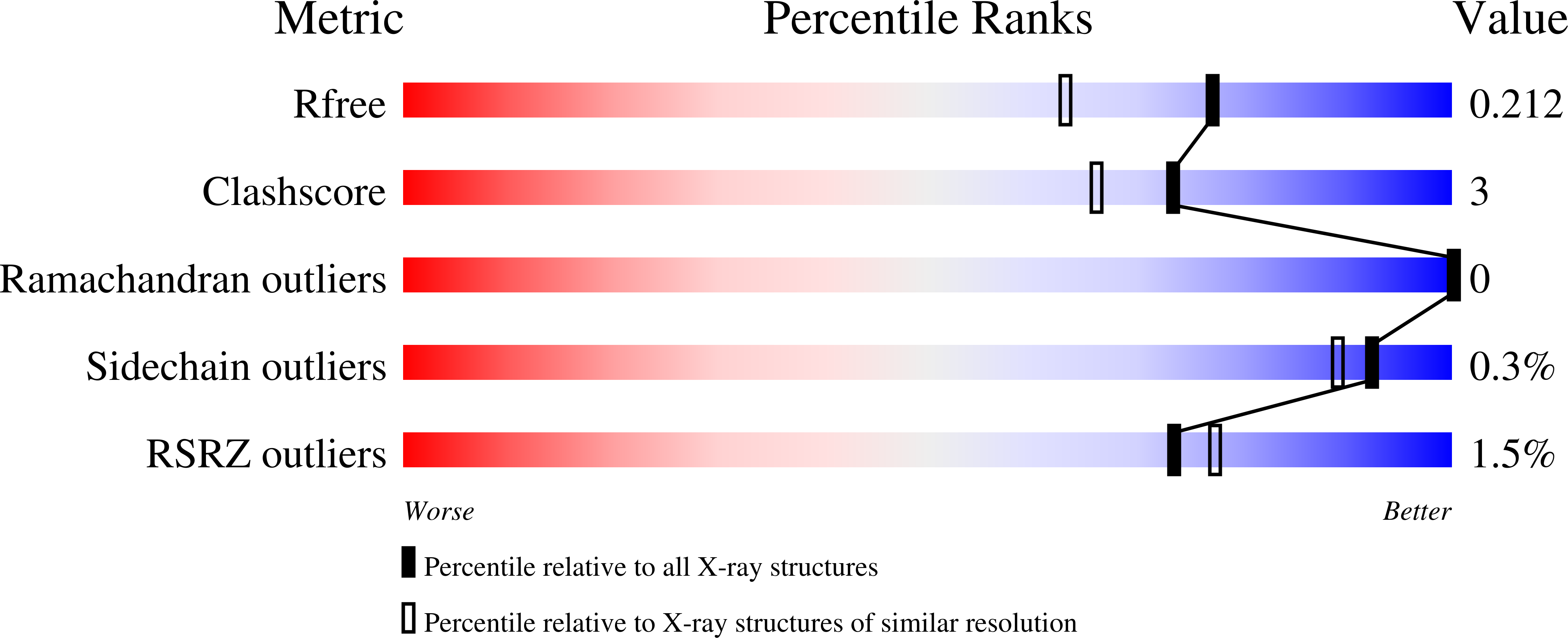
1.70 Å
R-Value Free:
0.21
R-Value Work:
0.17
R-Value Observed:
0.17
Space Group:
P 1 21 1
Macromolecular Entities
Structures with similar UniProt ID
Protein Blast
Polymer Type:polypeptide(L)
Molecule:Cytochrome P450
Gene (Uniprot):RPB_3613
Chain IDs:A
Chain Length:410
Number of Molecules:1
Biological Source:Rhodopseudomonas palustris HaA2
Primary Citation
Selective alpha -Hydroxyketone Formation and Subsequent C-C Bond Cleavage by Cytochrome P450 Monooxygenase Enzymes.
Acs Catalysis 14 8958 8971 (2024)
PMID: 39911918 DOI: 10.1021/acscatal.4c01766

Abstact

The heme enzymes of the cytochrome P450 superfamily (CYPs) catalyze oxidation reactions with a high level of selectivity. Here, the CYP199A4 enzyme from the bacterium Rhodopseudomonas palustris HaA2 is used to catalyze the hydroxylation of carbonyl-containing compounds to generate α-hydroxyketones. Both 4-propionyl- and 4-(2-oxopropyl)-benzoic acids were regioselectively hydroxylated by this enzyme to generate α-hydroxyketone metabolites, 4-(2-hydroxypropanoyl)benzoic acid and 4-(1-hydroxy-2-oxopropyl)benzoic acid, respectively, with high stereoselectivity. Co-crystallization of CYP199A4 with each substrate allowed high-resolution X-ray crystal structures of the enzyme bound with both to be determined. These provide a rationale for biochemical observations related to substrate binding and activity. As these versatile enzymes have a demonstrated ability to support carbon-carbon (C-C) bond cleavage (lyase) reactions on α-hydroxyketones, we assessed if this activity would be catalyzed by wild-type (WT) CYP199A4. Molecular dynamics (MD) simulations predicted the regioselective hydroxylation of each substrate but indicated that the WT enzyme would not be a good catalyst for lyase activity, in agreement with the experimental observations. The MD simulations also suggested the F182L mutant of CYP199A4 would permit closer approach of the substrate to the ferric-peroxo intermediate, enabling the formation of the lyase transition state. Indeed, this variant was observed to catalyze the cleavage reaction. Furthermore, the F182A variant of CYP199A4 was used to catalyze both the hydroxylation and C-C bond cleavage reactions with both 4-propionyl- and 4-(2-oxopropyl)-benzoic acids using hydrogen peroxide as the oxidant. This dual CYP activity is analogous to that supported by the mammalian CYP17A1 enzyme in steroid biosynthesis.

Legend

Protein

Chemical

Disease

Primary Citation of related structures
Feedback Form
Name
Email
Institute
Feedback