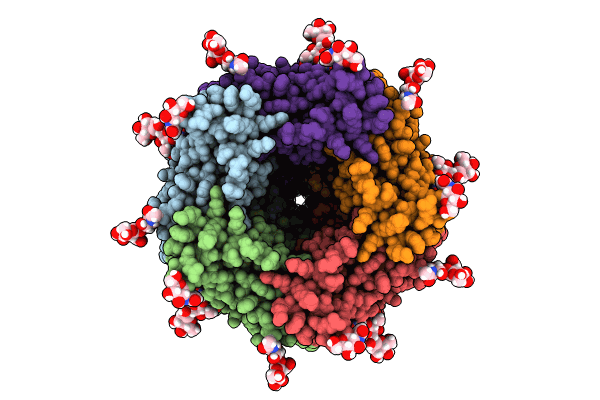
8UZJ image
Deposition Date 2023-11-15
Release Date 2024-02-21
Last Version Date 2025-05-14
Entry Detail
PDB ID:
8UZJ
Title:
Alpha7-nicotinic acetylcholine receptor bound to epibatidine and ivermectin
Biological Source:
Source Organism:
Homo sapiens (Taxon ID: 9606)
Host Organism:
Method Details:
Experimental Method:
Resolution:
2.30 Å
Aggregation State:
PARTICLE
Reconstruction Method:
SINGLE PARTICLE
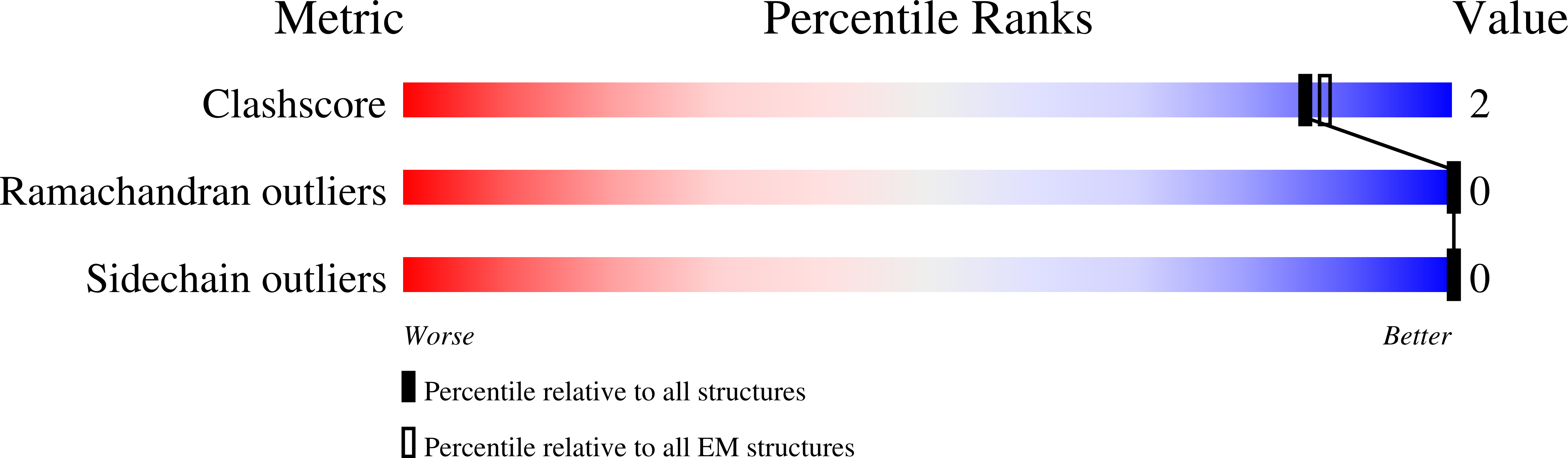
Macromolecular Entities
Protein Blast
Polymer Type:polypeptide(L)
Molecule:Neuronal acetylcholine receptor subunit alpha-7,Soluble cytochrome b562
Gene (Uniprot):cybC, CHRNA7
Chain IDs:A, B, C, D, E
Chain Length:599
Number of Molecules:5
Biological Source:Homo sapiens
Primary Citation
Structural mechanisms of alpha 7 nicotinic receptor allosteric modulation and activation.
Cell 187 1160 1176.e21 (2024)
PMID: 38382524 DOI: 10.1016/j.cell.2024.01.032

Abstact

The α7 nicotinic acetylcholine receptor is a pentameric ligand-gated ion channel that plays an important role in cholinergic signaling throughout the nervous system. Its unique physiological characteristics and implications in neurological disorders and inflammation make it a promising but challenging therapeutic target. Positive allosteric modulators overcome limitations of traditional α7 agonists, but their potentiation mechanisms remain unclear. Here, we present high-resolution structures of α7-modulator complexes, revealing partially overlapping binding sites but varying conformational states. Structure-guided functional and computational tests suggest that differences in modulator activity arise from the stable rotation of a channel gating residue out of the pore. We extend the study using a time-resolved cryoelectron microscopy (cryo-EM) approach to reveal asymmetric state transitions for this homomeric channel and also find that a modulator with allosteric agonist activity exploits a distinct channel-gating mechanism. These results define mechanisms of α7 allosteric modulation and activation with implications across the pentameric receptor superfamily.

Legend

Protein

Chemical

Disease

Primary Citation of related structures
Feedback Form
Name
Email
Institute
Feedback