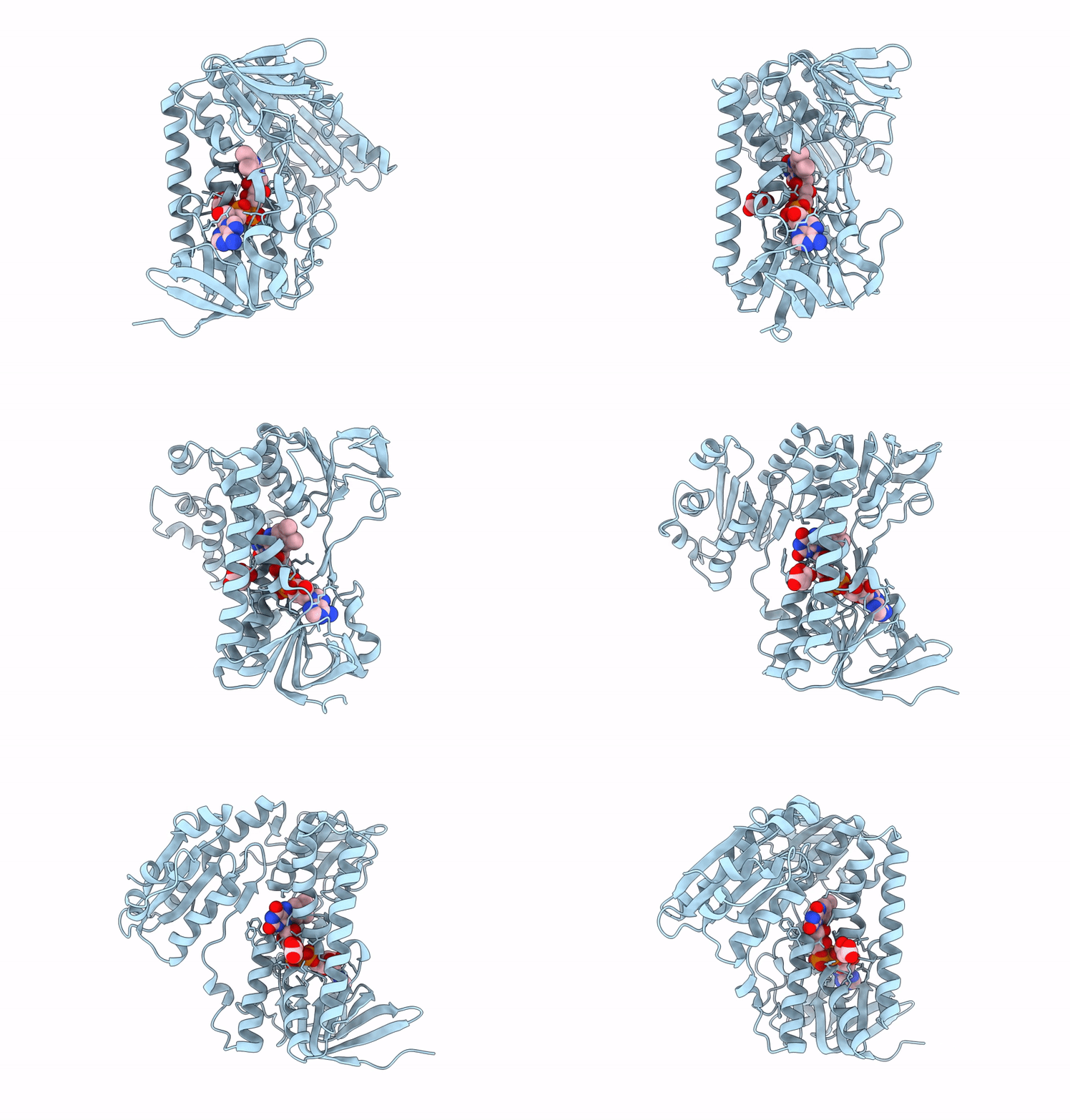
8UUB image
Deposition Date 2023-10-31
Release Date 2024-04-17
Last Version Date 2024-11-06
Entry Detail
PDB ID:
8UUB
Keywords:
Title:
Structure of hypothiocyanous acid reductase (Har) from Streptococcus pneumoniae
Biological Source:
Source Organism:
Method Details:
Experimental Method:
Resolution:
1.50 Å
R-Value Free:
0.18
R-Value Work:
0.15
R-Value Observed:
0.15
Space Group:
P 43 21 2

Macromolecular Entities
Structures with similar UniProt ID
Protein Blast
Polymer Type:polypeptide(L)
Molecule:Oxidoreductase, pyridine nucleotide-disulfide, class I
Gene (Uniprot):SPD_1415
Chain IDs:A
Chain Length:442
Number of Molecules:1
Biological Source:Streptococcus pneumoniae D39
Primary Citation
Hypothiocyanous acid reductase is critical for host colonization and infection by Streptococcus pneumoniae.
J.Biol.Chem. 300 107282 107282 (2024)
PMID: 38604564 DOI: 10.1016/j.jbc.2024.107282

Abstact

The major human pathogen Streptococcus pneumoniae encounters the immune-derived oxidant hypothiocyanous acid (HOSCN) at sites of colonization and infection. We recently identified the pneumococcal hypothiocyanous acid reductase (Har), a member of the flavoprotein disulfide reductase enzyme family, and showed that it contributes to the HOSCN tolerance of S. pneumoniae in vitro. Here, we demonstrate in mouse models of pneumococcal infection that Har is critical for colonization and invasion. In a colonization model, bacterial load was attenuated dramatically in the nasopharynx when har was deleted in S. pneumoniae. The Δhar strain was also less virulent compared to wild type in an invasion model as reflected by a significant reduction in bacteria in the lungs and no dissemination to the blood and brain. Kinetic measurements with recombinant Har demonstrated that this enzyme reduced HOSCN with near diffusion-limited catalytic efficiency, using either NADH (kcat/KM = 1.2 × 108 M-1s-1) or NADPH (kcat/KM = 2.5 × 107 M-1s-1) as electron donors. We determined the X-ray crystal structure of Har in complex with the FAD cofactor to 1.50 Å resolution, highlighting the active site architecture characteristic for this class of enzymes. Collectively, our results demonstrate that pneumococcal Har is a highly efficient HOSCN reductase, enabling survival against oxidative host immune defenses. In addition, we provide structural insights that may aid the design of Har inhibitors.

Legend

Protein

Chemical

Disease

Primary Citation of related structures
Feedback Form
Name
Email
Institute
Feedback