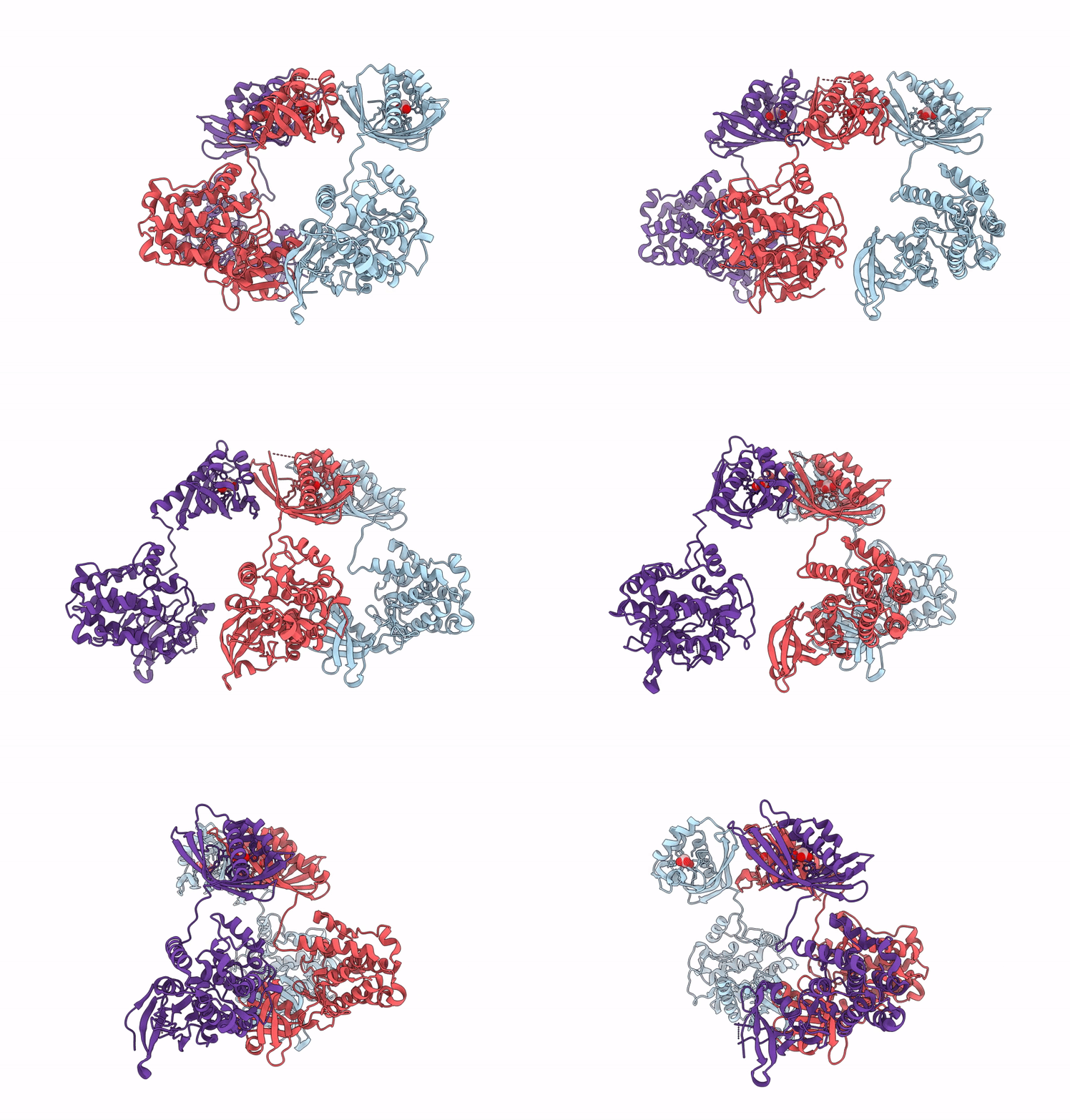
8USO image
Deposition Date 2023-10-28
Release Date 2024-03-27
Last Version Date 2025-10-08
Entry Detail
PDB ID:
8USO
Keywords:
Title:
Full-length human CaMKII delta holoenzyme
Biological Source:
Source Organism:
Homo sapiens (Taxon ID: 9606)
Host Organism:
Method Details:
Experimental Method:
Resolution:
2.30 Å
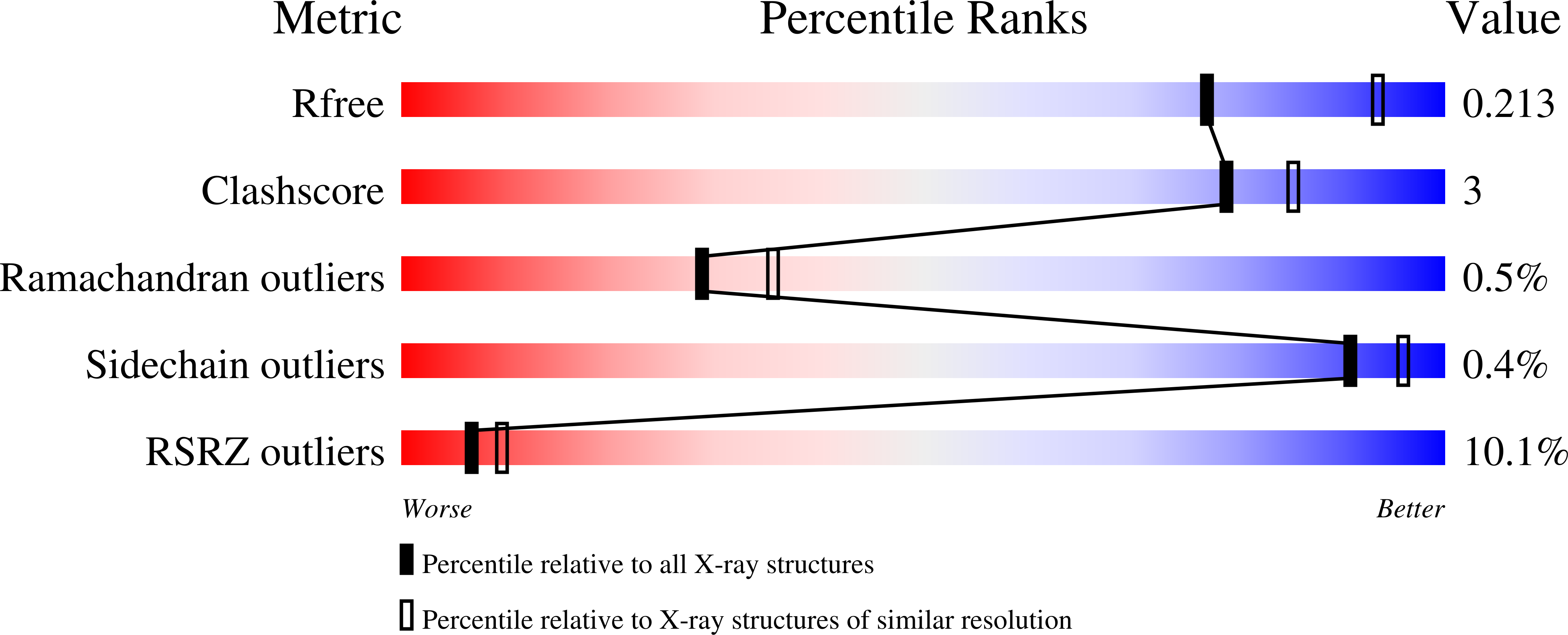
R-Value Free:
0.21
R-Value Work:
0.18
R-Value Observed:
0.18
Space Group:
P 42 2 2
Macromolecular Entities
Structures with similar UniProt ID
Protein Blast
Polymer Type:polypeptide(L)
Molecule:calcium/calmodulin-dependent protein kinase
Gene (Uniprot):CAMK2D
Mutagens:D336C, Deletion 316-343
Chain IDs:A, B, C
Chain Length:450
Number of Molecules:3
Biological Source:Homo sapiens
Ligand Molecules
Primary Citation
A domain-swapped CaMKII conformation facilitates linker-mediated allosteric regulation.
Nat Commun 16 8461 8461 (2025)
PMID: 41006217 DOI: 10.1038/s41467-025-63249-w

Abstact

Memory formation, fertilization, and cardiac function rely on precise Ca2+ signaling and subsequent Ca2+/calmodulin-dependent protein kinase II (CaMKII) activation. Ca2+ sensitivity of the four CaMKII paralogs in mammals is linked to the length of the variable linker region that undergoes extensive alternative splicing. In this study, we determine that the position of charged residues within the linker modulates the Ca2+/CaM sensitivity. We present an X-ray crystal structure of the full-length CaMKIIδ holoenzyme consisting of domain-swapped dimers within a dodecameric complex, revealing potential contacts for cooperativity and allostery. Based on molecular dynamics (MD) simulations, small-angle X-ray scattering (SAXS) measurements, and live-cell imaging, we propose a model where the domain-swapped conformation positions the charges of the linker region to drive an interaction with the regulatory segment that modulates the degree of autoinhibition. Our findings provide a framework for understanding allosteric regulation of CaMKII by the linker region in Ca2+-sensitive cells.

Legend

Protein

Chemical

Disease

Primary Citation of related structures
Feedback Form
Name
Email
Institute
Feedback