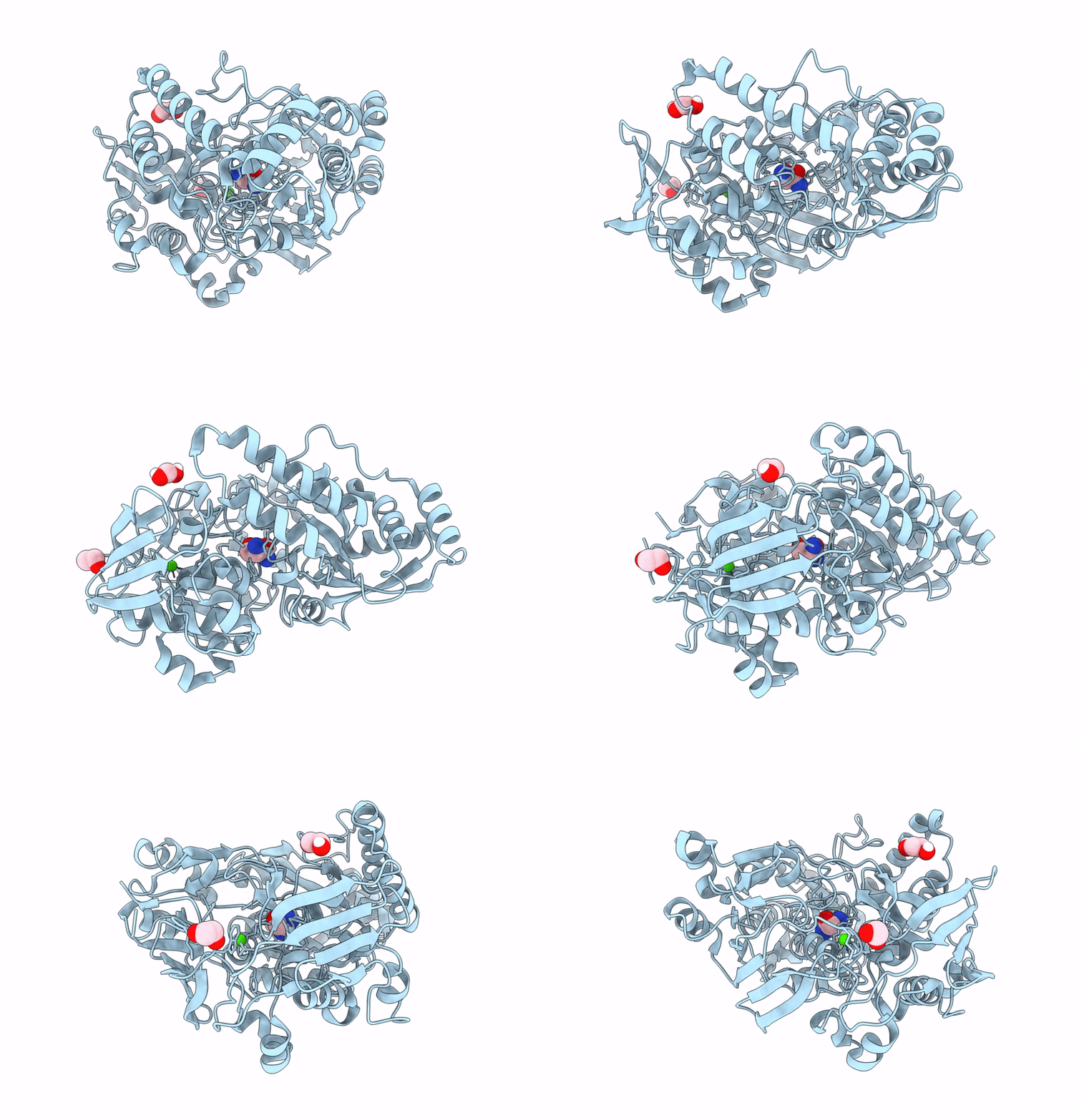
8UPI image
Deposition Date 2023-10-22
Release Date 2023-11-08
Last Version Date 2024-10-23
Entry Detail
PDB ID:
8UPI
Title:
Structure of a periplasmic peptide binding protein from Mesorhizobium sp. AP09 bound to aminoserine
Biological Source:
Source Organism:
Host Organism:
Method Details:
Experimental Method:
Resolution:
1.55 Å
R-Value Free:
0.22
R-Value Work:
0.17
R-Value Observed:
0.18
Space Group:
P 21 21 21

Macromolecular Entities
Structures with similar UniProt ID
Protein Blast
Polymer Type:polypeptide(L)
Molecule:Peptide ABC transporter substrate-binding protein
Chain IDs:A
Chain Length:523
Number of Molecules:1
Biological Source:Mesorhizobium sp. AP09
Primary Citation
Identification and Characterization of a Bacterial Periplasmic Solute Binding Protein That Binds l-Amino Acid Amides.
Biochemistry 63 1322 1334 (2024)
PMID: 38696389 DOI: 10.1021/acs.biochem.4c00096

Abstact

Periplasmic solute-binding proteins (SBPs) are key ligand recognition components of bacterial ATP-binding cassette (ABC) transporters that allow bacteria to import nutrients and metabolic precursors from the environment. Periplasmic SBPs comprise a large and diverse family of proteins, of which only a small number have been empirically characterized. In this work, we identify a set of 610 unique uncharacterized proteins within the SBP_bac_5 family that are found in conserved operons comprising genes encoding (i) ABC transport systems and (ii) putative amidases from the FmdA_AmdA family. From these uncharacterized SBP_bac_5 proteins, we characterize a representative periplasmic SBP from Mesorhizobium sp. A09 (MeAmi_SBP) and show that MeAmi_SBP binds l-amino acid amides but not the corresponding l-amino acids. An X-ray crystal structure of MeAmi_SBP bound to l-serinamide highlights the residues that impart distinct specificity for l-amino acid amides and reveals a structural Ca2+ binding site within one of the lobes of the protein. We show that the residues involved in ligand and Ca2+ binding are conserved among the 610 SBPs from experimentally uncharacterized FmdA_AmdA amidase-associated ABC transporter systems, suggesting these homologous systems are also likely to be involved in the sensing, uptake, and metabolism of l-amino acid amides across many Gram-negative nitrogen-fixing soil bacteria. We propose that MeAmi_SBP is involved in the uptake of such solutes to supplement pathways such as the citric acid cycle and the glutamine synthetase-glutamate synthase pathway. This work expands our currently limited understanding of microbial interactions with l-amino acid amides and bacterial nitrogen utilization.

Legend

Protein

Chemical

Disease

Primary Citation of related structures
Feedback Form
Name
Email
Institute
Feedback