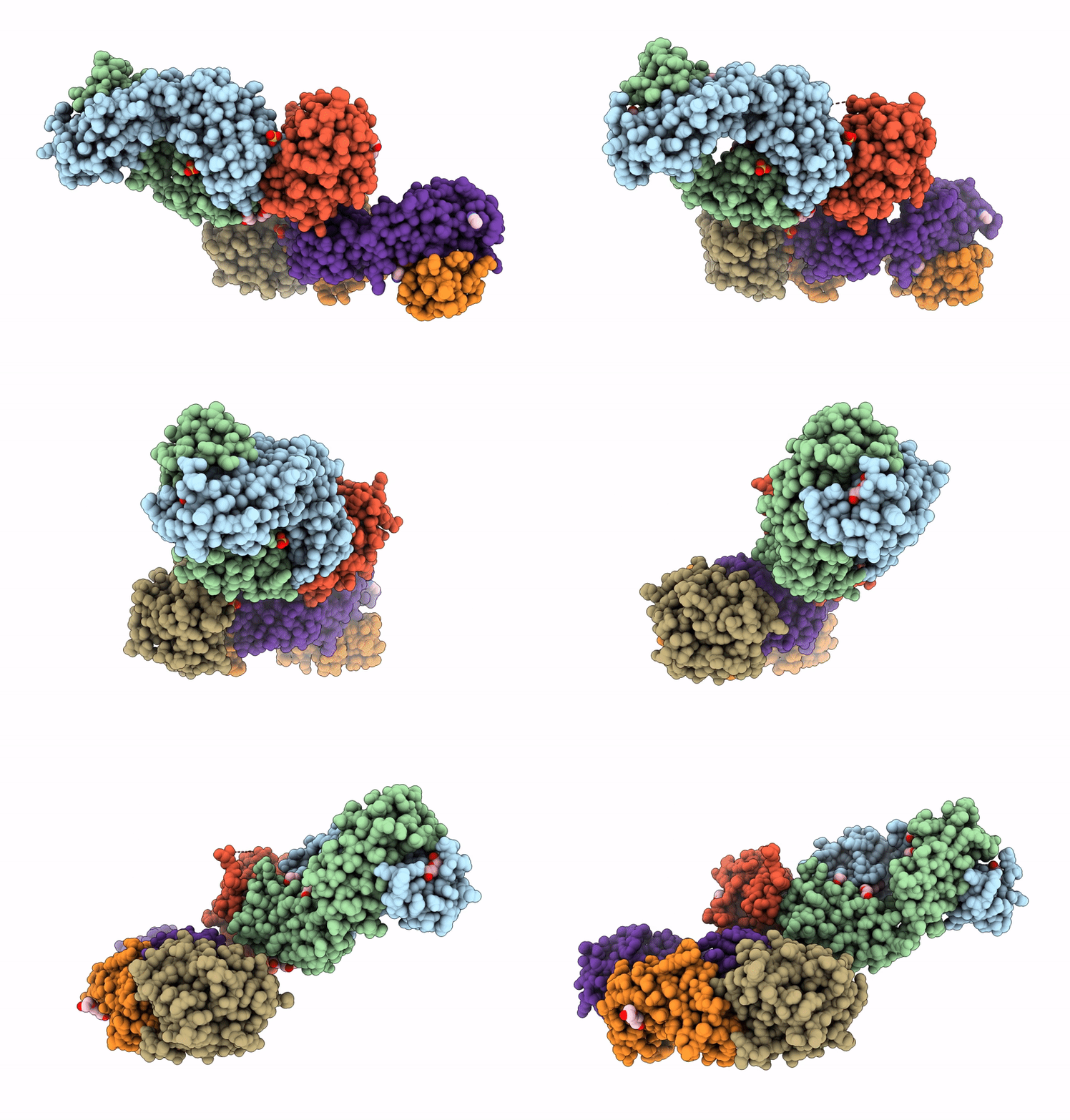
8UKY image
Deposition Date 2023-10-15
Release Date 2024-04-10
Last Version Date 2024-10-16
Entry Detail
PDB ID:
8UKY
Title:
Crystal structure of BAK in complex with inhibiting antibody 14G6
Biological Source:
Source Organism:
Homo sapiens (Taxon ID: 9606)
Host Organism:
Method Details:
Experimental Method:
Resolution:
2.40 Å
R-Value Free:
0.25
R-Value Work:
0.21
R-Value Observed:
0.21
Space Group:
P 1
Macromolecular Entities
Structures with similar UniProt ID
Protein Blast
Polymer Type:polypeptide(L)
Molecule:Bcl-2 homologous antagonist/killer
Gene (Uniprot):BAK1
Chain IDs:C, F (auth: D)
Chain Length:170
Number of Molecules:2
Biological Source:Homo sapiens
Polymer Type:polypeptide(L)
Molecule:14G6 Fab heavy chain
Chain IDs:B (auth: H), E (auth: B)
Chain Length:219
Number of Molecules:2
Biological Source:Homo sapiens
Polymer Type:polypeptide(L)
Molecule:14G6 Fab light chain
Chain IDs:A (auth: L), D (auth: A)
Chain Length:213
Number of Molecules:2
Biological Source:Homo sapiens
Primary Citation
A novel inhibitory BAK antibody enables assessment of non-activated BAK in cancer cells.
Cell Death Differ. 31 711 721 (2024)
PMID: 38582955 DOI: 10.1038/s41418-024-01289-3

Abstact

BAX and BAK are pro-apoptotic members of the BCL2 family that are required to permeabilize the mitochondrial outer membrane. The proteins can adopt a non-activated monomeric conformation, or an activated conformation in which the exposed BH3 domain facilitates binding either to a prosurvival protein or to another activated BAK or BAX protein to promote pore formation. Certain cancer cells are proposed to have high levels of activated BAK sequestered by MCL1 or BCLXL, thus priming these cells to undergo apoptosis in response to BH3 mimetic compounds that target MCL1 or BCLXL. Here we report the first antibody, 14G6, that is specific for the non-activated BAK conformer. A crystal structure of 14G6 Fab bound to BAK revealed a binding site encompassing both the α1 helix and α5-α6 hinge regions of BAK, two sites involved in the unfolding of BAK during its activation. In mitochondrial experiments, 14G6 inhibited BAK unfolding triggered by three diverse BAK activators, supporting crucial roles for both α1 dissociation and separation of the core (α2-α5) and latch (α6-α9) regions in BAK activation. 14G6 bound the majority of BAK in several leukaemia cell lines, and binding decreased following treatment with BH3 mimetics, indicating only minor levels of constitutively activated BAK in those cells. In summary, 14G6 provides a new means of assessing BAK status in response to anti-cancer treatments.

Legend

Protein

Chemical

Disease

Primary Citation of related structures
Feedback Form
Name
Email
Institute
Feedback