8UK6 image
Deposition Date 2023-10-12
Release Date 2024-03-06
Last Version Date 2024-05-01
Entry Detail
PDB ID:
8UK6
Title:
Candida albicans glutaminyl tRNA synthetase (GLN4) in complex with N-pyrimidinyl-beta-thiophenylacrylamide
Biological Source:
Source Organism:
Host Organism:
Method Details:
Experimental Method:
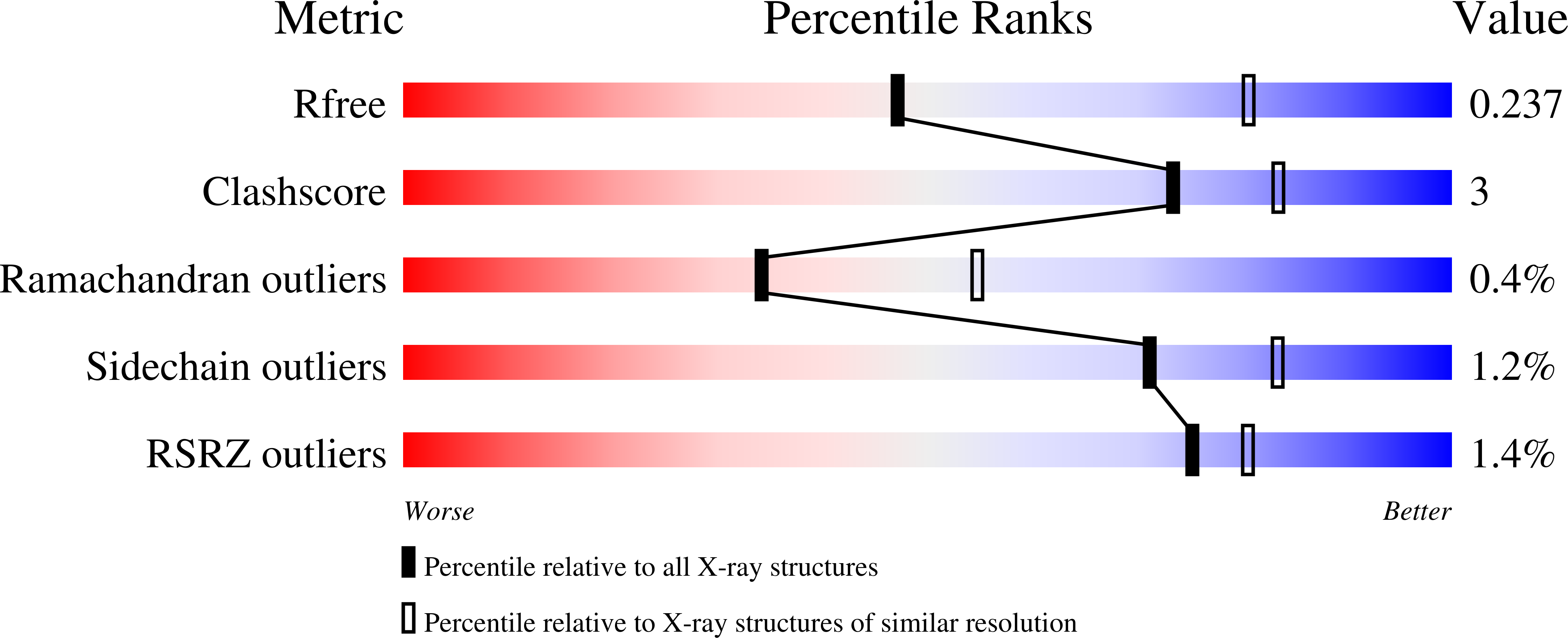
Resolution:
2.73 Å
R-Value Free:
0.24
R-Value Work:
0.20
R-Value Observed:
0.20
Space Group:
I 4 2 2
Macromolecular Entities
Structures with similar UniProt ID
Protein Blast
Polymer Type:polypeptide(L)
Molecule:glutamine--tRNA ligase
Gene (Uniprot):GLN4
Chain IDs:A
Chain Length:818
Number of Molecules:1
Biological Source:Candida albicans
Primary Citation
Allosteric inhibition of tRNA synthetase Gln4 by N-pyrimidinyl-beta-thiophenylacrylamides exerts highly selective antifungal activity.
Cell Chem Biol 31 760 ? (2024)
PMID: 38402621 DOI: 10.1016/j.chembiol.2024.01.010

Abstact

Candida species are among the most prevalent causes of systemic fungal infections, which account for ∼1.5 million annual fatalities. Here, we build on a compound screen that identified the molecule N-pyrimidinyl-β-thiophenylacrylamide (NP-BTA), which strongly inhibits Candida albicans growth. NP-BTA was hypothesized to target C. albicans glutaminyl-tRNA synthetase, Gln4. Here, we confirmed through in vitro amino-acylation assays NP-BTA is a potent inhibitor of Gln4, and we defined how NP-BTA arrests Gln4's transferase activity using co-crystallography. This analysis also uncovered Met496 as a critical residue for the compound's species-selective target engagement and potency. Structure-activity relationship (SAR) studies demonstrated the NP-BTA scaffold is subject to oxidative and non-oxidative metabolism, making it unsuitable for systemic administration. In a mouse dermatomycosis model, however, topical application of the compound provided significant therapeutic benefit. This work expands the repertoire of antifungal protein synthesis target mechanisms and provides a path to develop Gln4 inhibitors.

Legend

Protein

Chemical

Disease

Primary Citation of related structures
Feedback Form
Name
Email
Institute
Feedback