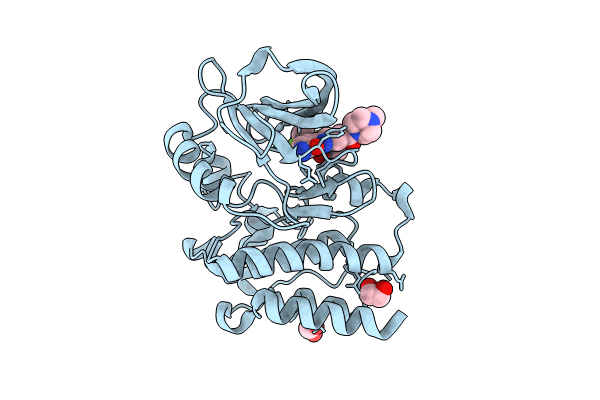
8U2E image
Deposition Date 2023-09-05
Release Date 2024-01-31
Last Version Date 2024-03-06
Entry Detail
PDB ID:
8U2E
Keywords:
Title:
Bruton's tyrosine kinase in complex with N-[(2R)-1-[(3R)-3-(methylcarbamoyl)-1H,2H,3H,4H,9H-pyrido[3,4-b]indol-2-yl]-3-(3-methylphenyl)-1-oxopropan-2-yl]-1H-indazole-5-carboxamide
Biological Source:
Source Organism:
Homo sapiens (Taxon ID: 9606)
Host Organism:
Method Details:
Experimental Method:
Resolution:
1.90 Å
R-Value Free:
0.23
R-Value Work:
0.19
R-Value Observed:
0.19
Space Group:
P 21 21 21
Macromolecular Entities
Structures with similar UniProt ID
Protein Blast
Polymer Type:polypeptide(L)
Molecule:Tyrosine-protein kinase BTK
Gene (Uniprot):BTK
Chain IDs:A
Chain Length:270
Number of Molecules:1
Biological Source:Homo sapiens
Primary Citation
Discovery and Preclinical Pharmacology of NX-2127, an Orally Bioavailable Degrader of Bruton's Tyrosine Kinase with Immunomodulatory Activity for the Treatment of Patients with B Cell Malignancies.
J.Med.Chem. 67 2321 2336 (2024)
PMID: 38300987 DOI: 10.1021/acs.jmedchem.3c01007

Abstact

Bruton's tyrosine kinase (BTK), a member of the TEC family of kinases, is an essential effector of B-cell receptor (BCR) signaling. Chronic activation of BTK-mediated BCR signaling is a hallmark of many hematological malignancies, which makes it an attractive therapeutic target. Pharmacological inhibition of BTK enzymatic function is now a well-proven strategy for the treatment of patients with these malignancies. We report the discovery and characterization of NX-2127, a BTK degrader with concomitant immunomodulatory activity. By design, NX-2127 mediates the degradation of transcription factors IKZF1 and IKZF3 through molecular glue interactions with the cereblon E3 ubiquitin ligase complex. NX-2127 degrades common BTK resistance mutants, including BTKC481S. NX-2127 is orally bioavailable, exhibits in vivo degradation across species, and demonstrates efficacy in preclinical oncology models. NX-2127 has advanced into first-in-human clinical trials and achieves deep and sustained degradation of BTK following daily oral dosing at 100 mg.

Legend

Protein

Chemical

Disease

Primary Citation of related structures
Feedback Form
Name
Email
Institute
Feedback