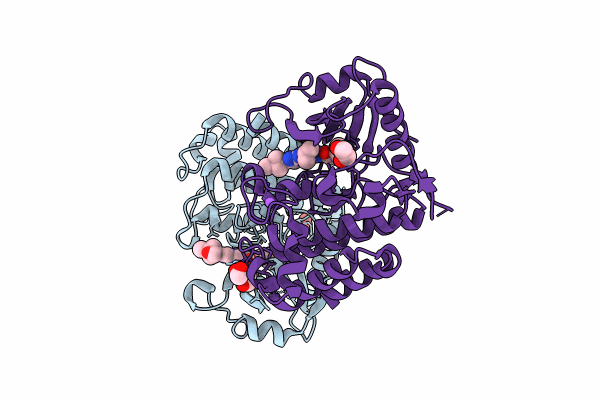
8TX0 image
Deposition Date 2023-08-21
Release Date 2024-06-26
Last Version Date 2024-10-23
Entry Detail
PDB ID:
8TX0
Title:
IRAK4 in complex with compound
Biological Source:
Source Organism:
Homo sapiens (Taxon ID: 9606)
Host Organism:
Method Details:
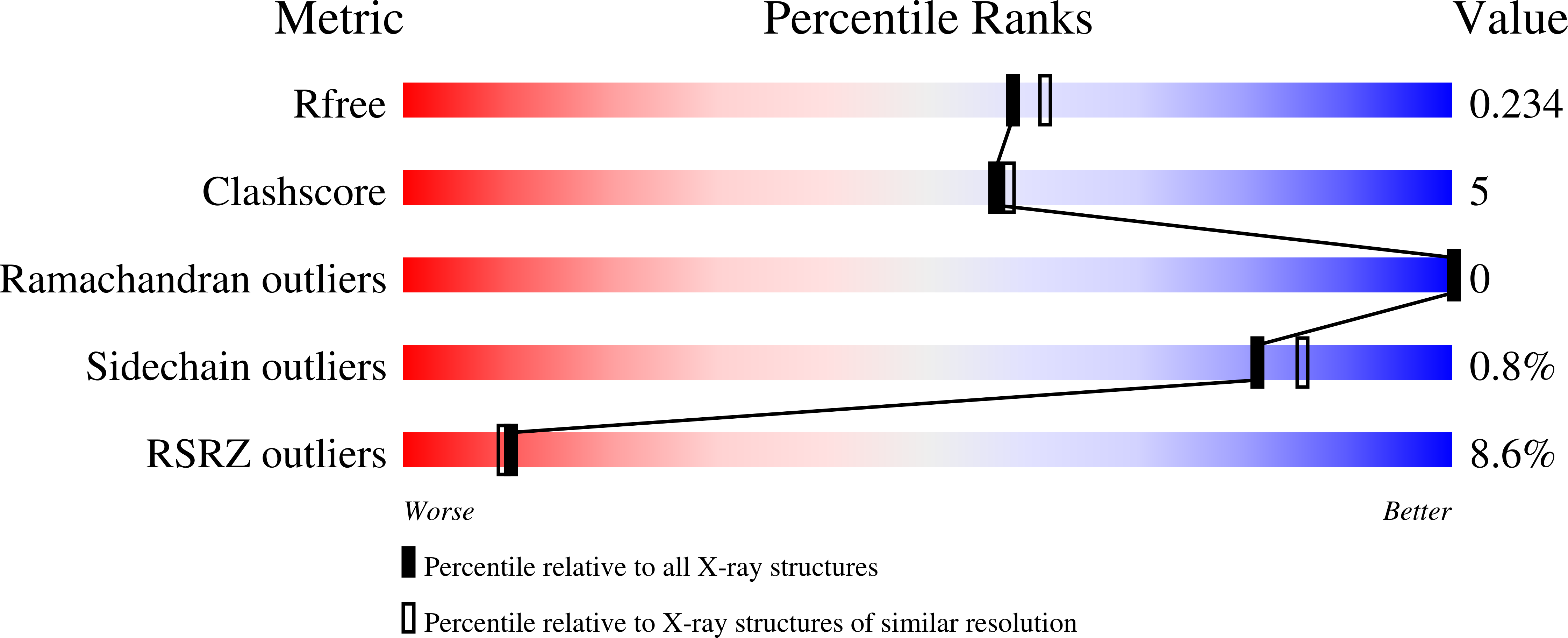
Experimental Method:
Resolution:
2.00 Å
R-Value Free:
0.23
R-Value Work:
0.20
R-Value Observed:
0.20
Space Group:
I 2 2 2
Macromolecular Entities
Structures with similar UniProt ID
Protein Blast
Polymer Type:polypeptide(L)
Molecule:Interleukin-1 receptor-associated kinase 4
Gene (Uniprot):IRAK4
Chain IDs:A, B
Chain Length:307
Number of Molecules:2
Biological Source:Homo sapiens
Modified Residue
Compound ID Chain ID Parent Comp ID Details 2D Image
SEP A SER modified residue
TPO A THR modified residue
Primary Citation
Discovery of BIO-8169─A Highly Potent, Selective, and Brain-Penetrant IRAK4 Inhibitor for the Treatment of Neuroinflammation.
J.Med.Chem. 67 8383 8395 (2024)
PMID: 38695469 DOI: 10.1021/acs.jmedchem.4c00560

Abstact

Interleukin receptor associated kinase 4 (IRAK4) plays an important role in innate immune signaling through Toll-like and interleukin-1 receptors and represents an attractive target for the treatment of inflammatory diseases and cancer. We previously reported the development of a potent, selective, and brain-penetrant imidazopyrimidine series of IRAK4 inhibitors. However, lead molecule BIO-7488 (1) suffered from low solubility which led to variable PK, compound accumulation, and poor in vivo tolerability. Herein, we describe the discovery of a series of pyridone analogs with improved solubility which are highly potent, selective and demonstrate desirable PK profiles including good oral bioavailability and excellent brain penetration. BIO-8169 (2) reduced the in vivo production of pro-inflammatory cytokines, was well tolerated in safety studies in rodents and dog at margins well above the predicted efficacious exposure and showed promising results in a mouse model for multiple sclerosis.

Legend

Protein

Chemical

Disease

Primary Citation of related structures
Feedback Form
Name
Email
Institute
Feedback