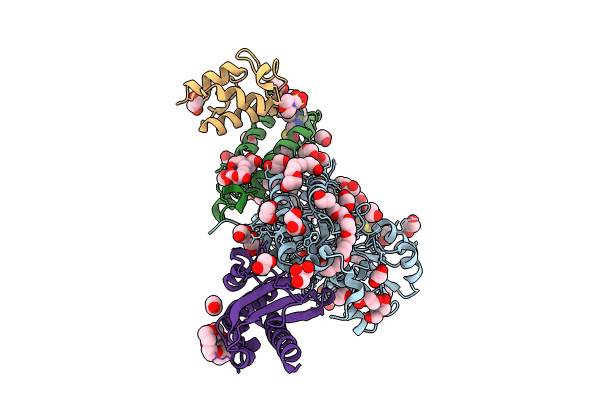
8TVT image
Deposition Date 2023-08-18
Release Date 2024-09-11
Last Version Date 2025-08-27
Entry Detail
PDB ID:
8TVT
Keywords:
Title:
Structure of human Cysteine desulfurase Nfs1 with L-propargylglycine bound to active site PLP in complex with ISD11, Acp1 and ISCU2
Biological Source:
Source Organism:
Homo sapiens (Taxon ID: 9606)
Escherichia coli (Taxon ID: 562)
Host Organism:
Method Details:
Experimental Method:
Resolution:
2.00 Å
R-Value Free:
0.18
R-Value Work:
0.15
R-Value Observed:
0.15
Space Group:
P 41 21 2
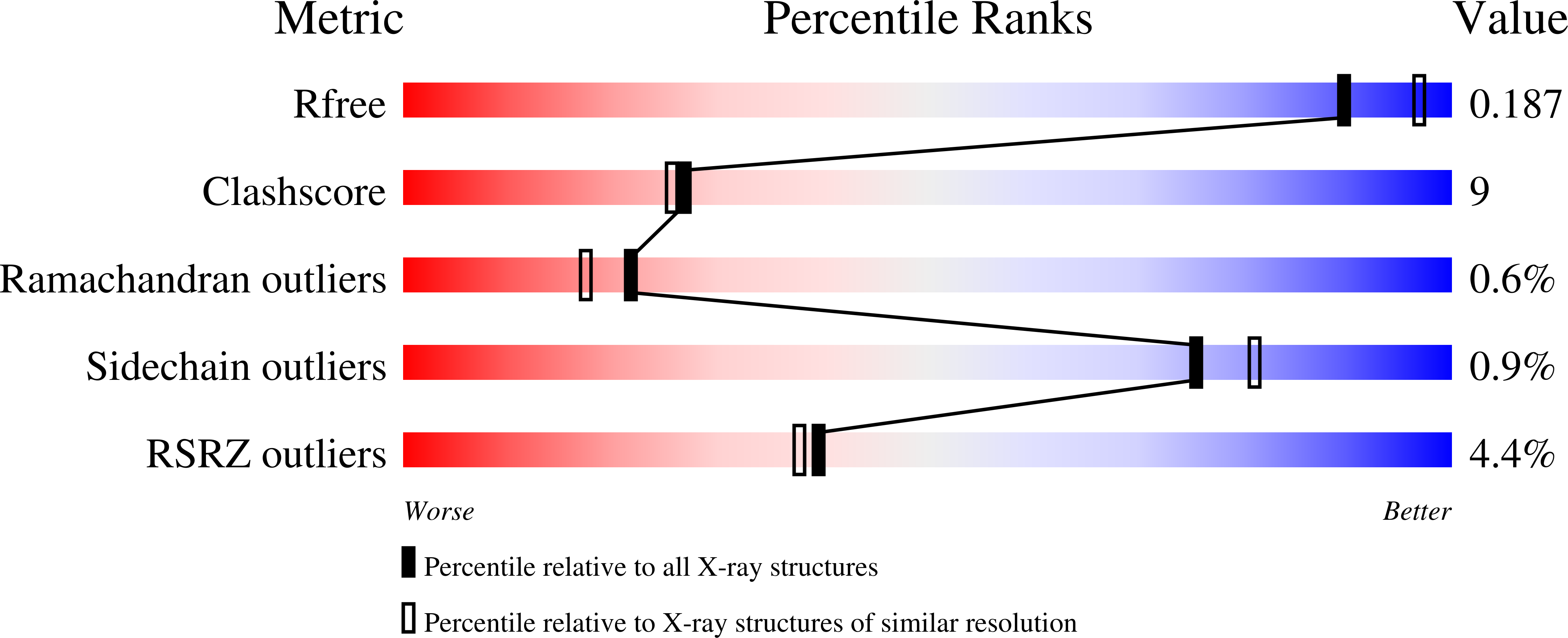
Macromolecular Entities
Structures with similar UniProt ID
Protein Blast
Polymer Type:polypeptide(L)
Molecule:Cysteine desulfurase
Gene (Uniprot):NFS1
Chain IDs:A
Chain Length:403
Number of Molecules:1
Biological Source:Homo sapiens
Structures with similar UniProt ID
Protein Blast
Polymer Type:polypeptide(L)
Molecule:LYR motif-containing protein 4
Gene (Uniprot):LYRM4
Chain IDs:B
Chain Length:91
Number of Molecules:1
Biological Source:Homo sapiens
Structures with similar UniProt ID
Protein Blast
Polymer Type:polypeptide(L)
Molecule:Acyl carrier protein
Chain IDs:C
Chain Length:76
Number of Molecules:1
Biological Source:Escherichia coli
Structures with similar UniProt ID
Protein Blast
Polymer Type:polypeptide(L)
Molecule:Iron-sulfur cluster assembly enzyme ISCU
Gene (Uniprot):ISCU
Chain IDs:D
Chain Length:135
Number of Molecules:1
Biological Source:Homo sapiens
Primary Citation

Abstact

Selective targeting of cancer cells is a major challenge for cancer therapy. Many cancer cells overexpress the cystine/glutamate antiporter xCT/CD98, an L-cystine transport system that strengthens antioxidant defences, thereby promoting tumour survival and progression. Here, we show that the D-enantiomer of cysteine (D-Cys) is selectively imported into xCT/CD98-overexpressing cancer cell lines and impairs their proliferation, particularly under high oxygen concentrations. Intracellular D-Cys specifically inhibits the mitochondrial cysteine desulfurase NFS1, a key enzyme of cellular iron-sulfur protein biogenesis, by blocking sulfur mobilization due to steric constraints. NFS1 inhibition by D-Cys affects all cellular iron-sulfur cluster-dependent functions, including mitochondrial respiration, nucleotide metabolism and maintenance of genome integrity, leading to decreased oxygen consumption, DNA damage and cell cycle arrest. D-Cys administration diminishes tumour growth of human triple-negative breast cancer cells implanted orthotopically into the mouse mammary gland. Hence, D-Cys could represent a simple therapy to selectively target those forms of cancer characterized by overexpression of xCT/CD98.

Legend

Protein

Chemical

Disease

Primary Citation of related structures
Feedback Form
Name
Email
Institute
Feedback