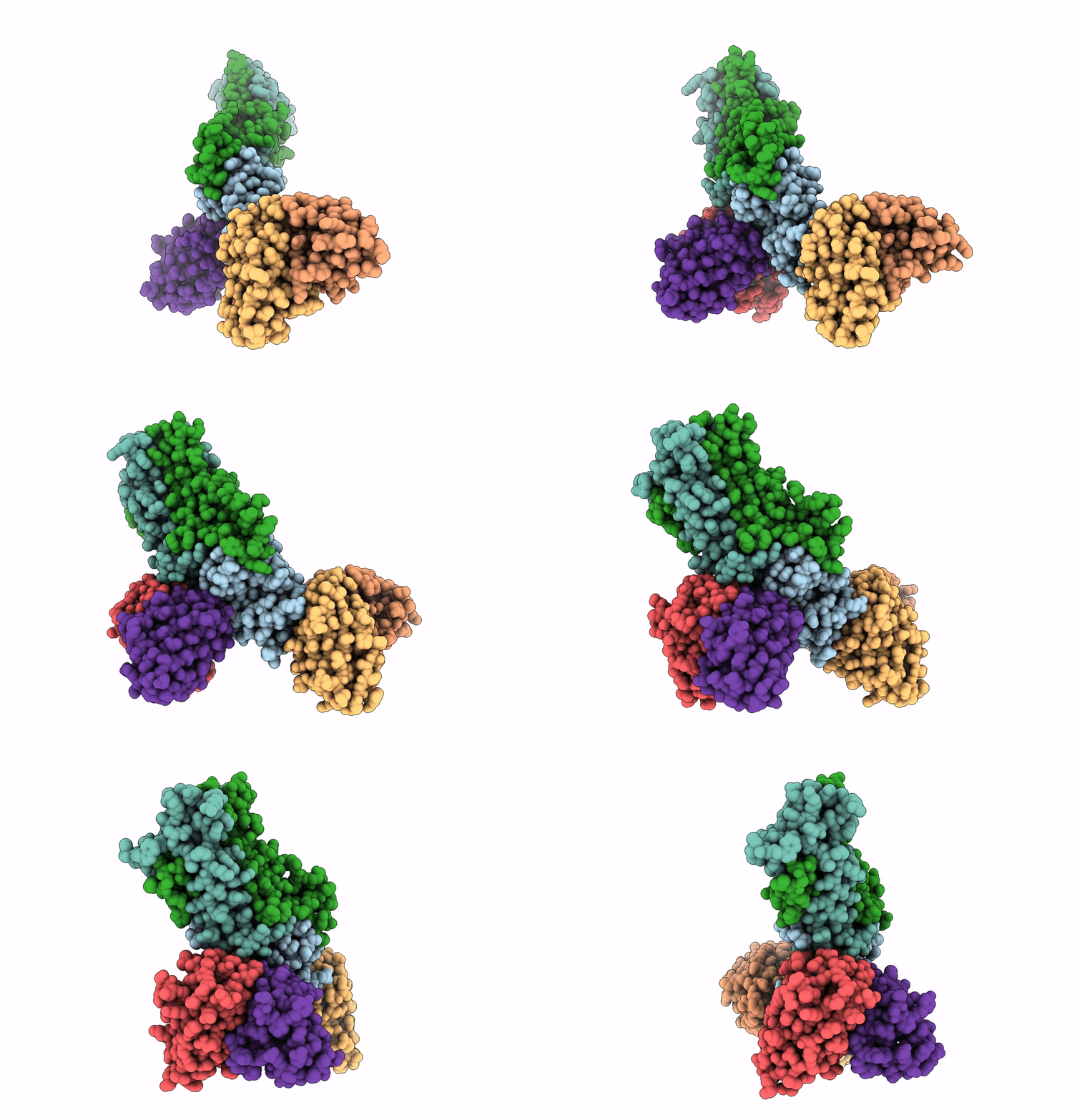
8TEA image
Deposition Date 2023-07-05
Release Date 2023-08-09
Last Version Date 2024-10-09
Entry Detail
PDB ID:
8TEA
Keywords:
Title:
HCMV Pentamer in complex with CS2pt1p2_A10L Fab and CS3pt1p4_C1L Fab
Biological Source:
Source Organism:
Host Organism:
Method Details:
Experimental Method:
Resolution:
3.40 Å
Aggregation State:
PARTICLE
Reconstruction Method:
SINGLE PARTICLE
Macromolecular Entities
Structures with similar UniProt ID
Protein Blast
Polymer Type:polypeptide(L)
Molecule:Envelope protein UL128
Chain IDs:A (auth: C)
Chain Length:163
Number of Molecules:1
Biological Source:Human betaherpesvirus 5
Structures with similar UniProt ID
Protein Blast
Polymer Type:polypeptide(L)
Molecule:Envelope glycoprotein UL130
Chain IDs:B (auth: D)
Chain Length:208
Number of Molecules:1
Biological Source:Human betaherpesvirus 5
Structures with similar UniProt ID
Protein Blast
Polymer Type:polypeptide(L)
Molecule:UL131A
Chain IDs:C (auth: E)
Chain Length:130
Number of Molecules:1
Biological Source:Human betaherpesvirus 5
Polymer Type:polypeptide(L)
Molecule:CS3pt1p4_C1L Fab heavy chain
Chain IDs:F
Chain Length:223
Number of Molecules:1
Biological Source:Homo sapiens
Polymer Type:polypeptide(L)
Molecule:CS2pt1p2_A10L Fab light chain
Chain IDs:D (auth: G)
Chain Length:216
Number of Molecules:1
Biological Source:Homo sapiens
Polymer Type:polypeptide(L)
Molecule:CS2pt1p2_A10L Fab heavy chain
Chain IDs:E (auth: H)
Chain Length:243
Number of Molecules:1
Biological Source:Homo sapiens
Polymer Type:polypeptide(L)
Molecule:CS3pt1p4_C1L Fab light chain
Chain IDs:G (auth: I)
Chain Length:218
Number of Molecules:1
Biological Source:Homo sapiens
Ligand Molecules
Primary Citation
Single-cell analysis of memory B cells from top neutralizers reveals multiple sites of vulnerability within HCMV Trimer and Pentamer.
Immunity 56 2602 2620.e10 (2023)
PMID: 37967532 DOI: 10.1016/j.immuni.2023.10.009

Abstact

Human cytomegalovirus (HCMV) can cause severe diseases in fetuses, newborns, and immunocompromised individuals. Currently, no vaccines are approved, and treatment options are limited. Here, we analyzed the human B cell response of four HCMV top neutralizers from a cohort of 9,000 individuals. By single-cell analyses of memory B cells targeting the pentameric and trimeric HCMV surface complexes, we identified vulnerable sites on the shared gH/gL subunits as well as complex-specific subunits UL128/130/131A and gO. Using high-resolution cryogenic electron microscopy, we revealed the structural basis of the neutralization mechanisms of antibodies targeting various binding sites. Moreover, we identified highly potent antibodies that neutralized a broad spectrum of HCMV strains, including primary clinical isolates, that outperform known antibodies used in clinical trials. Our study provides a deep understanding of the mechanisms of HCMV neutralization and identifies promising antibody candidates to prevent and treat HCMV infection.

Legend

Protein

Chemical

Disease

Primary Citation of related structures
Feedback Form
Name
Email
Institute
Feedback