8SY8 image
Deposition Date 2023-05-24
Release Date 2023-09-20
Last Version Date 2023-10-25
Entry Detail
PDB ID:
8SY8
Keywords:
Title:
Crystal structure of TsaC
Biological Source:
Source Organism:
Host Organism:
Method Details:
Experimental Method:
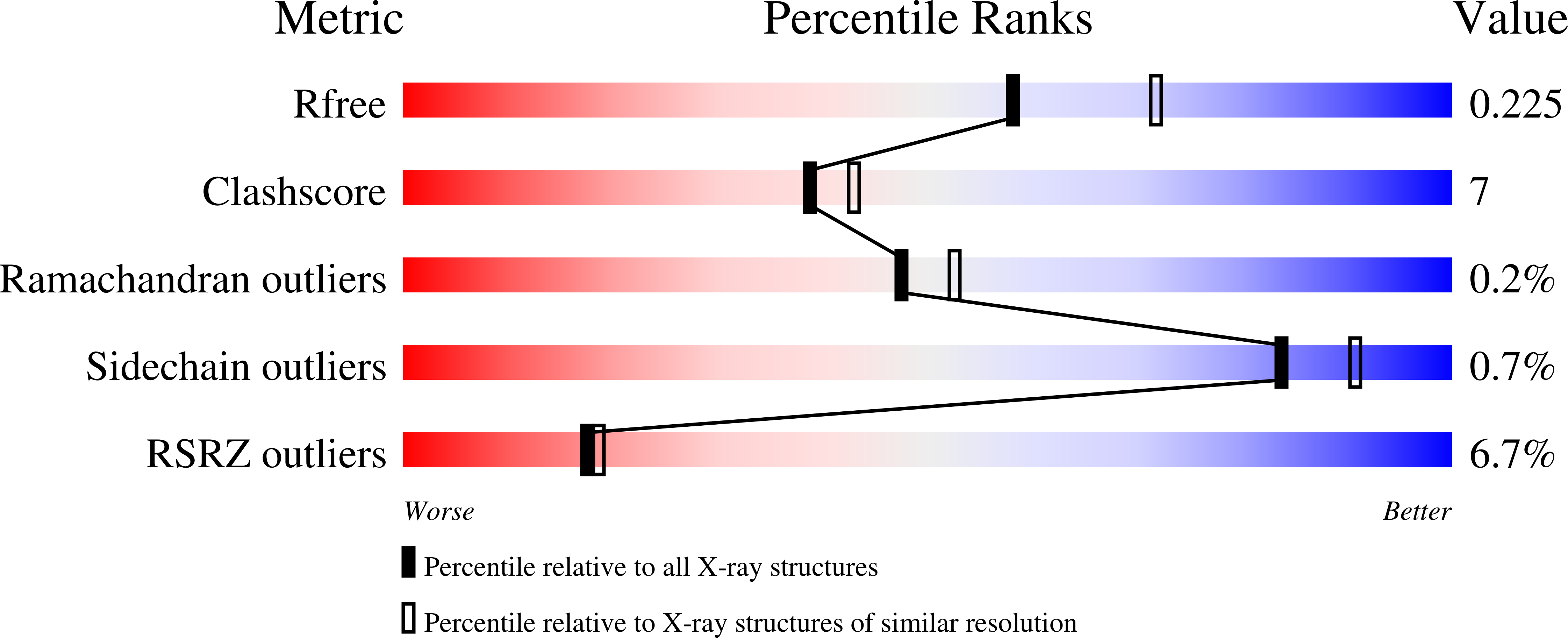
Resolution:
2.18 Å
R-Value Free:
0.22
R-Value Work:
0.20
R-Value Observed:
0.20
Space Group:
P 32 2 1
Macromolecular Entities
Structures with similar UniProt ID
Protein Blast
Polymer Type:polypeptide(L)
Molecule:4-formylbenzenesulfonate dehydrogenase TsaC
Gene (Uniprot):tsaC1, tsaC2
Chain IDs:A, B
Chain Length:272
Number of Molecules:2
Biological Source:Comamonas testosteroni
Primary Citation
The NADH recycling enzymes TsaC and TsaD regenerate reducing equivalents for Rieske oxygenase chemistry.
J.Biol.Chem. 299 105222 105222 (2023)
PMID: 37673337 DOI: 10.1016/j.jbc.2023.105222

Abstact

Many microorganisms use both biological and nonbiological molecules as sources of carbon and energy. This resourcefulness means that some microorganisms have mechanisms to assimilate pollutants found in the environment. One such organism is Comamonas testosteroni, which metabolizes 4-methylbenzenesulfonate and 4-methylbenzoate using the TsaMBCD pathway. TsaM is a Rieske oxygenase, which in concert with the reductase TsaB consumes a molar equivalent of NADH. Following this step, the annotated short-chain dehydrogenase/reductase and aldehyde dehydrogenase enzymes TsaC and TsaD each regenerate a molar equivalent of NADH. This co-occurrence ameliorates the need for stoichiometric addition of reducing equivalents and thus represents an attractive strategy for integration of Rieske oxygenase chemistry into biocatalytic applications. Therefore, in this work, to overcome the lack of information regarding NADH recycling enzymes that function in partnership with Rieske non-heme iron oxygenases (Rieske oxygenases), we solved the X-ray crystal structure of TsaC to a resolution of 2.18 Å. Using this structure, a series of substrate analog and protein variant combination reactions, and differential scanning fluorimetry experiments, we identified active site features involved in binding NAD+ and controlling substrate specificity. Further in vitro enzyme cascade experiments demonstrated the efficient TsaC- and TsaD-mediated regeneration of NADH to support Rieske oxygenase chemistry. Finally, through in-depth bioinformatic analyses, we illustrate the widespread co-occurrence of Rieske oxygenases with TsaC-like enzymes. This work thus demonstrates the utility of these NADH recycling enzymes and identifies a library of short-chain dehydrogenase/reductase enzyme prospects that can be used in Rieske oxygenase pathways for in situ regeneration of NADH.

Legend

Protein

Chemical

Disease

Primary Citation of related structures
Feedback Form
Name
Email
Institute
Feedback