8SUF image
Deposition Date 2023-05-12
Release Date 2024-05-15
Last Version Date 2025-11-26
Entry Detail
PDB ID:
8SUF
Keywords:
Title:
The complex of TOL-1 ectodomain bound to LAT-1 Lectin domain
Biological Source:
Source Organism:
Host Organism:
Method Details:
Experimental Method:
Resolution:
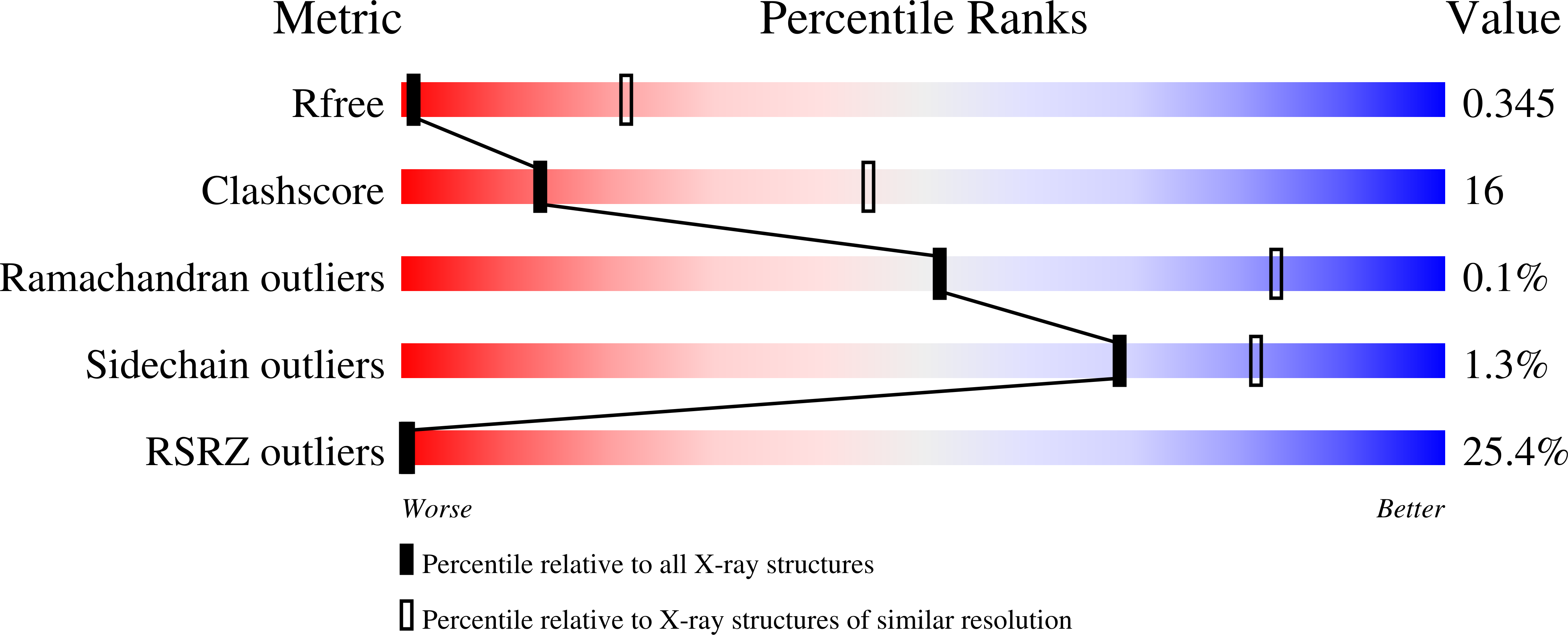
4.00 Å
R-Value Free:
0.33
R-Value Work:
0.28
R-Value Observed:
0.29
Space Group:
P 1 21 1
Macromolecular Entities
Structures with similar UniProt ID
Protein Blast
Polymer Type:polypeptide(L)
Molecule:TIR domain-containing protein
Gene (Uniprot):tol-1
Chain IDs:A, B, C, D
Chain Length:1007
Number of Molecules:4
Biological Source:Caenorhabditis elegans
Structures with similar UniProt ID
Protein Blast
Polymer Type:polypeptide(L)
Molecule:Latrophilin-like protein 1
Gene (Uniprot):lat-1
Chain IDs:E, F, G, H
Chain Length:114
Number of Molecules:4
Biological Source:Caenorhabditis elegans
Ligand Molecules
Primary Citation
Structural basis and functional roles for Toll-like receptor binding to Latrophilin in C. elegans development.
Nat.Struct.Mol.Biol. 32 1683 1696 (2025)
PMID: 40588662 DOI: 10.1038/s41594-025-01592-8

Abstact

Latrophilins are conserved adhesion-type G-protein-coupled receptors associated with embryonic defects and lethality. However, their mechanistic roles and ligands in embryogenesis remain unknown. Here, we identified TOL-1, the sole Toll-like receptor in Caenorhabditis elegans, as a ligand for the C. elegans latrophilin, LAT-1. The extracellular lectin domain of LAT-1 directly binds to the second leucine-rich repeat domain of TOL-1. The crystal structure and cryo-electron microscopy density map of the LAT-1-TOL-1 extracellular region complex reveal a one-to-one lectin domain interaction with the convex face of a leucine-rich repeat domain. In C. elegans, endogenous mRNA and protein localization analyses showed mutually exclusive sites of expression, suggesting that in vivo LAT-1-TOL-1 interactions mostly occur in trans. Mutagenesis of key interface residues that disrupt the LAT-1-TOL-1 interaction led to partial lethality and malformed embryos. Thus, TOL-1 binding to LAT-1 represents a receptor-ligand axis essential for animal development.

Legend

Protein

Chemical

Disease

Primary Citation of related structures
Feedback Form
Name
Email
Institute
Feedback