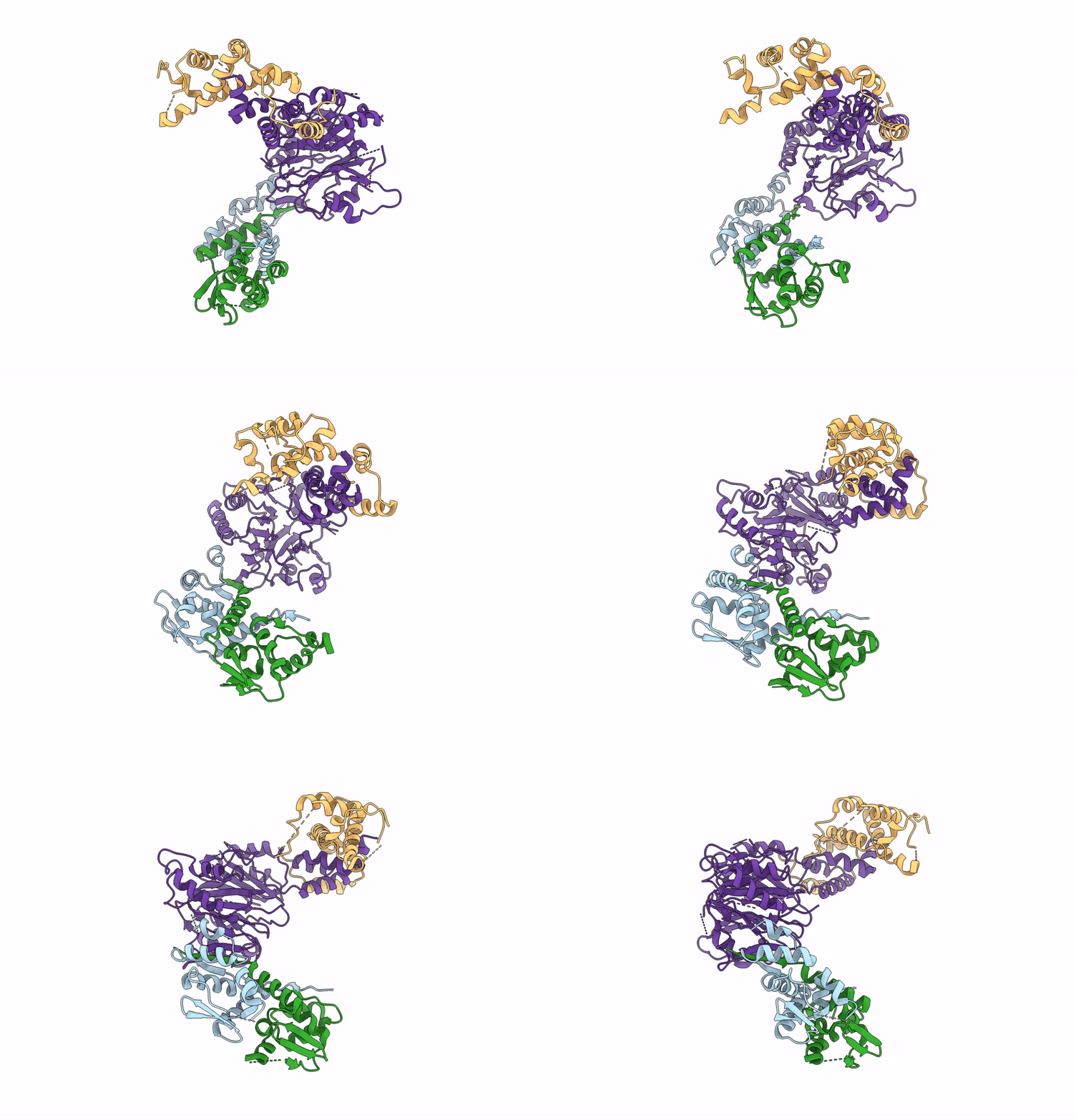
8S7D image
Deposition Date 2024-02-29
Release Date 2024-12-11
Last Version Date 2025-07-02
Entry Detail
PDB ID:
8S7D
Keywords:
Title:
Cryo-EM structure of SKP1-FBXO22 in complex with a BACH1 BTB dimer at 3.2A resolution
Biological Source:
Source Organism:
Homo sapiens (Taxon ID: 9606)
Host Organism:
Method Details:
Experimental Method:
Resolution:
3.20 Å
Aggregation State:
PARTICLE
Reconstruction Method:
SINGLE PARTICLE

Macromolecular Entities
Structures with similar UniProt ID
Protein Blast
Polymer Type:polypeptide(L)
Molecule:Transcription regulator protein BACH1
Gene (Uniprot):BACH1
Chain IDs:A, B
Chain Length:125
Number of Molecules:2
Biological Source:Homo sapiens
Structures with similar UniProt ID
Protein Blast
Polymer Type:polypeptide(L)
Molecule:S-phase kinase-associated protein 1
Gene (Uniprot):SKP1
Chain IDs:C
Chain Length:163
Number of Molecules:1
Biological Source:Homo sapiens
Structures with similar UniProt ID
Protein Blast
Polymer Type:polypeptide(L)
Molecule:F-box only protein 22
Gene (Uniprot):FBXO22
Chain IDs:D
Chain Length:395
Number of Molecules:1
Biological Source:Homo sapiens
Ligand Molecules
Primary Citation

Abstact

Broad-complex, tramtrack, and bric-à-brac domain (BTB) and CNC homolog 1 (BACH1) is a key regulator of the cellular oxidative stress response and an oncogene that undergoes tight post-translational control by two distinct F-box ubiquitin ligases, SCFFBXO22 and SCFFBXL17. However, how both ligases recognize BACH1 under oxidative stress is unclear. In our study, we elucidate the mechanism by which FBXO22 recognizes a quaternary degron in a domain-swapped β-sheet of the BACH1 BTB dimer. Cancer-associated mutations and cysteine modifications destabilize the degron and impair FBXO22 binding but simultaneously expose an otherwise shielded degron in the dimer interface, allowing FBXL17 to recognize BACH1 as a monomer. These findings shed light on a ligase switch mechanism that enables post-translational regulation of BACH1 by complementary ligases depending on the stability of its BTB domain. Our results provide mechanistic insights into the oxidative stress response and may spur therapeutic approaches for targeting oxidative stress-related disorders and cancer.

Legend

Protein

Chemical

Disease

Primary Citation of related structures
Feedback Form
Name
Email
Institute
Feedback