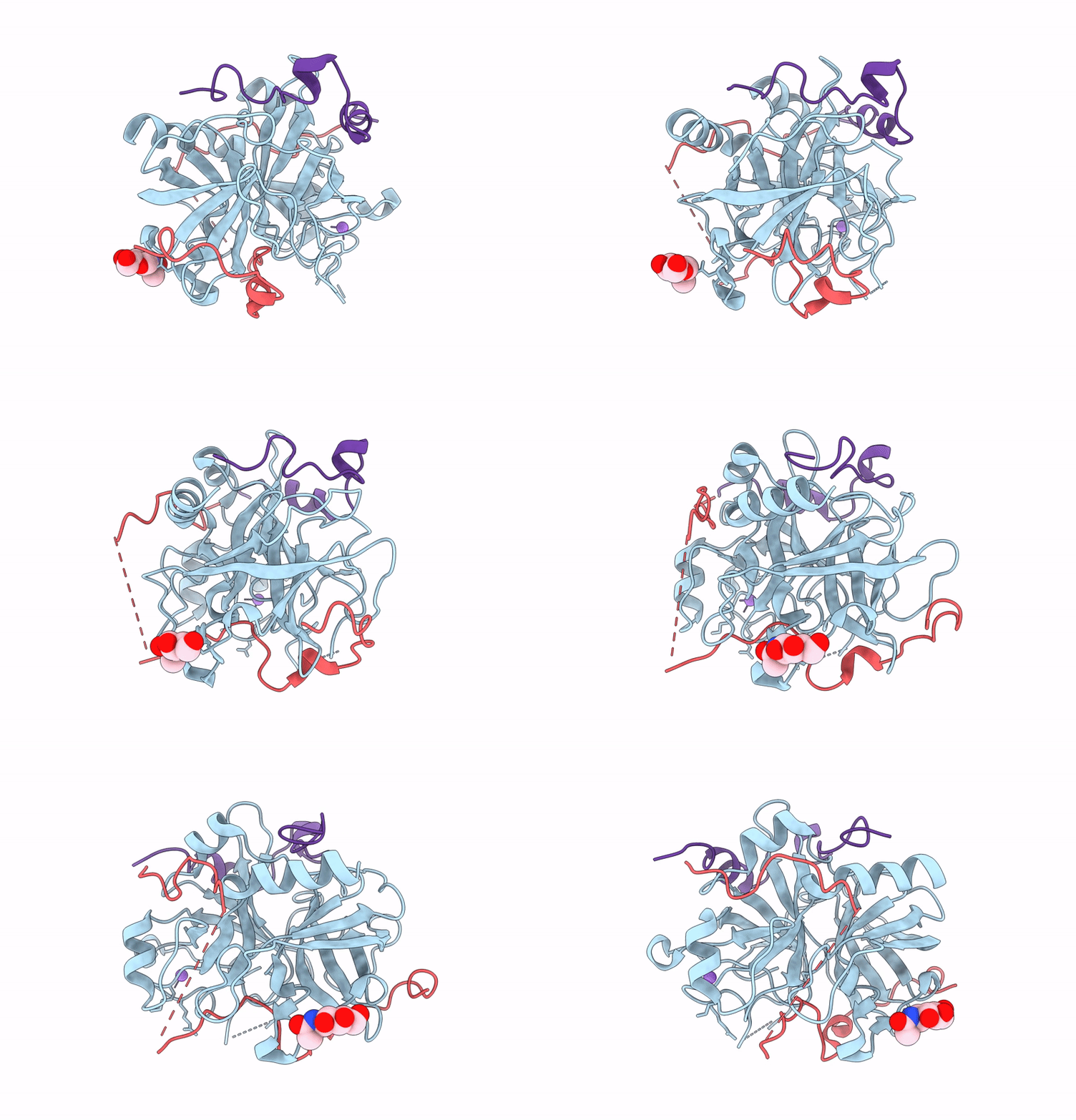
8RTN image
Deposition Date 2024-01-26
Release Date 2025-02-12
Last Version Date 2025-10-22
Entry Detail
PDB ID:
8RTN
Keywords:
Title:
Human thrombin in complex with a trivalent inhibitor
Biological Source:
Source Organism:
Method Details:
Experimental Method:
Resolution:
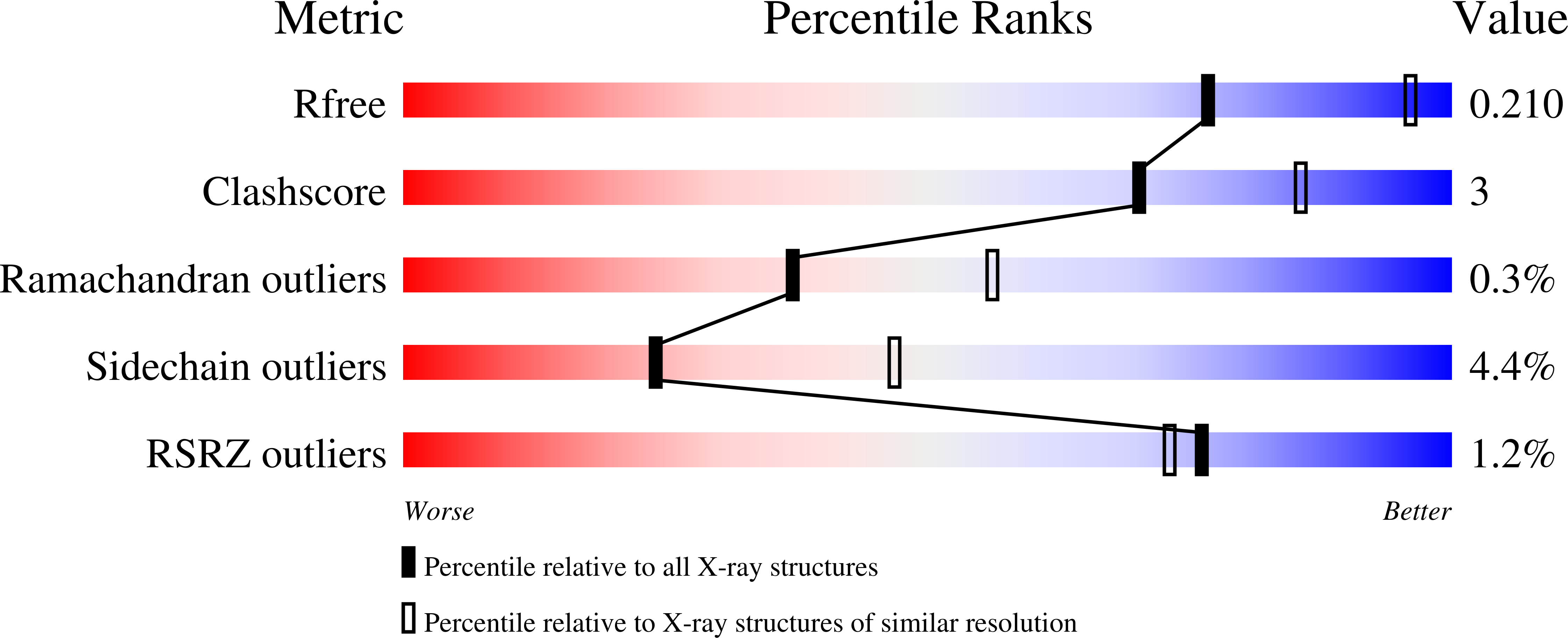
2.51 Å
R-Value Free:
0.21
R-Value Work:
0.16
R-Value Observed:
0.17
Space Group:
H 3 2
Macromolecular Entities
Polymer Type:polypeptide(L)
Molecule:Synthetic trivalent inhibitor
Chain IDs:C (auth: I)
Chain Length:48
Number of Molecules:1
Biological Source:Glossina morsitans morsitans
Structures with similar UniProt ID
Protein Blast
Polymer Type:polypeptide(L)
Molecule:Prothrombin
Gene (Uniprot):F2
Chain IDs:A (auth: L), B (auth: H)
Chain Length:622
Number of Molecules:2
Biological Source:Homo sapiens
Primary Citation
Engineering ultrapotent trivalent anticoagulants through hybridisation of salivary peptides from multiple haematophagous organisms.
Chem Sci 16 18660 18672 (2025)
PMID: 40959396 DOI: 10.1039/d5sc04734j

Abstact

Haematophagous organisms are a rich source of salivary anticoagulant polypeptides that exert their activity by blocking the catalytic site and one of two positively charged exosites on the host protease thrombin. Here, we describe a molecular engineering approach to hybridise post-translationally sulfated polypeptides from different blood-feeding organisms to enhance anticoagulant activity. This led to the discovery of a triply sulfated hybrid anticoagulant, XChimera, possessing fragments from flea, leech, and fly salivary polypeptides that exhibits femtomolar inhibitory activity against thrombin. The crystallographic structure of a complex of XChimera with thrombin shows that it displays a trivalent binding mode in which it simultaneously blocks three functional sites of the protease, the active site and exosites I and II. This trivalent chimera exhibited ultrapotent anticoagulant activity in a suite of in vitro clotting assays and was also shown to possess potent in vivo antithrombotic activity in a murine model of thrombosis.

Legend

Protein

Chemical

Disease

Primary Citation of related structures
Feedback Form
Name
Email
Institute
Feedback