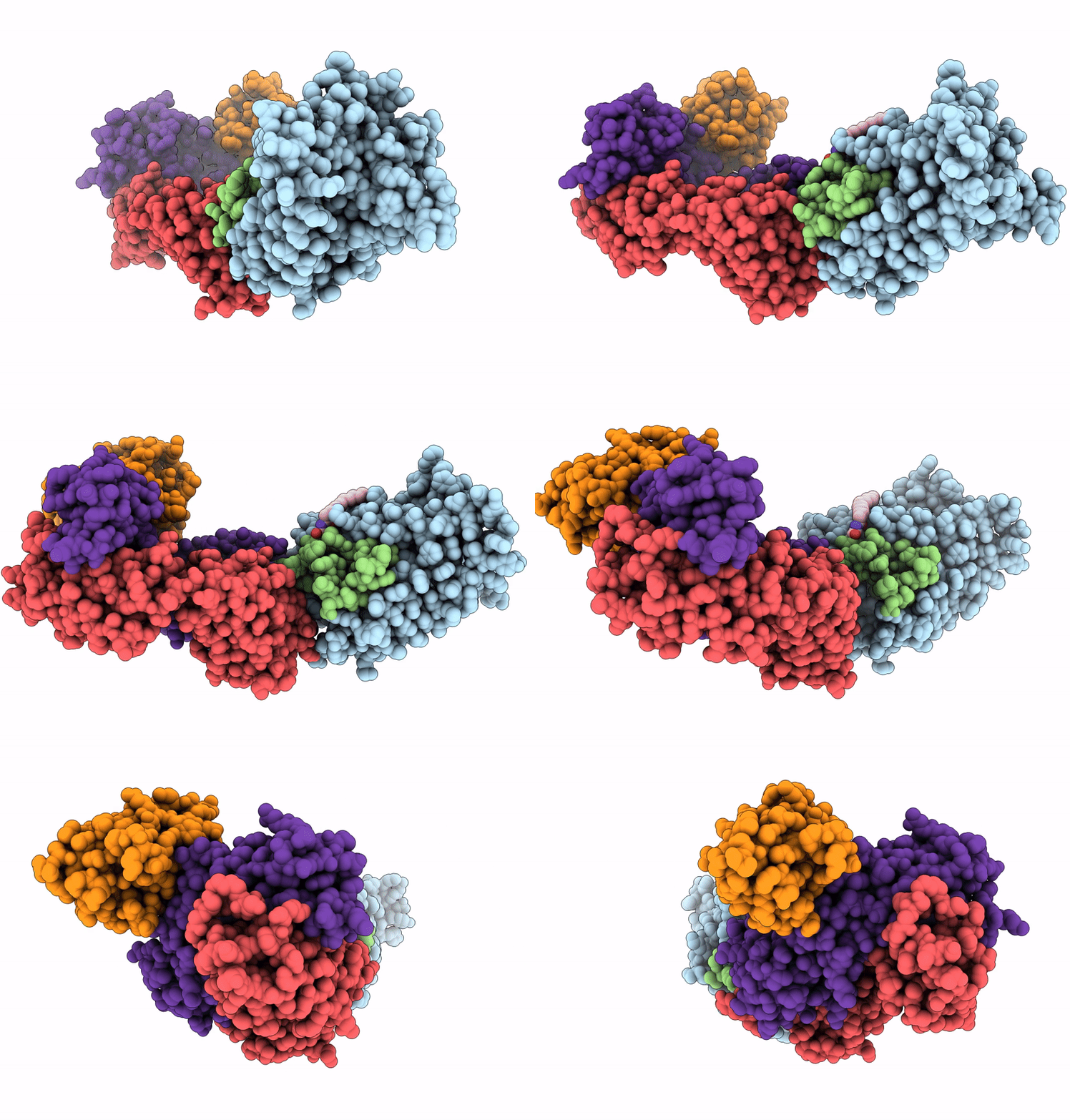
8RQF image
Deposition Date 2024-01-18
Release Date 2024-03-27
Last Version Date 2024-10-23
Entry Detail
PDB ID:
8RQF
Title:
Cryo-EM structure of human NTCP-Bulevirtide complex
Biological Source:
Source Organism:
Host Organism:
Method Details:
Experimental Method:
Resolution:
3.41 Å
Aggregation State:
PARTICLE
Reconstruction Method:
SINGLE PARTICLE

Macromolecular Entities
Structures with similar UniProt ID
Protein Blast
Polymer Type:polypeptide(L)
Molecule:Sodium/bile acid cotransporter
Gene (Uniprot):SLC10A1
Chain IDs:A
Chain Length:349
Number of Molecules:1
Biological Source:Homo sapiens
Structures with similar UniProt ID
Protein Blast
Polymer Type:polypeptide(L)
Molecule:Polymerase
Chain IDs:E (auth: B)
Chain Length:46
Number of Molecules:1
Biological Source:hepatitis B virus genotype C
Polymer Type:polypeptide(L)
Molecule:Heavy chain of Fab3
Chain IDs:B (auth: H)
Chain Length:235
Number of Molecules:1
Biological Source:Homo sapiens
Polymer Type:polypeptide(L)
Molecule:Fab-specific nanobody
Chain IDs:D (auth: K)
Chain Length:120
Number of Molecules:1
Biological Source:Lama glama
Polymer Type:polypeptide(L)
Molecule:Light chain of Fab3
Chain IDs:C (auth: L)
Chain Length:215
Number of Molecules:1
Biological Source:Homo sapiens
Ligand Molecules
Primary Citation
Structure of antiviral drug bulevirtide bound to hepatitis B and D virus receptor protein NTCP.
Nat Commun 15 2476 2476 (2024)
PMID: 38509088 DOI: 10.1038/s41467-024-46706-w

Abstact

Cellular entry of the hepatitis B and D viruses (HBV/HDV) requires binding of the viral surface polypeptide preS1 to the hepatobiliary transporter Na+-taurocholate co-transporting polypeptide (NTCP). This interaction can be blocked by bulevirtide (BLV, formerly Myrcludex B), a preS1 derivative and approved drug for treating HDV infection. Here, to elucidate the basis of this inhibitory function, we determined a cryo-EM structure of BLV-bound human NTCP. BLV forms two domains, a plug lodged in the bile salt transport tunnel of NTCP and a string that covers the receptor's extracellular surface. The N-terminally attached myristoyl group of BLV interacts with the lipid-exposed surface of NTCP. Our structure reveals how BLV inhibits bile salt transport, rationalizes NTCP mutations that decrease the risk of HBV/HDV infection, and provides a basis for understanding the host specificity of HBV/HDV. Our results provide opportunities for structure-guided development of inhibitors that target HBV/HDV docking to NTCP.

Legend

Protein

Chemical

Disease

Primary Citation of related structures
Feedback Form
Name
Email
Institute
Feedback