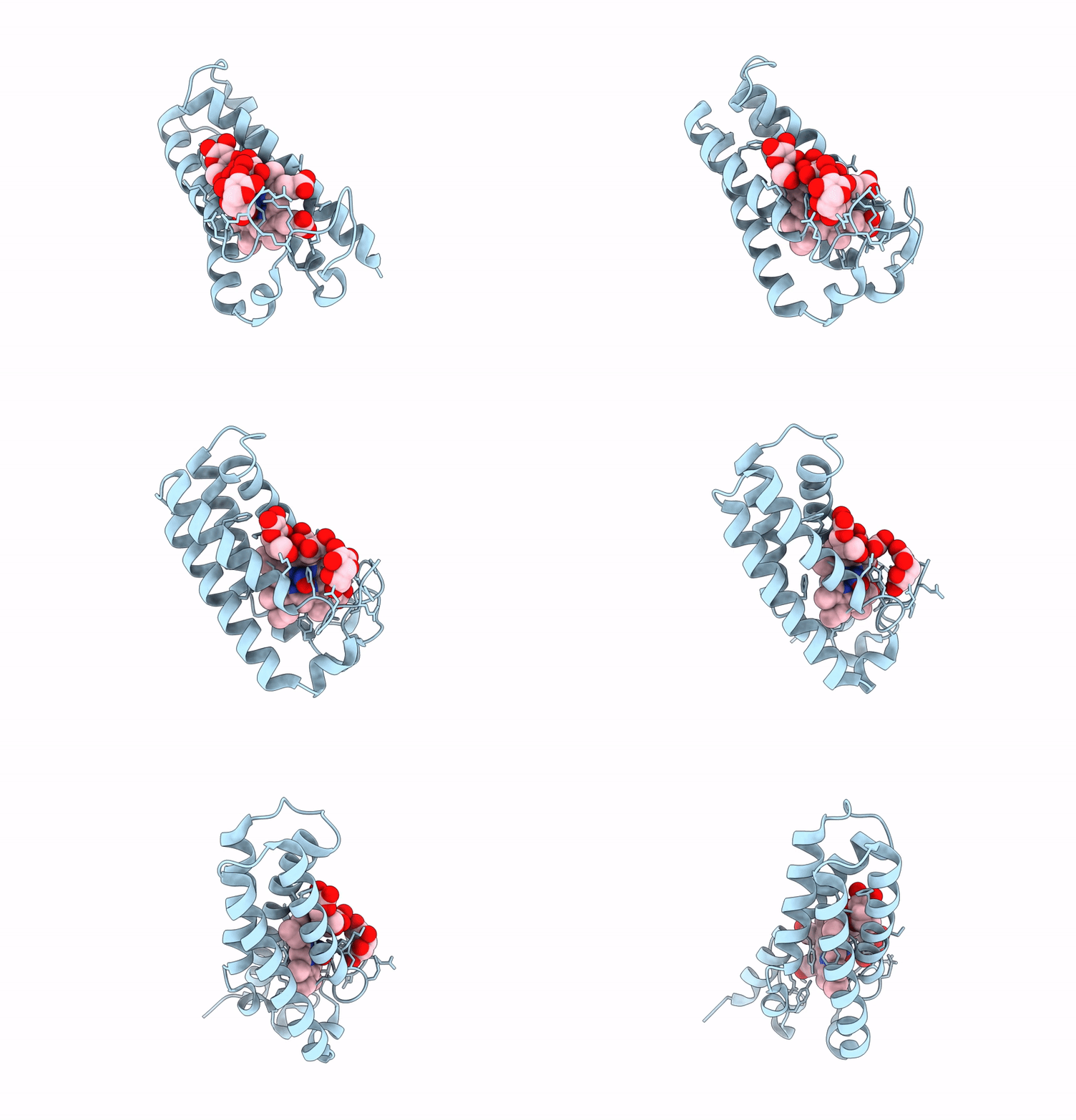
8RKP image
Deposition Date 2023-12-27
Release Date 2024-12-04
Last Version Date 2024-12-04
Entry Detail
PDB ID:
8RKP
Title:
Cytochrome c prime from Hydrogenophilus thermoluteolus: Ferrous recombinant native with bound NO
Biological Source:
Source Organism:
Host Organism:
Method Details:
Experimental Method:
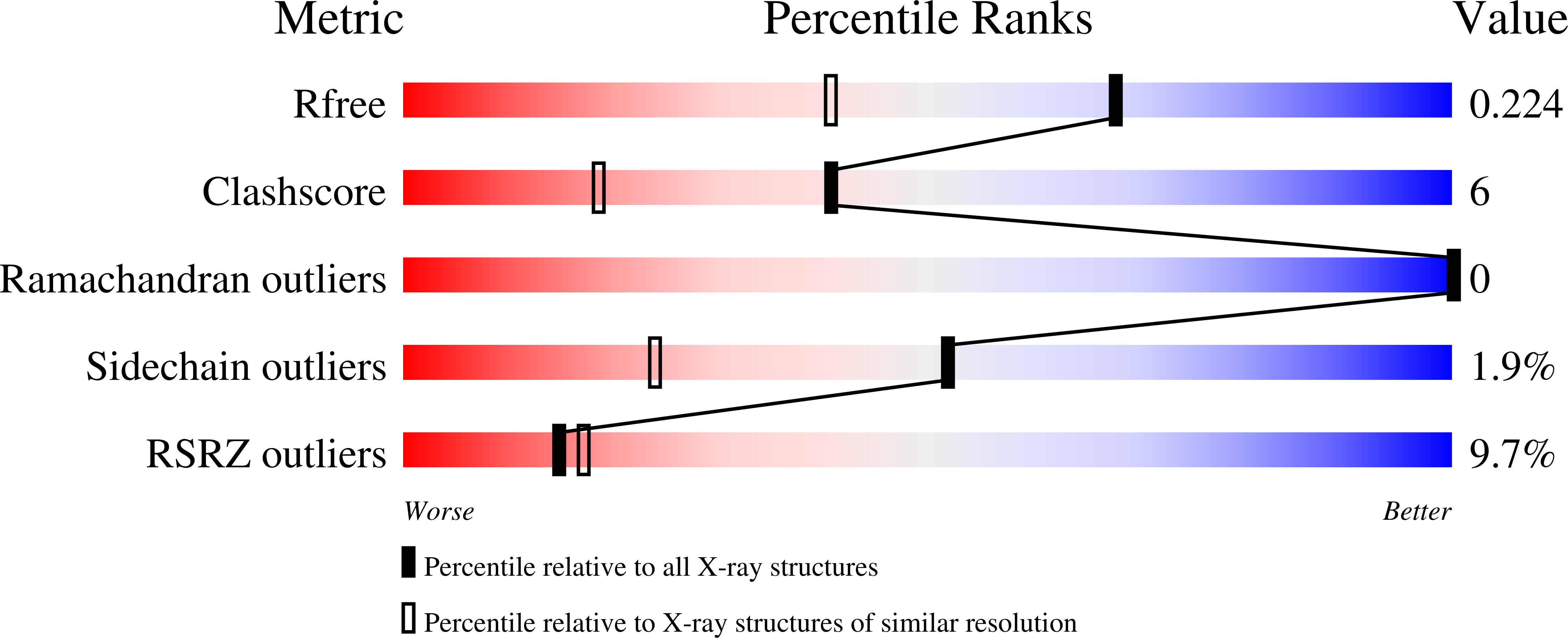
Resolution:
1.63 Å
R-Value Free:
0.21
R-Value Work:
0.19
R-Value Observed:
0.19
Space Group:
P 62 2 2
Macromolecular Entities
Structures with similar UniProt ID
Protein Blast
Polymer Type:polypeptide(L)
Molecule:Cytochrome c prime
Gene (Uniprot):cytc
Chain IDs:A
Chain Length:134
Number of Molecules:1
Biological Source:Hydrogenophilus thermoluteolus
Primary Citation
Conformational rigidity of cytochrome c'-alpha from a thermophile is associated with slow NO binding.
Biophys.J. 123 2594 2603 (2024)
PMID: 38937973 DOI: 10.1016/j.bpj.2024.06.026

Abstact

Cytochromes c'-α are nitric oxide (NO)-binding heme proteins derived from bacteria that can thrive in a wide range of temperature environments. Studies of mesophilic Alcaligenes xylosoxidans cytochrome c'-α (AxCP-α) have revealed an unusual NO-binding mechanism involving both heme faces, in which NO first binds to form a distal hexa-coordinate Fe(II)-NO (6cNO) intermediate and then displaces the proximal His to form a proximal penta-coordinate Fe(II)-NO (5cNO) final product. Here, we characterize a thermally stable cytochrome c'-α from thermophilic Hydrogenophilus thermoluteolus (PhCP-α) to understand how protein thermal stability affects NO binding. Electron paramagnetic and resonance Raman spectroscopies reveal the formation of a PhCP-α 5cNO product, with time-resolved (stopped-flow) UV-vis absorbance indicating the involvement of a 6cNO intermediate. Relative to AxCP-α, the rates of 6cNO and 5cNO formation in PhCP-α are ∼11- and ∼13-fold lower, respectively. Notably, x-ray crystal structures of PhCP-α in the presence and absence of NO suggest that the sluggish formation of the proximal 5cNO product results from conformational rigidity: the Arg-132 residue (adjacent to the proximal His ligand) is held in place by a salt bridge between Arg-75 and Glu-135 (an interaction not present in AxCP-α or a psychrophilic counterpart). Overall, our data provide fresh insights into structural factors controlling NO binding in heme proteins, including 5cNO complexes relevant to eukaryotic NO sensors.

Legend

Protein

Chemical

Disease

Primary Citation of related structures
Feedback Form
Name
Email
Institute
Feedback