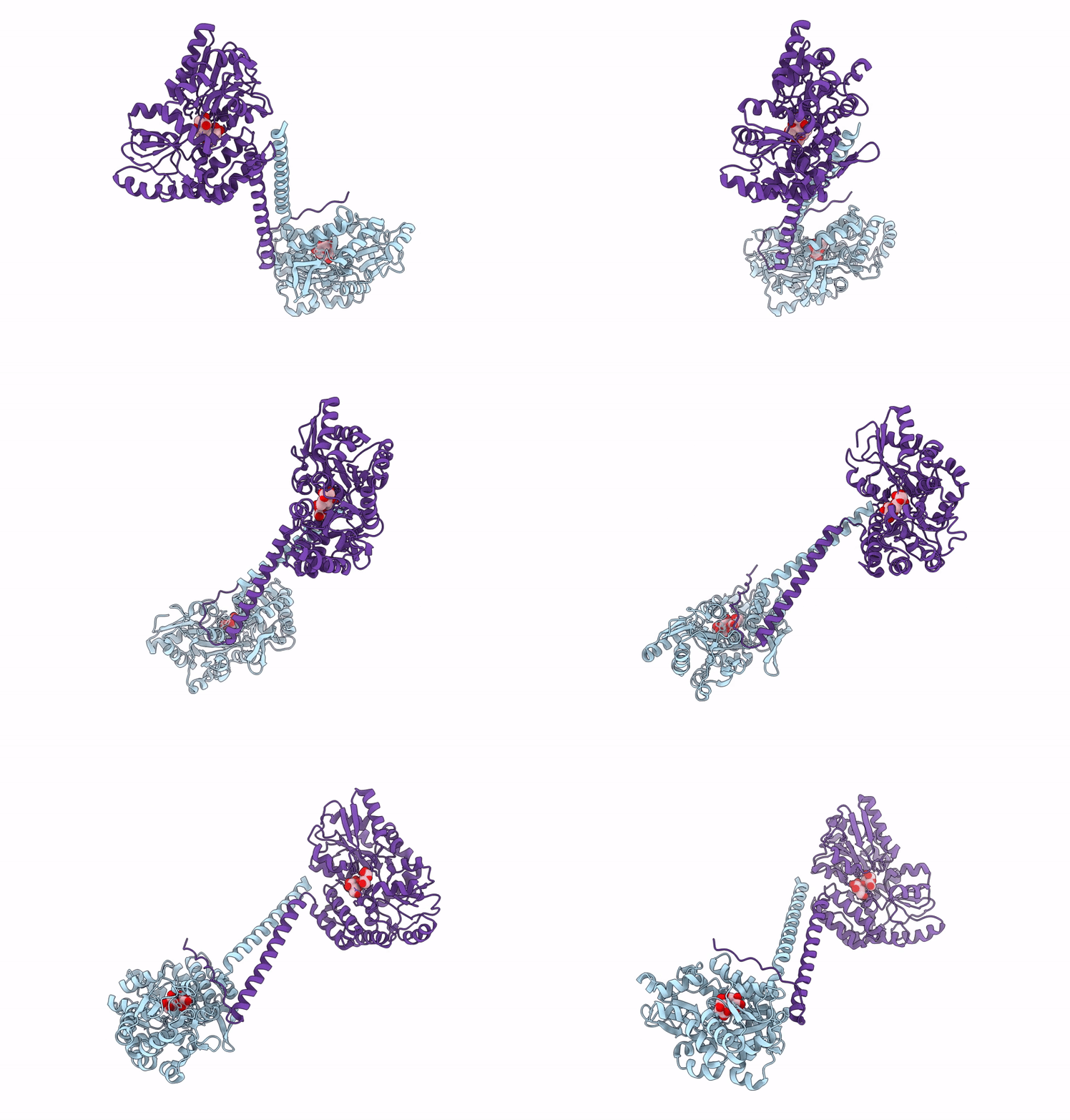
8R2O image
Deposition Date 2023-11-07
Release Date 2024-09-18
Last Version Date 2025-09-10
Entry Detail
PDB ID:
8R2O
Title:
Huntingtin-Q17, 1-66, N-MBP fusion
Biological Source:
Source Organism:
Homo sapiens (Taxon ID: 9606)
Host Organism:
Method Details:
Experimental Method:
Resolution:
3.23 Å
R-Value Free:
0.23
R-Value Work:
0.16
R-Value Observed:
0.16
Space Group:
F 2 3
Macromolecular Entities
Protein Blast
Polymer Type:polypeptide(L)
Molecule:Maltodextrin-binding protein,Huntingtin, myristoylated N-terminal fragment
Gene (Uniprot):malE, HTT
Chain IDs:A, B
Chain Length:442
Number of Molecules:2
Biological Source:Homo sapiens
Ligand Molecules
Peptide-like Molecules
PRD_900001
Primary Citation
Post-translational modifications of huntingtin's N17 region: implications for self-association and membrane binding.
Biochim Biophys Acta Mol Basis Dis 1871 168019 168019 (2025)
PMID: 40835213 DOI: 10.1016/j.bbadis.2025.168019

Abstact

Huntington's disease is a neurodegenerative disorder associated with a polyglutamine expansion within the first exon of the huntingtin protein (HTT exon 1). This mutation results in HTT dysfunction and the production of N-terminal HTT aggregates. The dimerization of the HTT exon 1 fragment through self-association of the first 17 residues (N17) is considered the initial step in the HTT exon 1 aggregation pathway. The association of N17 with membranes has been proposed to catalyze aggregation by increasing the local concentration of exon 1, and post-translational modifications (PTMs) in N17 are known to influence membrane interaction and the aggregation rate of exon 1. To elucidate the influence of N17 PTMs on both self-association and membrane interaction, thereby gaining insight into HTT function and exon 1 aggregation, we used solution nuclear magnetic resonance and circular dichroism spectroscopies to address loss of initial methionine, subsequent acetylation, and phosphorylation of threonine and serines. Our findings indicate that modifications to N17 that enhance helicity correspond to increased self-association and membrane interaction. We then conducted X-ray crystallographic studies that led to a proposed HTT exon 1 dimerization model consistent with the association of N17 dimers. This provides insight into the impact of PTMs on HTT aggregation. The experimental methods and N17 self-association model we describe may serve as a foundation for further experiments exploring the influence of N17 PTMs on HTT function and pathogenicity.

Legend

Protein

Chemical

Disease

Primary Citation of related structures
Feedback Form
Name
Email
Institute
Feedback