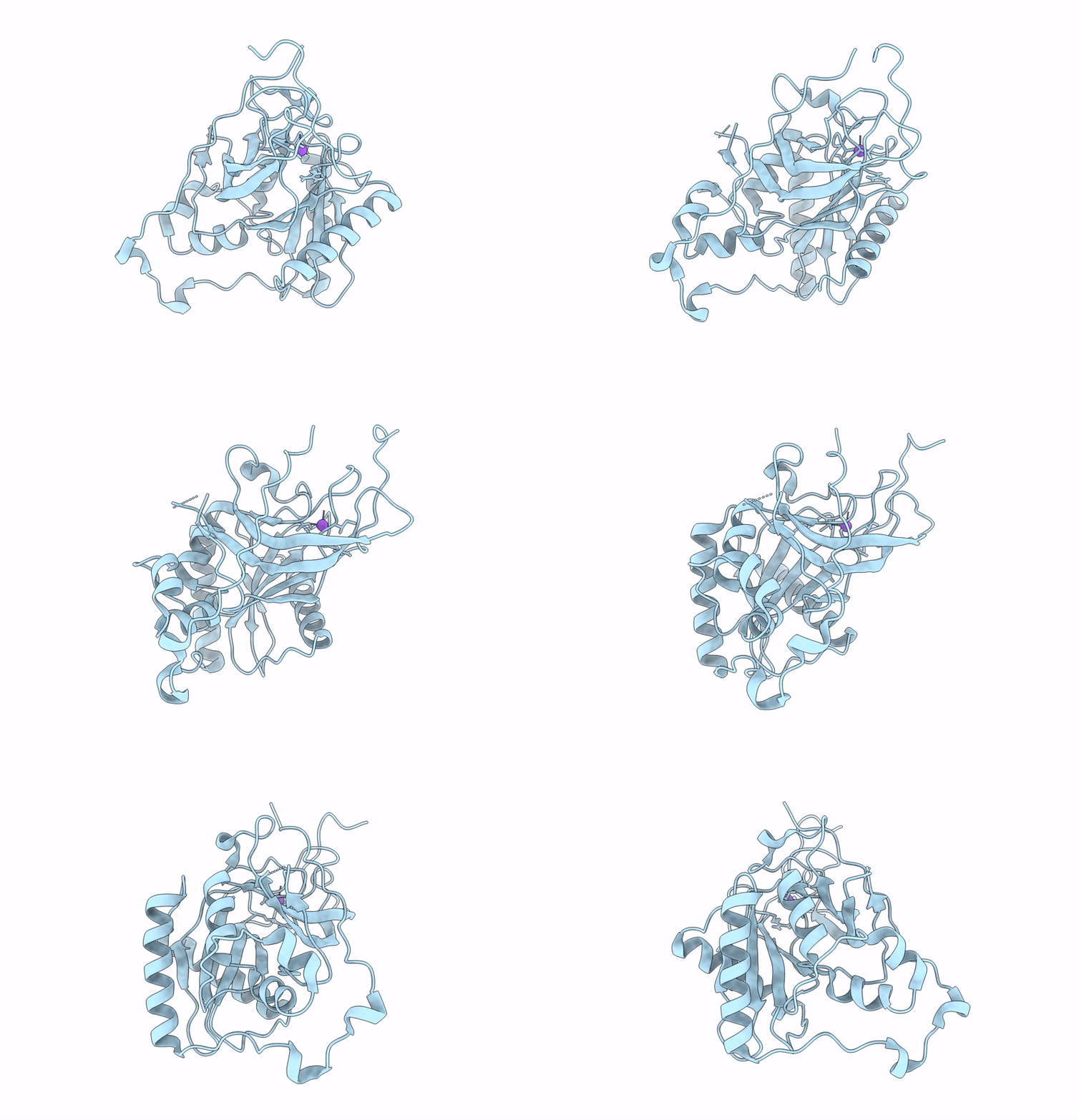
8QZG image
Deposition Date 2023-10-27
Release Date 2023-11-08
Last Version Date 2024-03-06
Entry Detail
PDB ID:
8QZG
Keywords:
Title:
1,3 L,D-transpeptidase from Gluconobacter oxydans
Biological Source:
Source Organism:
Host Organism:
Method Details:
Experimental Method:
Resolution:
1.73 Å
R-Value Free:
0.20
R-Value Work:
0.17
R-Value Observed:
0.17
Space Group:
P 21 21 21
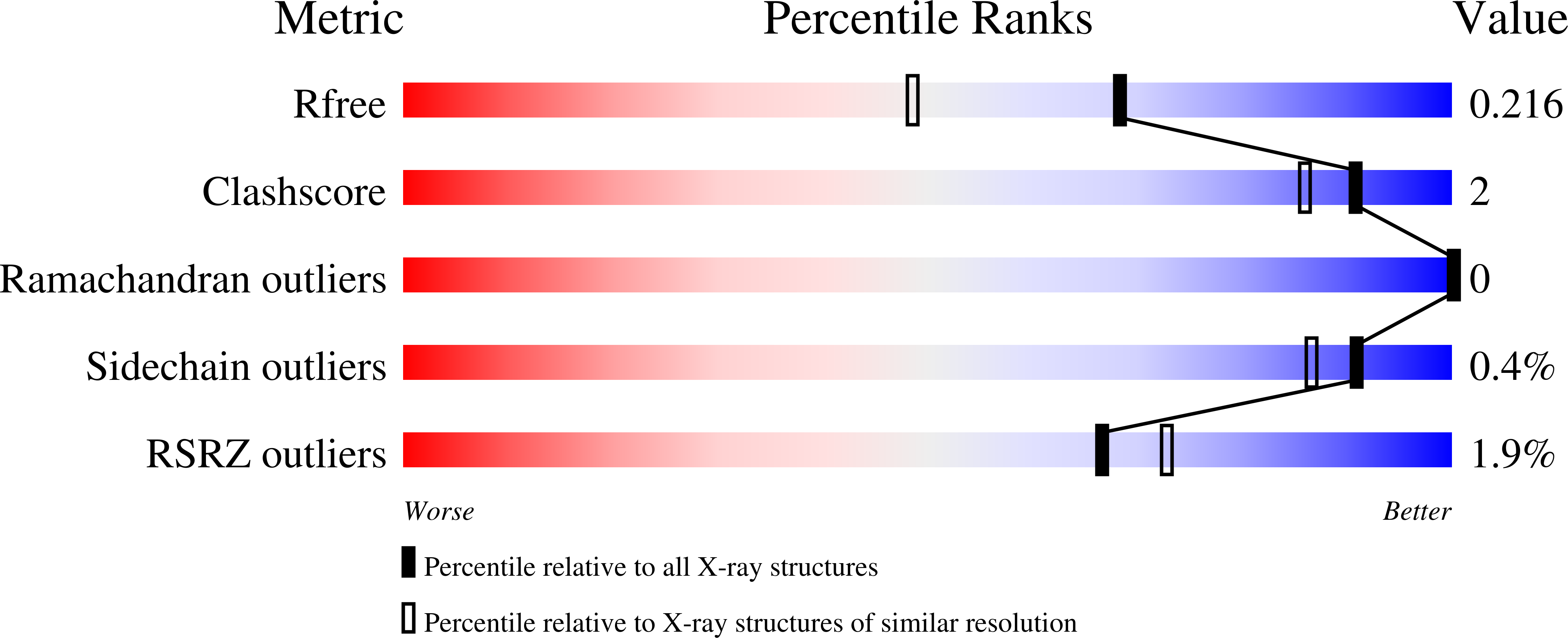
Macromolecular Entities
Polymer Type:polypeptide(L)
Molecule:YkuD domain-containing protein
Chain IDs:A (auth: 1)
Chain Length:328
Number of Molecules:1
Biological Source:Gluconobacter oxydans
Primary Citation
A distinctive family of L,D-transpeptidases catalyzing L-Ala-mDAP crosslinks in Alpha- and Betaproteobacteria.
Nat Commun 15 1343 1343 (2024)
PMID: 38351082 DOI: 10.1038/s41467-024-45620-5

Abstact

The bacterial cell-wall peptidoglycan is made of glycan strands crosslinked by short peptide stems. Crosslinks are catalyzed by DD-transpeptidases (4,3-crosslinks) and LD-transpeptidases (3,3-crosslinks). However, recent research on non-model species has revealed novel crosslink types, suggesting the existence of uncharacterized enzymes. Here, we identify an LD-transpeptidase, LDTGo, that generates 1,3-crosslinks in the acetic-acid bacterium Gluconobacter oxydans. LDTGo-like proteins are found in Alpha- and Betaproteobacteria lacking LD3,3-transpeptidases. In contrast with the strict specificity of typical LD- and DD-transpeptidases, LDTGo can use non-terminal amino acid moieties for crosslinking. A high-resolution crystal structure of LDTGo reveals unique features when compared to LD3,3-transpeptidases, including a proline-rich region that appears to limit substrate access, and a cavity accommodating both glycan chain and peptide stem from donor muropeptides. Finally, we show that DD-crosslink turnover is involved in supplying the necessary substrate for LD1,3-transpeptidation. This phenomenon underscores the interplay between distinct crosslinking mechanisms in maintaining cell wall integrity in G. oxydans.

Legend

Protein

Chemical

Disease

Primary Citation of related structures
Feedback Form
Name
Email
Institute
Feedback